Kamkata-viri, Kalasha-ala, Ashkun, Tregami and Prasun form their own branch of the Indo-Iranian family, spoken almost nowhere but Nuristan. Where each is spoken, what makes them so old, and why every valley sounds different.
The languages of Nuristan sit in a box of their own. They are Indo-Iranian, related to Persian, Pashto and Hindi, but they are neither Iranian nor Indo-Aryan. They make up a third branch, spoken by a couple of hundred thousand people at most, in the valleys of Nuristan and a few villages over the border in Chitral, and hardly anywhere else.
One family, three branches
The Indo-Iranian languages descend from a single ancestor spoken more than three thousand years ago. Two of its branches are famous. Iranian gave the world Persian, Kurdish, Pashto and Balochi. Indo-Aryan gave Sanskrit, Hindi, Urdu, Bengali and Punjabi. For most of the twentieth century the languages of Nuristan were filed under one or the other, or bundled with the Dardic languages of Chitral and Gilgit under the old label Kafiri.
The Norwegian linguist Georg Morgenstierne, who worked in the region from the 1920s, showed that they had split from the common stock before Iranian and Indo-Aryan went their separate ways. The evidence is in the sounds. A set of ancient consonants that became one thing in Iranian and another in Indo-Aryan survives in Nuristani in a third, older form. The word for ten is the textbook case: Sanskrit daśa, Avestan dasa, and Kati duts, which keeps a consonant the other two had already softened. Morgenstierne's conclusion was argued over for decades and is now the settled view.
The five languages
Kamkata-viri
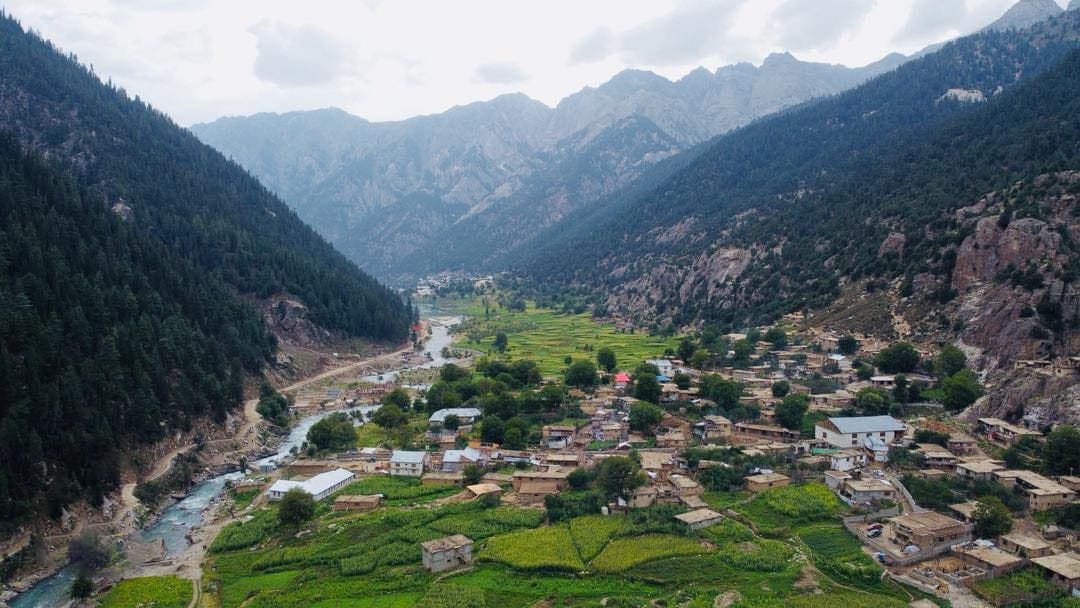
The largest of the five. It is spoken in the Bashgal valley and its side valleys, which is to say Kamdesh and Bargi Matal, in the Kantiwa valley that runs west from there, in the Ramgal and Kulam valleys of the far west, and in a few villages of Chitral in Pakistan, where families settled after the conversion of the 1890s. Its speakers divide it by tribe: Kata-vari for the Kata, Kamviri for the Kom of Kamdesh, Mumviri for the Mumo. Some scholars count Kati and Kamviri as separate languages, which is why you will read of six Nuristani languages as often as five.
Kalasha-ala
Spoken in the Waygal valley of southern Nuristan, in villages such as Waygal, Nishigram, Ameshdesh and Want, and still often called Waigali after the valley. The name its speakers use means the speech of the Kalasha, which is also what the Kalash of Chitral call themselves; the two peoples share an old name and, until the 1890s, related religions. But the Kalash of Chitral speak an Indo-Aryan language, Kalasha-mun, so the two Kalasha tongues are cousins at some remove rather than siblings. Estimates put Kalasha-ala speakers at somewhere between ten and twenty thousand.
Ashkun
Spoken by the Ashkun, who call themselves Sanu and their language Ashkunu, in the central Pech valley around Wama and in the side valleys on the eastern flank of the Alingar in Nurgaram and Du Ab. With something like forty thousand speakers on the higher estimates, it is second only to Kamkata-viri in size, and it has sound changes of its own that set it apart from the eastern languages.
Tregami
The smallest of the five, with a few thousand speakers in three villages, Gambir, Katar and Devoz, in the Tregam valley off the lower Pech. The valley lies in Watapur district of Kunar rather than in Nuristan itself, a reminder that the language map and the provincial map do not quite match. Tregami is closest to Kalasha-ala, with which it shares three quarters or more of its vocabulary.
Prasun
The language of the Parun valley, the provincial capital's own tongue, spoken in six villages along about twenty kilometres of river by perhaps eight thousand people. Its speakers call it Vasi-vari or Vasi-veri; outsiders have called it Prasun, Paruni and Veron. It is the most divergent of the five by a distance. Old sounds shifted here in ways they did not anywhere else, so that a Kati speaker from the next valley cannot follow it, and early scholars wondered whether it was Nuristani at all. UNESCO lists it as definitely endangered.
Five languages, or fifty?
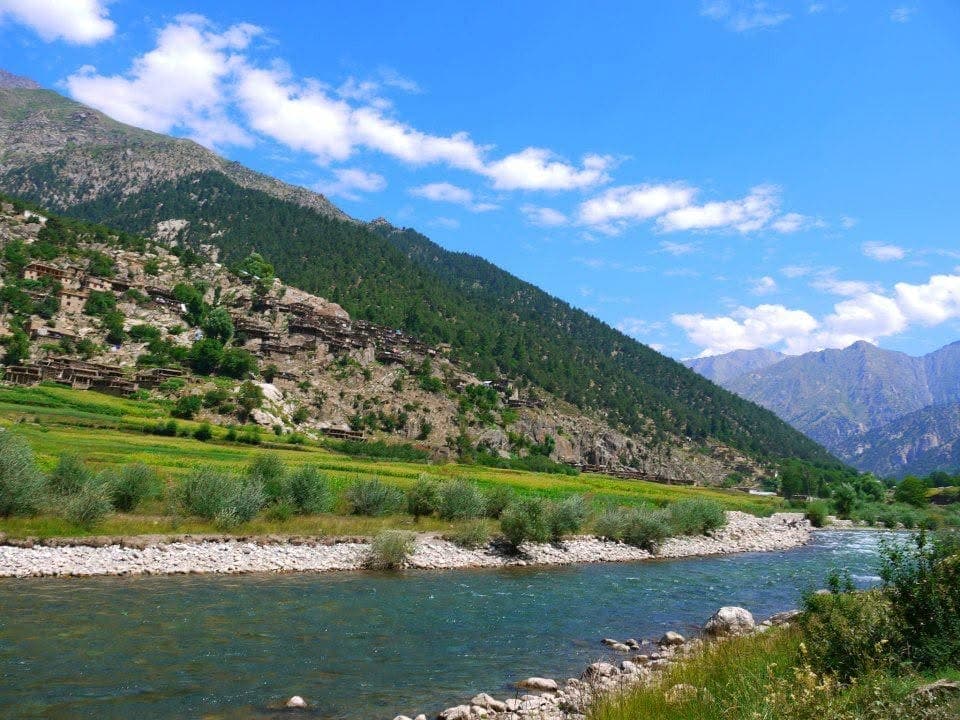
Five is the tidy answer, and it undercounts the reality. Every one of these languages splits from valley to valley into distinct tongues or at least distinct accents, and some of the differences are large enough that neighbours barely understand each other. Kamkata-viri alone covers Kata-vari, Kamviri and Mumviri, and the western Kati of Ramgal sounds different again from the eastern Kati of Bashgal. Prasun has three dialect areas along a single valley. There is even a sixth candidate, Zemiaki, spoken by a few hundred people and usually grouped with Kalasha-ala. Generations of isolation behind high passes gave each valley its own words and customs, and most of that speech has never been written down. When people from Nuristan say the province has five languages, they mean five families of speech, not five uniform tongues.
What makes them old
- Consonants the rest of Indo-Iranian lost. The dental affricate in words like duts, ten, is the branch's fingerprint.
- Counting in twenties. Forty is two twenties and sixty is three, a habit shared with the Dardic languages next door and with Basque and old Celtic far away, and older than the decimal counting of Persian.
- Retroflex consonants, made with the tongue curled back, which Persian lacks entirely.
- Words that reach back to the common Indo-Iranian past. The names of the old gods, Imra and Indr among them, share roots with the Vedic hymns of ancient India.
Speaking, writing, surviving
These are spoken languages. There is no standard script and no tradition of literature on paper; the literature is oral, in songs, proverbs and the stories told on winter evenings. People who write their own language do so in the Arabic-based alphabet they learnt for Pashto and Dari, spelling by ear. The American linguist Richard Strand, who has documented the languages since the late 1960s, devised writing systems for Kamviri and others, but they have not entered daily use. Afghanistan's 2004 constitution listed Nuristani among the languages with official status in the areas where they are spoken, alongside Pashai, Pamiri, Balochi, Uzbek and Turkmen, though in practice schooling and administration run in Pashto and Dari.
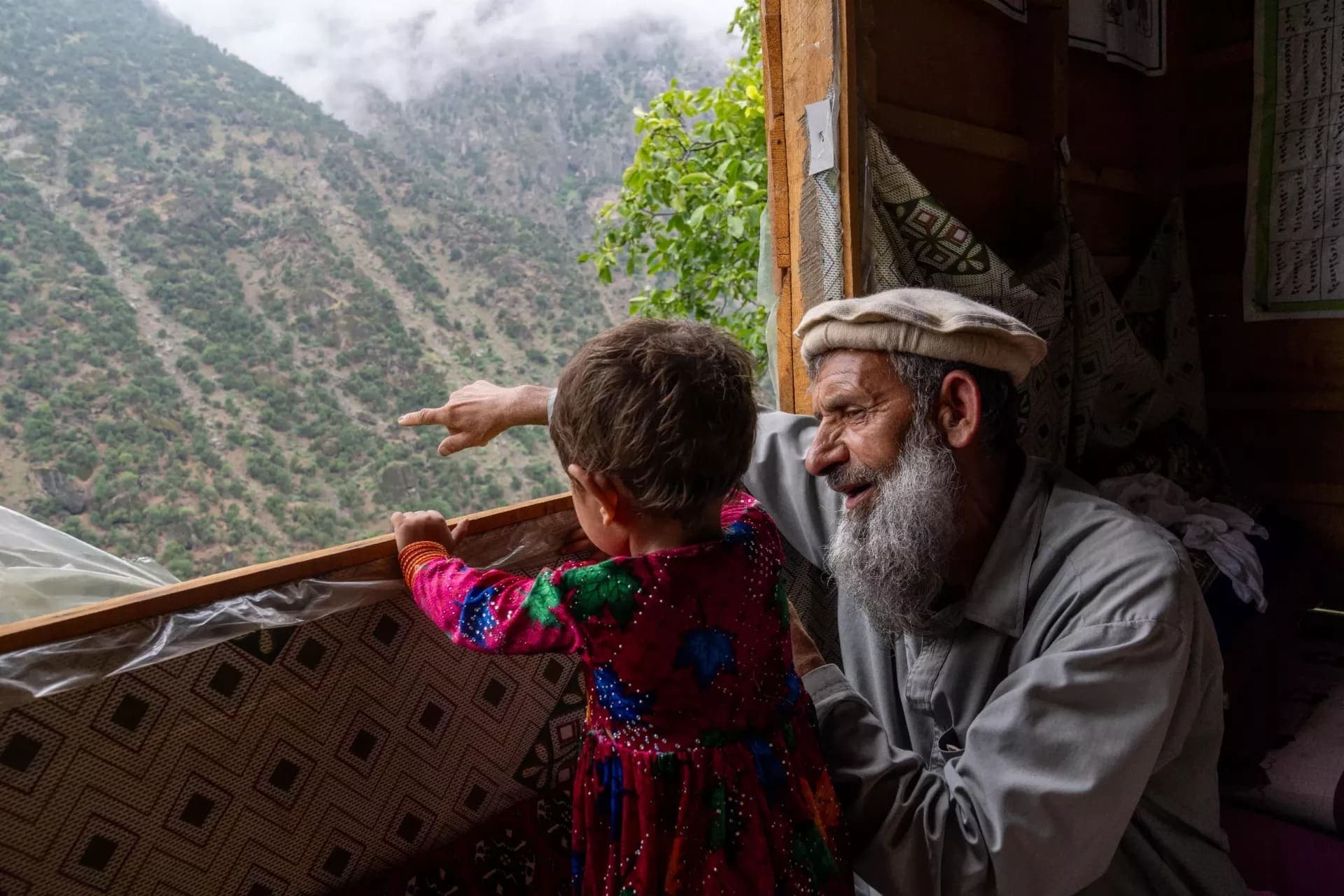
Everyone in Nuristan speaks at least one of those two as well, and many speak Pashto, Dari and Urdu. That is a strength and a risk. In the lower valleys, closer to the road and the plains, Pashto is gaining ground. In the high villages the languages are secure for now because there is no one else to talk to. Keeping them alive as the roads arrive means recording them while the elders who speak them best are still here, and giving children a reason to be proud of a speech that only their valley understands.
Where to hear them
The best way to understand the map is to travel it. Each district guide on this site names the language of its valley.
Sources
- Encyclopaedia Iranica: Nurestani languages
- Wikipedia: Nuristani languages
- Wikipedia: Prasun language
- Wikipedia: Ashkun language
- Wikipedia: Tregami language
- Richard Strand: Nuristan, Hidden Land of the Hindu-Kush (language documentation)
- Henrik Liljegren, Stockholm University, 2023: Nuristani languages from an areal and typological point of view
- Constitution of Afghanistan (2004), Article 16, on official languages