Du Ab
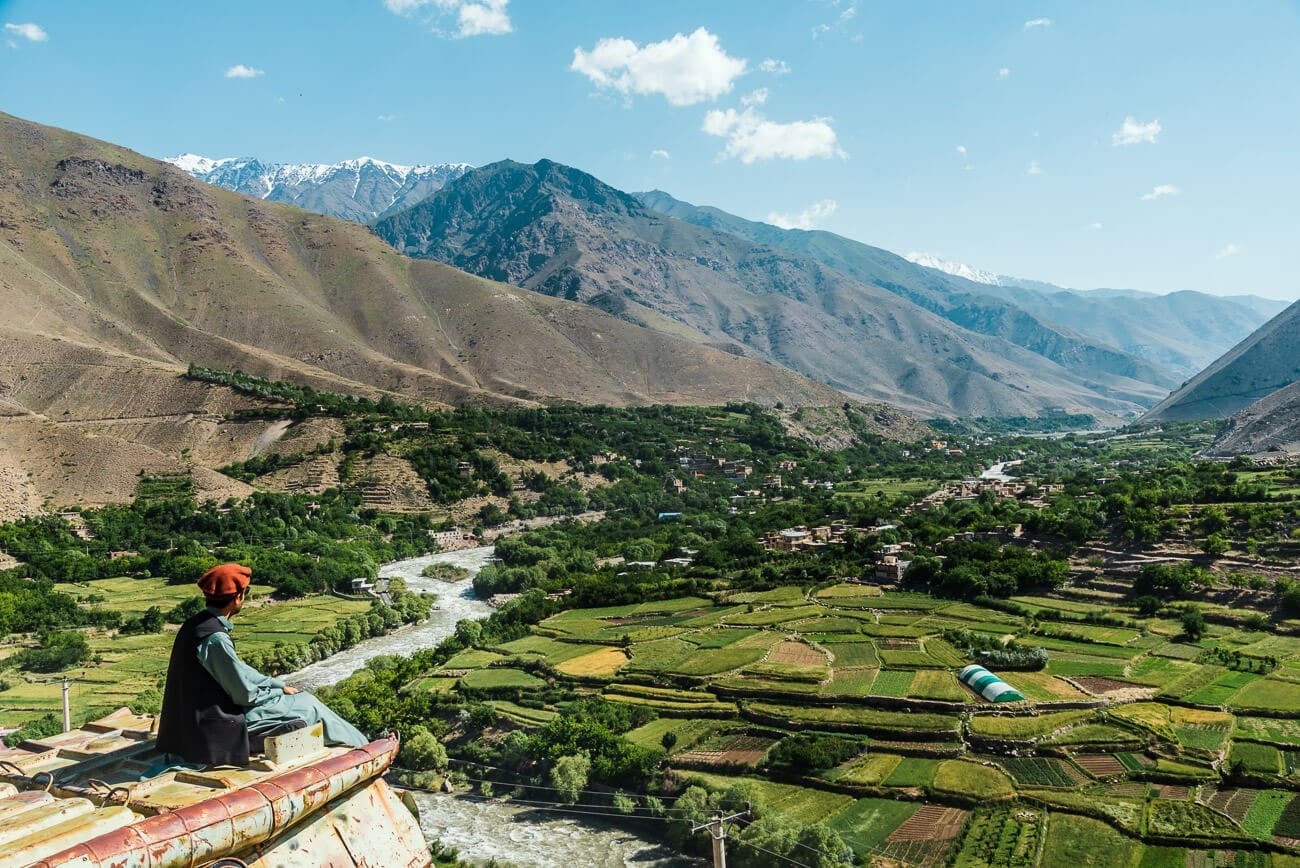
Two waters: the meeting of the Ramgal and the Kolum at the head of the Alingar, and the home of the Mawi kunzite mine.
About Du Ab
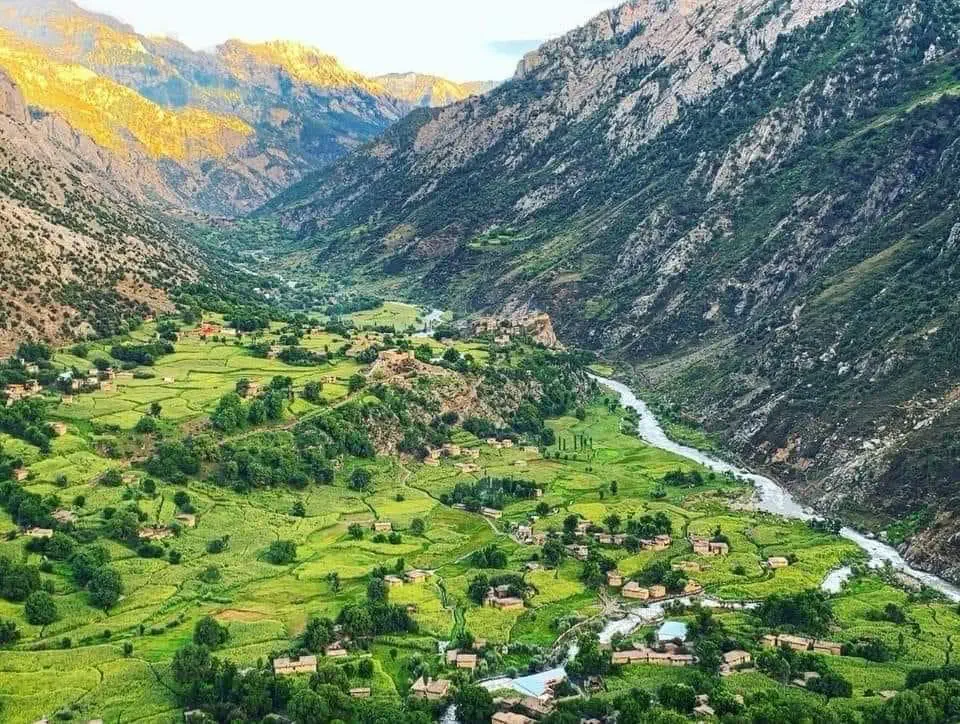
Du Ab means two waters in Persian, and the district holds the meeting of two rivers: the Ramgal, coming down from Mandol, and the Kolum, which join at Dahan-e Piar, at about 1,440 metres, as the headwaters of the Alingar. Robertson heard of the same meeting in 1896, and that the Kolum valley held only four villages. The Kolum is still Du Ab's main valley, climbing north-east past Palagal, Alumari and Surich towards Shirudami and Witsir, under peaks of more than 4,500 metres on its rim. The Bajagal valley comes in from the east a little below the confluence. With about 9,500 people, Du Ab is one of the smaller districts.
Two Nuristani languages meet here. The people of the Kolum valley are Kata, the Kulam Kafirs of Robertson's day, and speak Western Kata-vari, as in Kantiwa and Ramgal; the Bajagal valley speaks Ashkun, in a dialect of its own. In summer Gujar herders bring their animals up to the pastures, and Kuchi herders come up from Laghman.
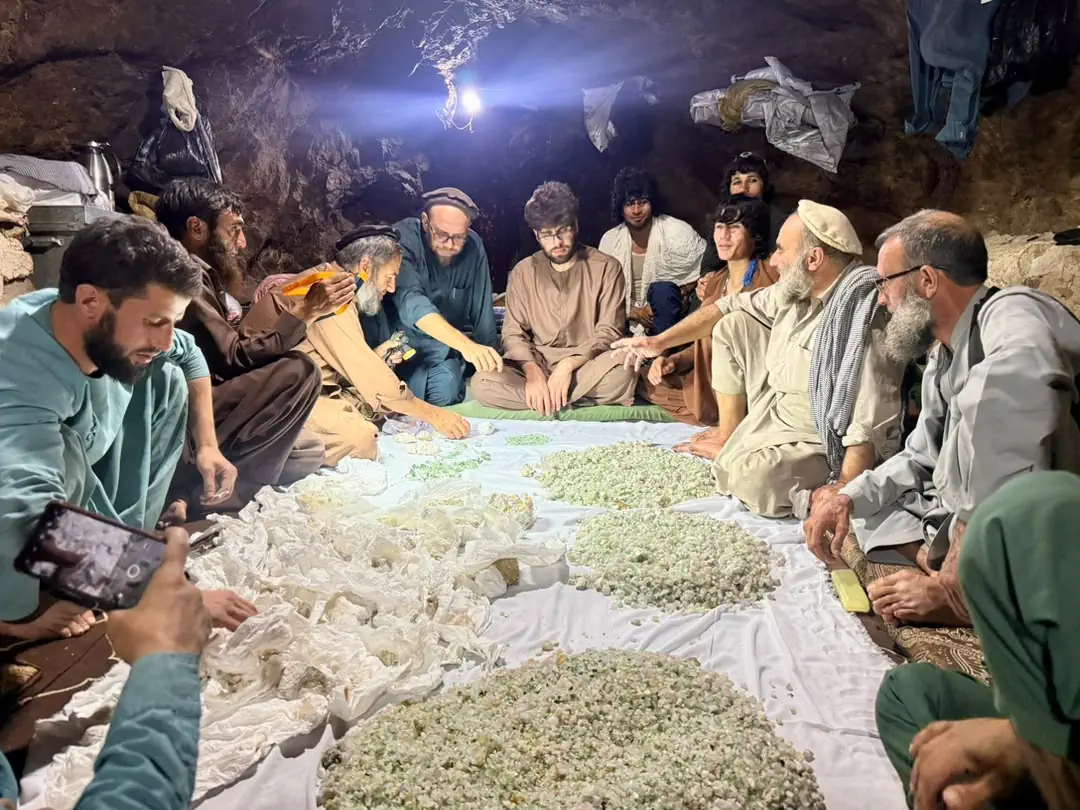
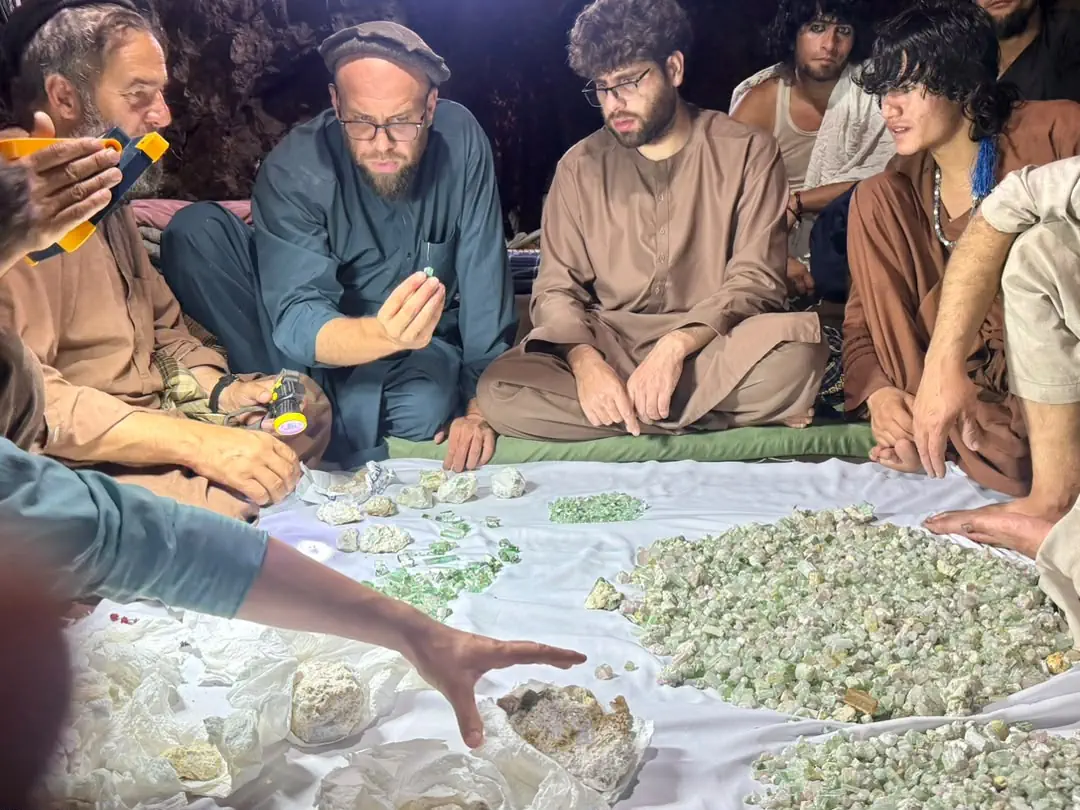
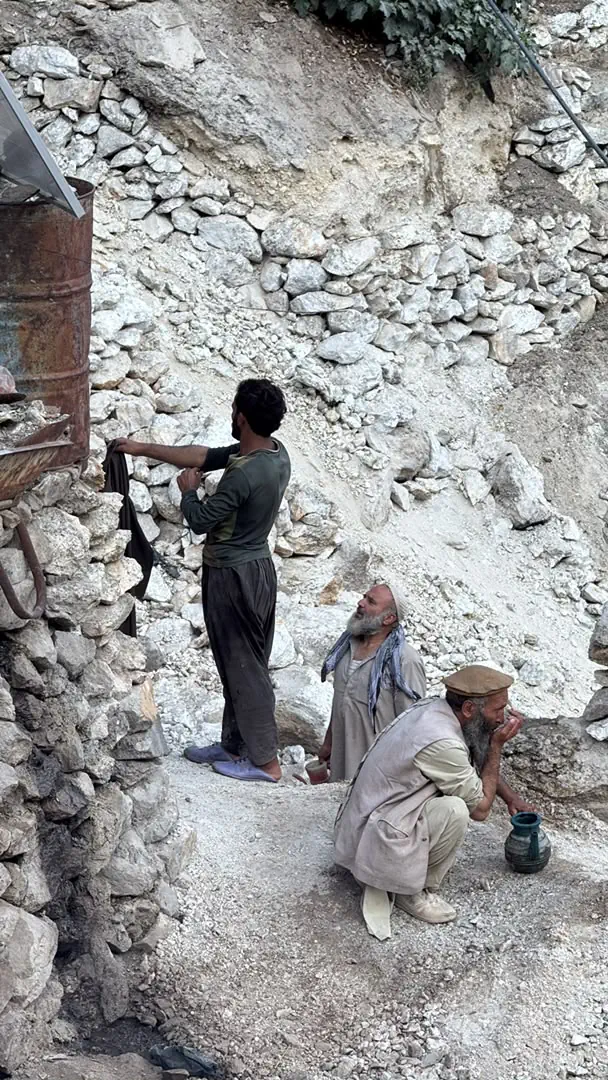
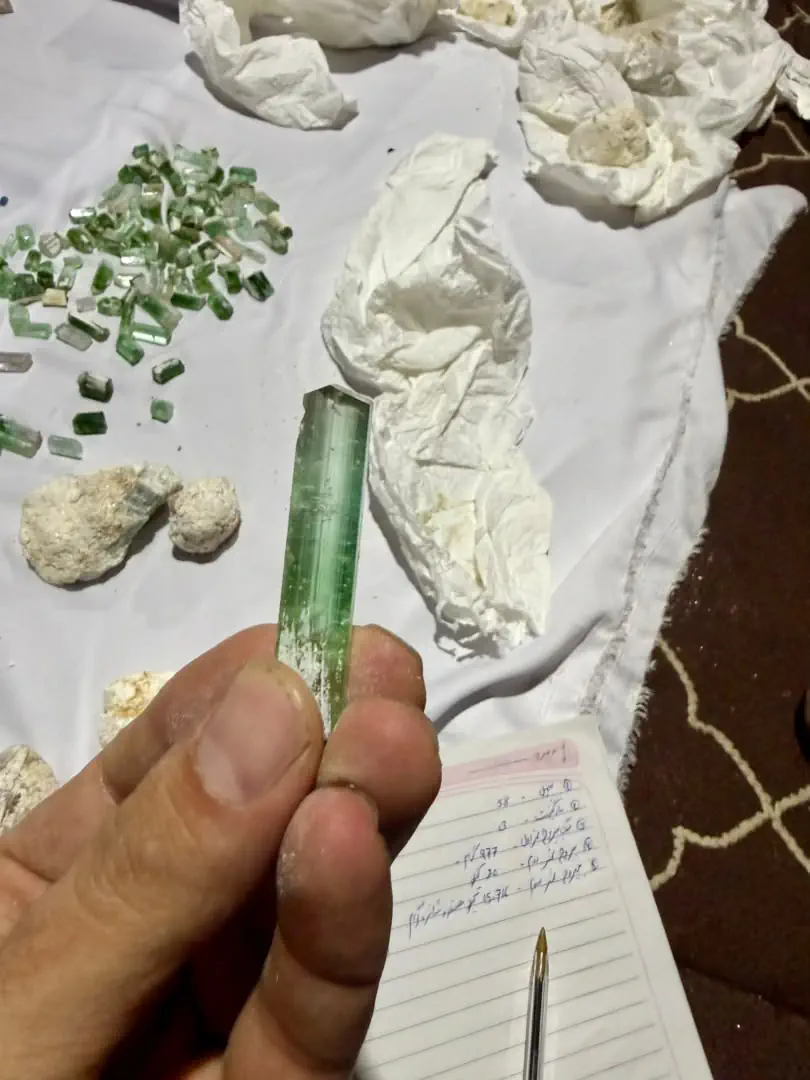
Du Ab is the classic ground of Afghan kunzite. The Mawi mine, in a small western branch of the Kolum valley, and the Kolum pegmatites along the river itself both lie inside the district; Nilaw, the other half of the Nilaw-Kolum field, is just over the line in Mandol. The Kolum deposit is a great vein carrying kunzite, aquamarine, tourmaline and beryl, and Mawi has given fine kunzite since the 1970s. The province now sells the rough at state auction: in September 2025, 9,000 kilograms of beryl, kunzite and morganite from the Mawi mine sold for about 95 million afghanis. The mine is still worked by hand, and the photographs on this page are our own, from a working at Mawi in 2026: the camp on the waste slope, the sorting of the tourmaline rough on a cloth inside the mountain, and the crystals themselves.
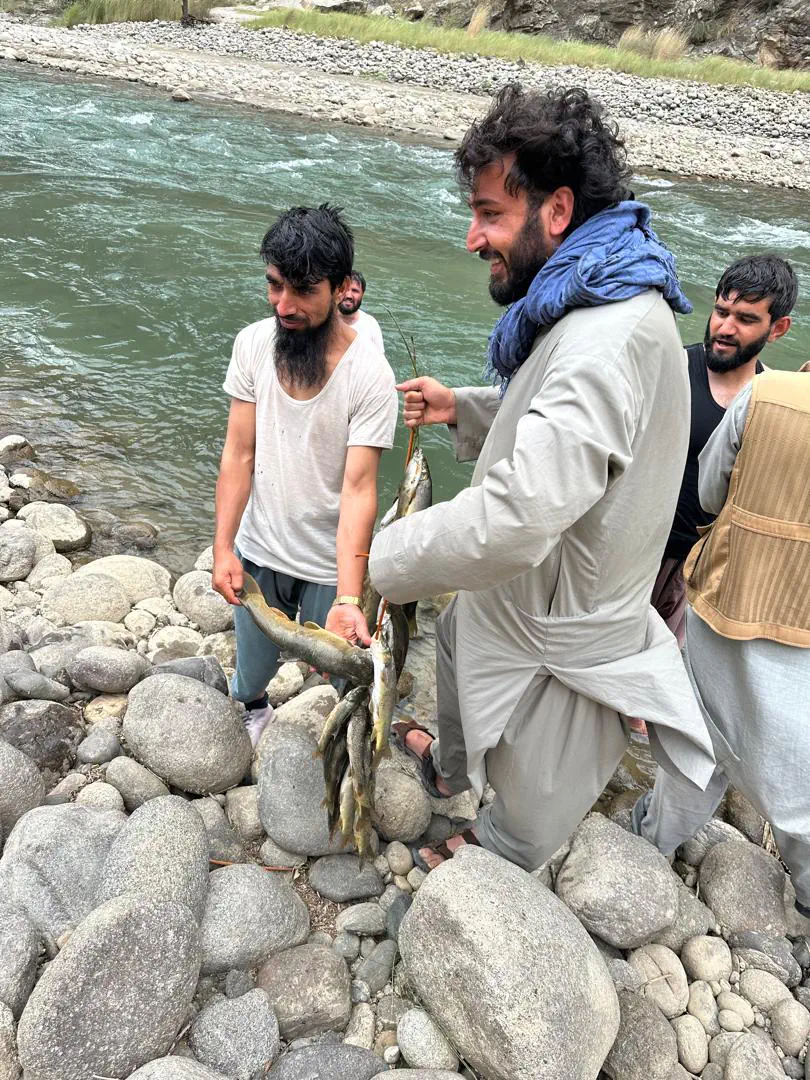
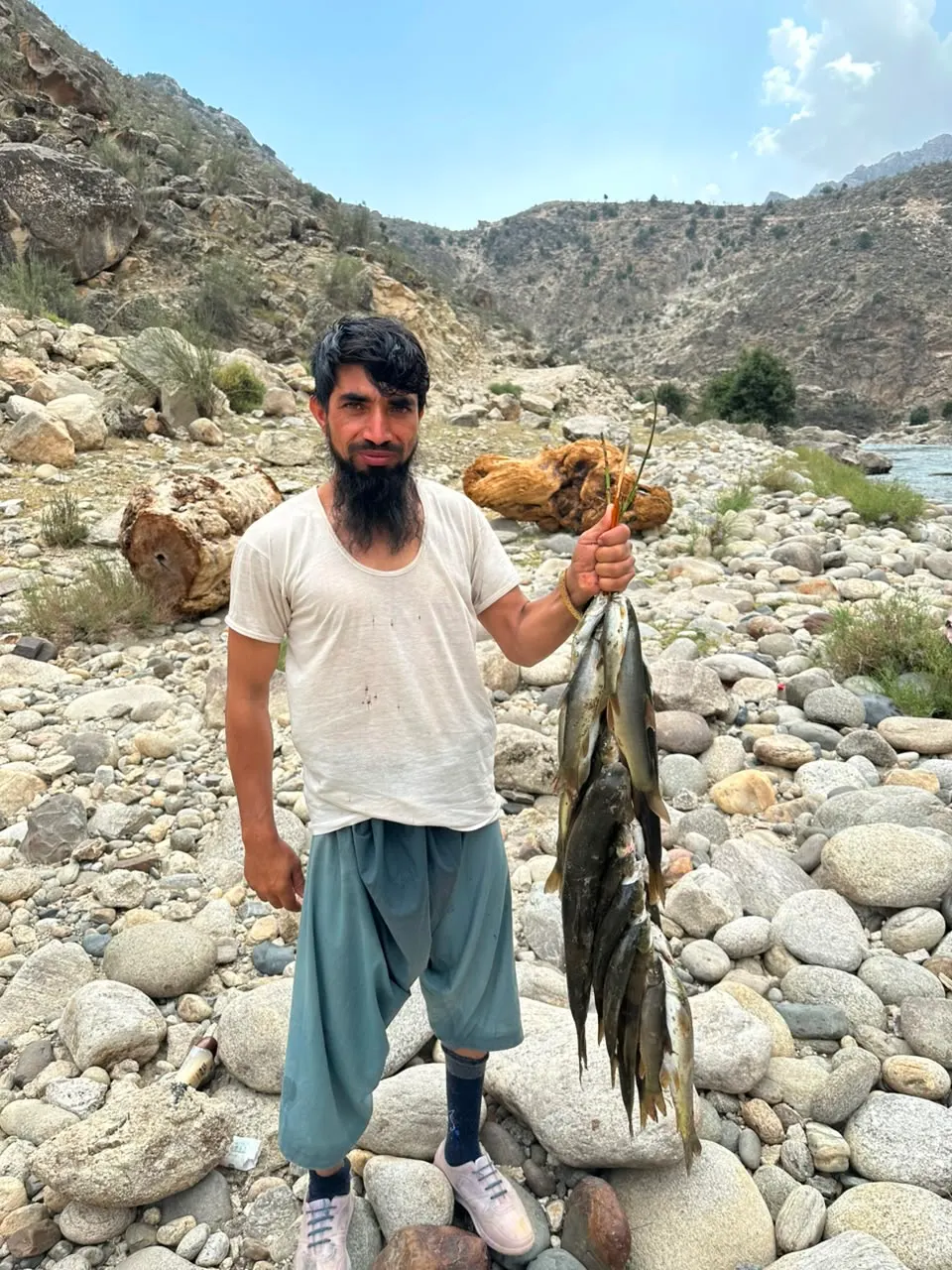
Life is made on very little land. A 2002 survey found that the average family farmed about one jerib, a fifth of a hectare, of corn and wheat, and lived mainly from goats, cows and sheep, on milk, yoghurt and butter. Walnuts grow in the side valleys, one of which, near Surich, is called Chaharmaghz Dara, the walnut valley, and pine nuts come from the forest: in 2022 villagers pooled their pine nuts to pay for a bridge they built themselves. The rivers are fished as well; on the Dani Pajagal, local men bring in strings of fish from the stony banks.
The way in is from Laghman, up the Alingar through Nurgaram to the fork at Dahan-e Piar, where roads go on up the Kolum valley, up the Ramgal towards Mandol, and east into Bajagal. There is no direct road to Parun: in 2023 a resident said the journey to the provincial capital took two days by car, round through the neighbouring provinces. In 2002 it took six or seven days on foot, and people from Mandol carried their sick for a day and a half to reach the clinic in Du Ab.
- Setting
- Western Nuristan, the head of the Alingar
- Rivers
- The Ramgal and the Kolum, meeting at Dahan-e Piar
- Population
- About 9,500 (2024 estimate)
- Languages
- Western Kata-vari in the Kolum valley; Ashkun in Bajagal
- Known for
- The Mawi and Kolum kunzite mines
Other districts of Nuristan
Plan your Nuristan journey
Ready to plan a visit, source Nuristani products, or discuss an investment? Your message goes to Obaid, who is from Nuristan, and his team in Afghanistan and the UK. We reply to every message.