Wama
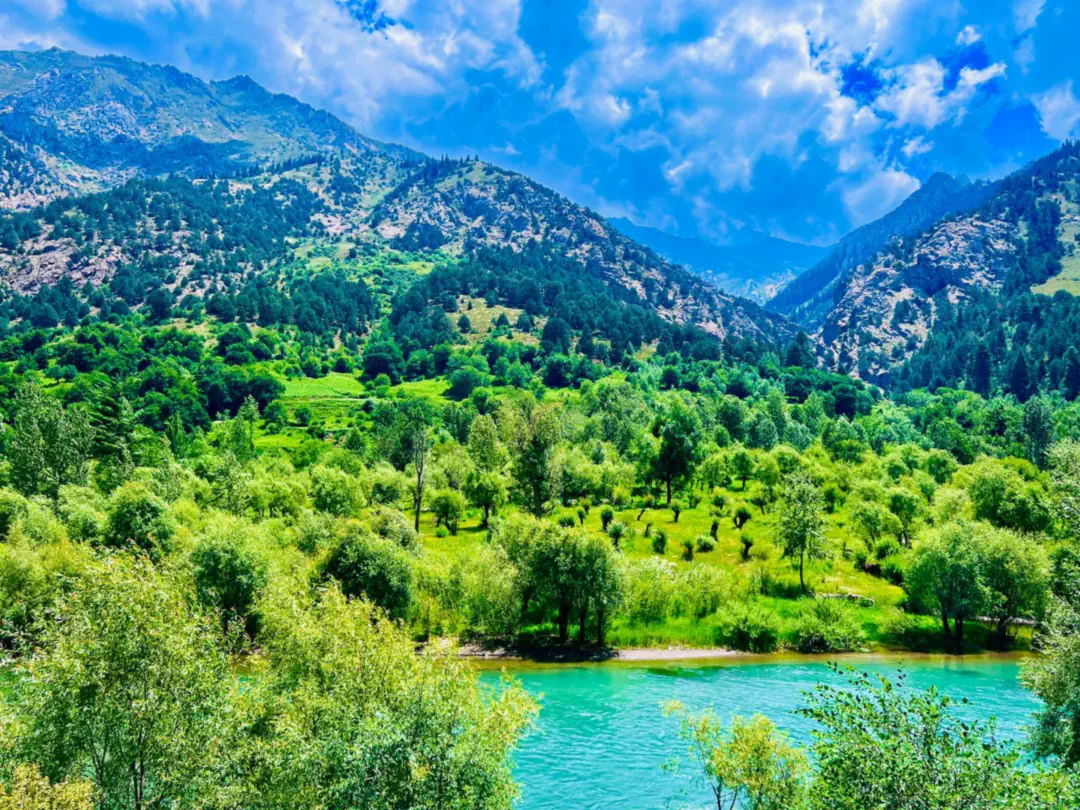
The first stretch of the Pech below Parun: Sanu villages, walnut and pomegranate orchards, and the road up to the capital.
About Wama
Wama is the first stretch of the Pech valley, in the middle of the province, just below Parun. The Pech begins at its northern edge, where the rivers of Kantiwa and Parun meet, and runs south through the district with short side valleys coming in on its right bank, the largest of them Kordar, where the river bends east. Wama is lower and milder than Parun, with fields and pastures at around 1,850 to 2,200 metres, and it grows two crops a year where Parun grows one; the winters are still cold and snowy. Wama village itself stands high on the west side of the valley, well above the river.
Its people are the Sanu, and Wama village is Sama in their own speech; in Waygali-ala it is Shemi. They speak Sanu-viri, the Wama dialect of Ashkun, one of the Nuristani languages, and the outside name Wamai, sometimes used for the whole language, comes from the village. Achanu, further down the valley, has a dialect of its own, and some families in Kordar speak Pashai.
The district appears in the old books under another name. Robertson, writing of 1890 and 1891, calls it Tsaru, the name the Kom of Kamdesh used for the Sanu, and he records that its people had already become Muslims before the conquest of 1896, which made them enemies of the Kom. The Kom themselves tell a story that their ancestors once lived in the Kam Gal, a side valley of Wama, and fled east after a feud. And Wama had an orchard of its own in legend: Indra Kun, said to have been planted by the god Indra.
Until 2004 Wama was a larger district that took in Parun and Kantiwa as well; the redrawing that year gave them districts of their own. Today it has about 13,400 people. Most families live from their animals: a 2008 survey found that livestock, goats, cows and mules, gave Wama households about four-fifths of their income. Maize, wheat and beans grow in small irrigated fields, and the orchards do well, with apricots, pomegranates, persimmons and walnuts. The same survey found that Wama households owned more walnut trees than those of any other district surveyed, nearly twice the average, and Achanu's pomegranates are the best-known fruit of the district. The forests of cedar, pine and holly oak are cut less here than elsewhere: Wama was the only surveyed district where the village councils strictly controlled the felling.
The road to Parun runs through Wama, and for anyone coming up the Pech from Asadabad it is the first Nuristani district on the way. The road is about 120 kilometres from Asadabad to Parun and in poor condition; in January 2025 more than 600 million afghanis were set aside to rebuild its first two sections. A rockslide closed the main road through Wama and damaged a clinic in March 2024, and a UNHCR flood wall now protects the village of Panisha. In July 2026 work began on a drinking-water network for 123 families in Kordar Dara.
- Setting
- Central Nuristan, the first stretch of the Pech below Parun
- Population
- About 13,400 (2024 estimate)
- People
- The Sanu; Sanu-viri, the Wama dialect of Ashkun
- Livelihood
- Livestock; maize, wheat and beans; walnuts and fruit
- Known for
- Walnut trees, Achanu pomegranates, the road to Parun
- Roads and servicesDrinking water network begun in Wama
Other districts of Nuristan
Plan your Nuristan journey
Ready to plan a visit, source Nuristani products, or discuss an investment? Your message goes to Obaid, who is from Nuristan, and his team in Afghanistan and the UK. We reply to every message.