Large, caps over 4 centimetres
Whole, intact caps for restaurants and retail packs. The highest price per kilogram; Chinese exporters quote their 4 to 6 centimetre grade about ten per cent above the next size down.
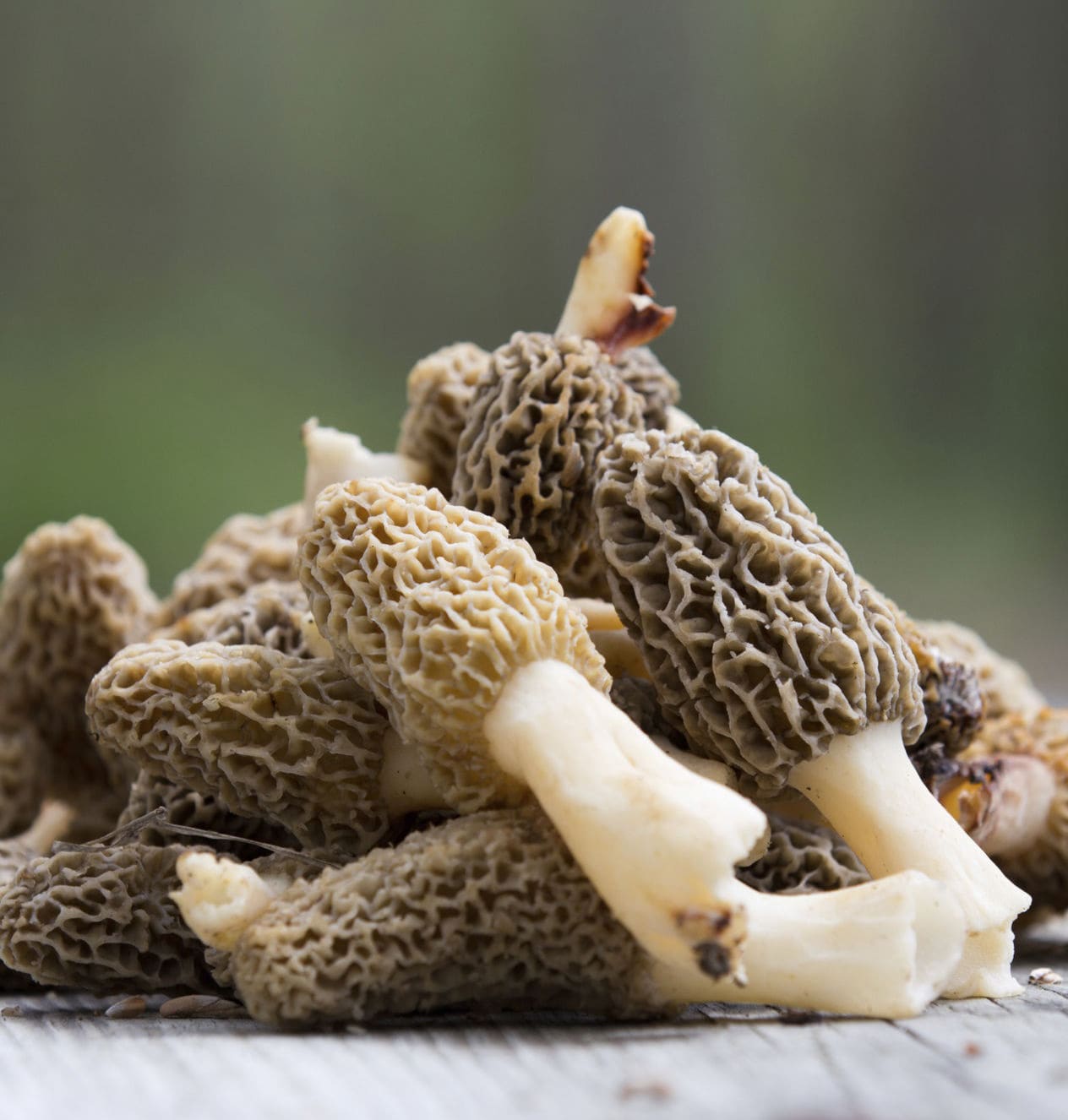
Wild gucchi from the forests of Nuristan, graded by size and moisture, documented from the valley to your warehouse, and bought at the first pair of hands.
Every spring, when the snow leaves the oak and cedar forests of Nuristan, families go up the slopes for gucchi: the wild morel, Morchella, the honeycombed mushroom that chefs in London, Paris and Delhi pay more for than for any other dried fungus. The valleys have gathered and dried them for as long as anyone remembers, and for as long as anyone remembers the dried morels have crossed into Pakistan and left Peshawar under a Pakistani label. The United Kingdom is the biggest buyer of those exports. Almost none of the price reaches the people who picked them.
This page is for food importers, wholesalers, specialist grocers and chefs who want dried morels with an honest origin, graded and documented, bought at the first pair of hands. It sets out where the morels come from and how they are gathered and dried, how we grade them, what the trade pays, what the paperwork and the import rules are for Britain and the European Union, how an order works, and what we will not claim. Walnuts, pine nuts and dried fruit can follow on the same route, but morels are where the value is.
Morels grow wild in the mixed oak, pine and cedar forests of Nuristan and across the Hindu Kush into Kunar, Badakhshan and the Pakistani side of the mountains, fruiting in spring on burnt ground, under dying trees and along the edge of the melting snow, at roughly 1,500 to 3,000 metres. They cannot be farmed in any quantity, which is why they cost what they do. In Nuristan the gathering is women's and children's work as much as men's: a family walks the slopes above its village after the thaw, picks what it finds, threads the caps on string and dries them in the sun or over the hearth. A kilogram of dried morels is about ten kilograms fresh.
The dried mushrooms go to a trader in the district centre, then to Asadabad or Jalalabad, and for fifty years mostly on to Peshawar, where they are sorted, graded and exported as Pakistani. Pakistan declared 394 tonnes of dried morel exports in 2024, with the United Kingdom its largest market at 167 tonnes, ahead of Saudi Arabia, the Emirates, the United States and the Netherlands; its declared imports from Afghanistan in the same year were a single tonne, which tells you how much of the Afghan harvest travels undeclared. Afghanistan's chamber of commerce has put the country's own dried mushroom production at about 200 tonnes a year, from Badakhshan, Kunar and Nuristan; we cannot verify the figure and say so. Collectors in the Hindu Kush are reckoned by the FAO to receive a quarter to a third of the export value.
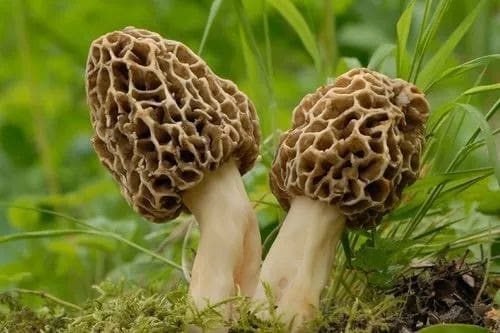
Whole, intact caps for restaurants and retail packs. The highest price per kilogram; Chinese exporters quote their 4 to 6 centimetre grade about ten per cent above the next size down.
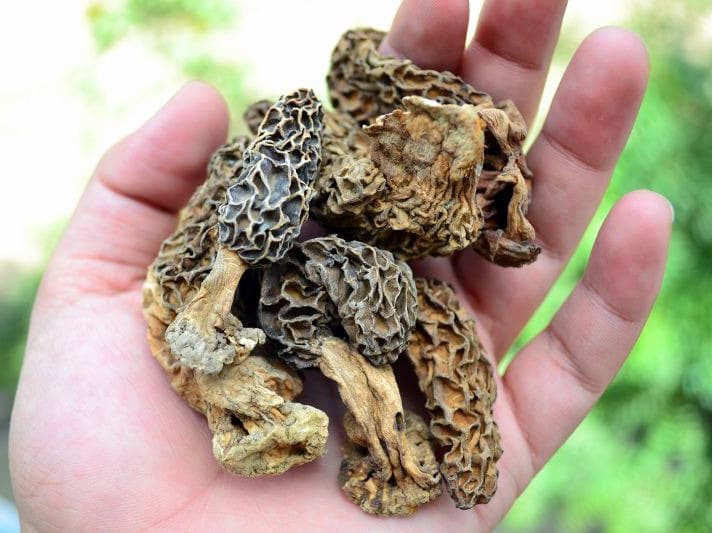
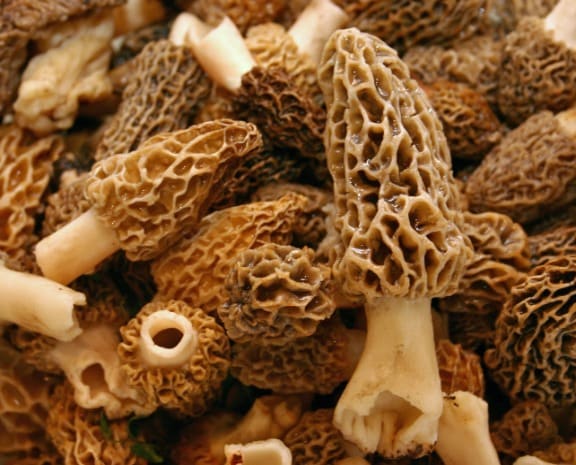
The bulk of a good harvest. Whole caps, some stem. The standard restaurant grade.
Whole small caps and clean pieces, for sauces, stocks and food manufacturers.
Broken caps and trimmed stems, sold by weight for powders and manufacturing. We state the proportion of stem in every lot.
Every lot we offer states cap size, the proportion of stem and pieces, moisture content, and grit. Moisture matters most: morels dried hard in the sun keep for a year; morels sold damp weigh more and spoil. Grit is the second complaint buyers have about Hindu Kush morels, because the mushrooms grow in sandy soil and are dried on the ground; we shake, sort and re-dry before weighing, and we send photographs of the lot with a ruler and a scale before you commit. We do not wash morels, because washing destroys them; the buyer soaks and rinses before use.
Benchmarks from customs data and exporters' published grades, with their dates. We quote per kilogram per grade against this market.
| Item | Price or figure | Source |
|---|---|---|
| Dried morels, Indian export prices, 2024 | 63 to 150 US dollars a kilogram, down from 125 to 219 in 2023 | Tridge, Indian customs data |
| Dried morels, Chinese exporter grades, 2026 | 90 US dollars a kilogram for 2 to 4 centimetre caps; 100 for 3 to 5; 110 for 4 to 6 | Alibaba export guide |
| Dried morels, UK wholesale listing, 2026 | About 15 pounds for a small retail pack; bulk on application | UK wholesale food marketplaces |
| Gucchi at Indian retail | 10,000 to 30,000 rupees a kilogram, up to 40,000 for the best | Village Square; The Better India |
| Pakistan's declared dried morel exports, 2024 | 394 tonnes, 167 of them to the United Kingdom | Tridge, Pakistani customs data |
| Collectors' share of export value in the Hindu Kush | About 25 to 30 per cent | FAO, non-wood forest products |
Dried morels are priced by the kilogram and by grade, and the price moves with the season, the harvest and the exchange rate. We quote per kilogram per grade against the export market at the time, with our terms written on the quote. A buyer who has paid Peshawar prices through two or three intermediaries will find the first pair of hands costs less; a buyer used to cultivated French morels will find wild Hindu Kush morels cost more and taste of more.
Afghan dried mushrooms, nuts and dried fruit enter the United Kingdom and the European Union under ordinary food law. Afghanistan is not on the lists of countries whose produce faces increased official controls at the border, in Great Britain's version of the regulation revised to January 2026 or in the European Union's of July 2025; the listed risks for nuts and dried fruit are pistachios from Iran and Turkey, figs from Turkey and hazelnuts from the Caucasus. Afghanistan has duty-free access to Britain under the Developing Countries Trading Scheme and to the Union under Everything But Arms, so dried morels under tariff heading 0712 carry no duty. Import VAT applies in the normal way, and in Britain most dried mushrooms sold as food are zero-rated.
What the buyer still needs is the ordinary paperwork: a commercial invoice and packing list, a certificate of origin from the Afghanistan Chamber of Commerce and Investment, a phytosanitary certificate from the Ministry of Agriculture, and a laboratory report where you want one for moisture, foreign matter and pesticide residues. We supply as the exporter in Afghanistan; the buyer, or an importer of your choosing, is the importer of record, registered as a food business in your country, and declares the goods on arrival. If you do not have an importer, we can introduce established Afghan-produce importers in Britain who clear such goods every month.
Logistics are the real constraint. The land route through Pakistan has been closed for months at a time in 2025 and 2026 and strips the goods of their Afghan origin on paper, so we ship by air from Kabul, where cargo rates have fallen on the India route and routes to the Gulf and Europe exist through Dubai and Istanbul. Morels are light enough to make that work; walnuts and dried fruit are not, which is why they follow only once a buyer wants them in quantity.
Tell us the grades, quantities and timing you want, and the country you import into.
We assemble the lot after the harvest, sort, re-dry and grade it, and send photographs with a ruler and a scale, plus a sample by courier if you want one.
A written quote per kilogram per grade, with our terms, the documents included, and the shipping and insurance set out.
A laboratory report at your request, from a laboratory in Kabul, Dubai or your own country, at cost.
Payment by bank transfer before shipment or through escrow for a first order; terms for established accounts in writing.
Export documents, air cargo from Kabul, and your importer clears the goods. An acceptance window and return terms are agreed before shipment.
We do not call Nuristan morels organic unless a recognised control body has certified the lot, and none has yet; we do not call them fair trade unless a scheme has audited the chain, and none has. What we can say, and show, is where a lot was gathered, who dried it, what they were paid and what you are paying, which is more than a Pakistani label ever carries. Nor do we promise fresh morels: they do not survive the journey.
From the oak, pine and cedar forests of Nuristan and the wider Hindu Kush, in Kunar and Badakhshan as well, at roughly 1,500 to 3,000 metres, gathered wild in spring and dried in the villages. Most are then exported through Pakistan under a Pakistani label; the United Kingdom was the biggest buyer of Pakistan's dried morel exports in 2024.
Indian exporters sold dried morels at 63 to 150 US dollars a kilogram in 2024, and Chinese exporters quote 90 to 110 dollars a kilogram by cap size in 2026; Indian retail runs from 10,000 to 40,000 rupees a kilogram. We quote per kilogram per grade against the export market at the time, with the source of the benchmark given.
Gucchi is the South Asian name for the wild morel, Morchella, the honeycombed spring mushroom of the Himalaya and Hindu Kush. It is gathered wild, cannot be farmed in quantity, and dries well, which is why dried gucchi is one of the most expensive foods in the Indian and Pakistani markets.
Yes. Afghanistan is not on the lists of countries whose produce faces increased border controls in Britain or the European Union, dried mushrooms carry no import duty from Afghanistan under either preference scheme, and the goods enter under ordinary food law with a commercial invoice, packing list, certificate of origin and phytosanitary certificate. The importer must be a registered food business in your country.
By cap size (over 4 centimetres, 3 to 4, 2 to 3, and pieces), with the proportion of stem, the moisture content and the grit declared for every lot, and photographs with a ruler and a scale sent before you commit. We sort, shake and re-dry before weighing; we do not wash morels.
None fixed. Air cargo makes small lots possible and the harvest makes large ones uncertain, so lot sizes are agreed per order. Tell us the grades, quantity and timing and we will say what the season allows.
They are wild and gathered without cultivation, but no lot can be sold as organic unless a recognised control body has certified it, and none has yet certified ours. We describe them as wild-gathered and say exactly where they came from.
Not fresh morels, which do not survive the journey. Walnuts, pine nuts, dried mulberries and apricots from the valleys can follow by the same route once a buyer wants them in quantity; their weight makes air freight harder, so they are a second step.
Related: all our services, the food of Nuristan, the forests the morels grow in, wholesale gemstones.
Ready to plan a visit, source Nuristani products, or discuss an investment? Your message goes to Obaid, who is from Nuristan, and his team in Afghanistan and the UK. We reply to every message.