The Nuristanis are a people of a few hundred thousand in the high valleys of eastern Afghanistan, with their own branch of the Indo-Iranian languages and a history apart from every neighbour. Where they come from, what they believe, how they live, and straight answers to the questions people keep asking.
Ask an Afghan who the Nuristanis are and you will get a short answer: the people of the mountains in the east, who were Kafirs until the Amir converted them, who speak languages nobody else understands, and who are known for their timber houses, their independence and, in some families, their fair hair. All of that is true and all of it is incomplete. This is our attempt at a fuller answer, written by Nuristanis and checked against what the scholars have recorded.
The short version
- A people of somewhere between 150,000 and 300,000, almost all in Nuristan province and the neighbouring edges of Kunar and Laghman in eastern Afghanistan, with several thousand in Chitral in Pakistan and a diaspora in Kabul and abroad.
- Speakers of the Nuristani languages, a branch of the Indo-Iranian family in their own right, distinct from Pashto and Dari and from the Indo-Aryan languages across the border.
- Sunni Muslims since the winter of 1895 to 1896, before which their valleys were Kafiristan and kept an ancient religion of many gods.
- Organised by village, clan and tribe, with a way of life built on goat herding by the men and terraced farming by the women.
- Descended from the ancient population of the Hindu Kush, not from the soldiers of Alexander the Great, whatever the brochures say.
Where Nuristanis live
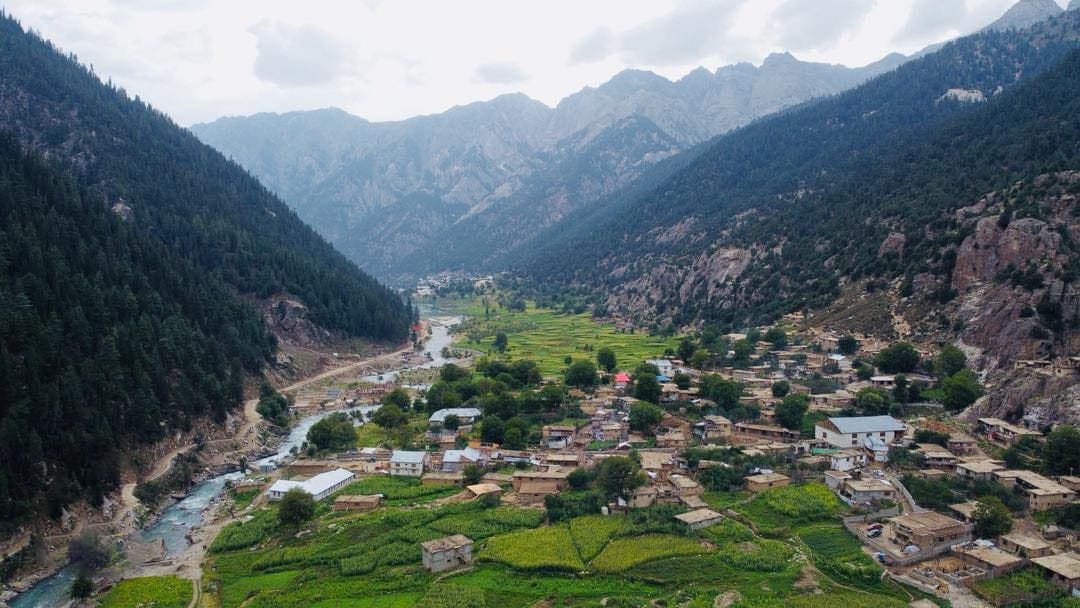
The Nuristani homeland is the block of steep valleys on the southern side of the Hindu Kush between the Panjshir and the Kunar, roughly the basins of the Alingar, Pech and Bashgal rivers. Since 1993 most of it has been Nuristan province, whose population the government estimated at about 175,500 in 2024. Not everyone in the province is Nuristani, and not every Nuristani lives in it. Pashai, Gujar and Pashtun communities live along its lower edges, while Nuristani-speaking villages lie outside the provincial line in the Tregam valley of Kunar, and generations of Nuristanis have settled in Kabul, in the Kapisa and Laghman lowlands, and in cities abroad.
Across the eastern passes, in Chitral in Pakistan, Kati-speaking Nuristanis live in villages settled by families who fled the conquest of the 1890s. A 2019 survey of that community put its number at 12,000 or more.
Estimates for the whole people range widely because no census has ever counted Nuristanis as such. Encyclopaedia Iranica gives probably more than 150,000, Britannica more than 100,000, and other sources go up to 300,000. Something between 150,000 and 300,000 is the honest answer.
The tribes and their valleys
Nuristanis did not, traditionally, call themselves Nuristanis at all. The name was given in 1896 along with the province. People identify by tribe, valley and village, and the tribes map closely onto the languages. In the north and east, in the Bashgal, Kantiwa and Ramgal valleys, are the Kata, the Kom of Kamdesh, the Mumo and the Kshto, whose dialects are grouped as Kamkata-viri. In the Parun valley are the Vasi, called Prasun by outsiders, with a language so distinct that early scholars doubted it belonged to the family. In the south are the Kalasha of the Waygal valley, the Ashkun and Sanu of the Pech and its side valleys, and the small Tregami group of three villages on the lower Pech.
Their Muslim neighbours once sorted the Kafirs by the colour of their clothes: the Siah-posh, the black-robed, in the Bashgal, and the Safed-posh, the white-robed, further west. George Scott Robertson, who lived among the Kom in 1890 and 1891, counted well over thirty local groupings once the smaller valleys were included. To this day a Nuristani will tell you their valley before their province.
Read more
Where do the Nuristani people come from?
The clearest evidence is the language. The Nuristani languages split from the common Indo-Iranian stock before the Iranian and Indo-Aryan branches separated, which means their speakers have been a distinct people for something like three thousand years. They are not Persians who drifted east, nor Pashtuns who took to the hills. They are a remnant of the ancient Indo-Iranian population of the Hindu Kush, who kept their languages and their gods because the mountains let them.
How they came to be in these particular valleys is less certain. Robertson thought they were the old population of the eastern Afghan lowlands, who retreated into the mountains as Islam advanced between the eighth and eleventh centuries and absorbed or displaced whoever was already there. Later scholars have argued that the Nuristanis were mountain people all along and never migrated at all. Both views agree on the point that matters: the Nuristanis were here long before the Muslim conquests, and long before Alexander.
Are Nuristanis descended from Alexander the Great?
No. The story that the Kafirs were the children of Alexander's Macedonians, who crossed the Hindu Kush in the 320s BC, was written down by nineteenth-century travellers, dramatised by Rudyard Kipling in The Man Who Would Be King, and is still repeated by tour operators on both sides of the border. The surgeon and ethnographer H. W. Bellew, Robertson himself and every serious scholar since have dismissed it. The languages are Indo-Iranian, not Greek. The old religion had Vedic and Iranian roots, not Olympian ones. And Alexander's own historians recorded his army marching through these mountains, not settling in them.
What genetics says
Very little has been published on Nuristani DNA specifically, and what exists rests on a handful of samples, so treat any confident claim with suspicion. A 2012 survey of Afghan Y-chromosomes that included five Nuristani men found lineages common across Afghanistan and northern Pakistan, three of them in the R1a group that is widespread among Indo-Iranian speakers. Studies of Afghanistan's populations as a whole find that they share an ancient common heritage and show no particular link to the Balkans. Nothing yet found supports a Greek origin, and everything found is consistent with what the linguists say: an old local population with old local roots.
Why do some Nuristanis have fair hair and blue eyes?
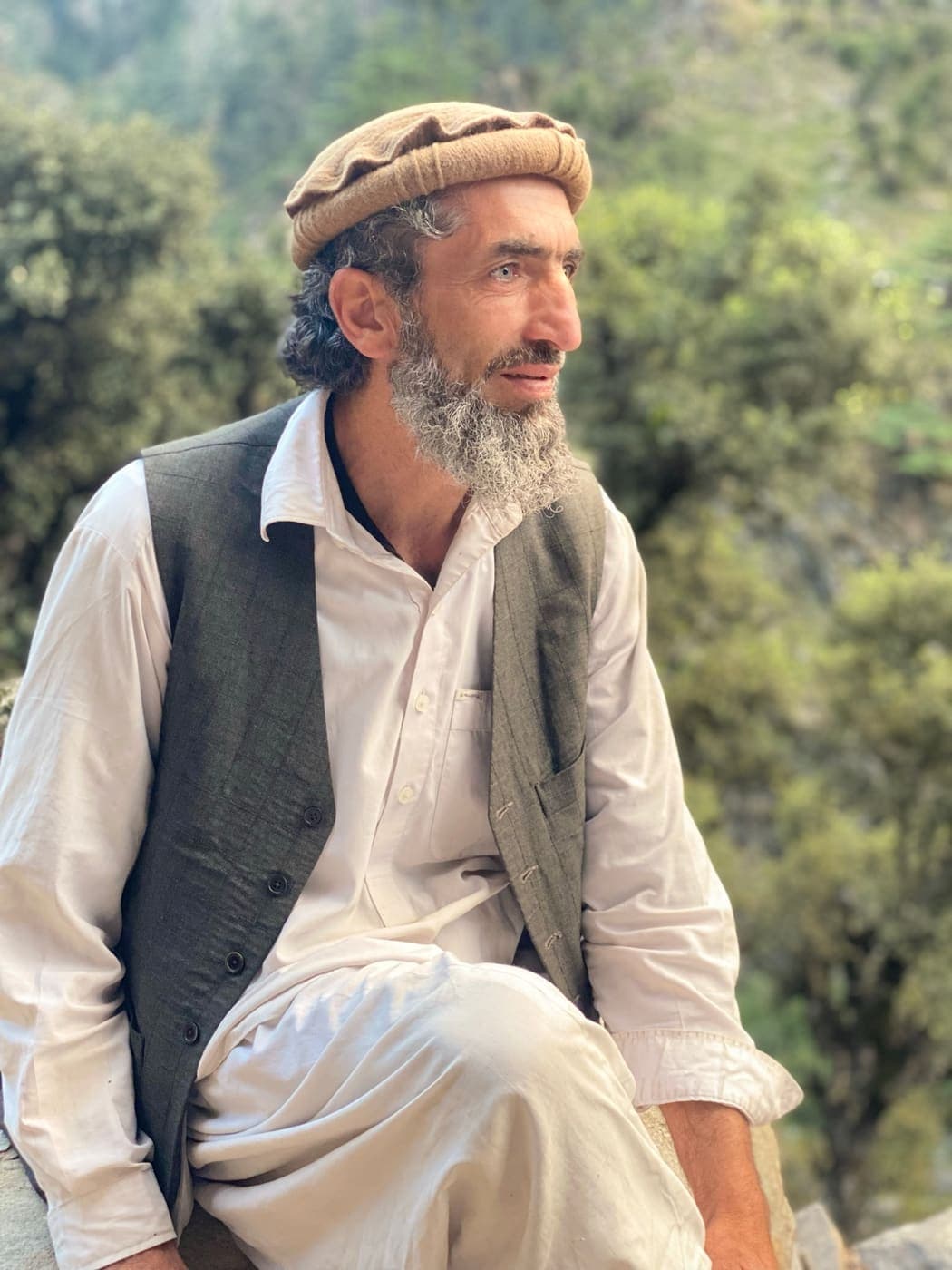
This is the question the internet asks most, so here is a plain answer from people who grew up in the valleys. Some Nuristanis have fair or red hair and blue or green eyes. Most do not. Walk through any village in Nuristan and you will see every shade, with dark hair and brown eyes the commonest by far, and the same is true of the neighbouring Pashtuns of Kunar, the Kalash of Chitral and the peoples of the Pamirs. Light colouring is a little more frequent in the Hindu Kush than in the rest of Afghanistan, and it is more noticeable because visitors come looking for it.
The looking has a history. A German expedition of 1935, sent in the racial spirit of its decade, crisscrossed Nuristan measuring heads in search of what its report called genuine Aryan features, and the notion of a lost European tribe has trailed the Nuristanis ever since. The truth is duller and older. Fair colouring turns up across the ancient Indo-Iranian world and in isolated mountain populations everywhere, where small communities marrying among themselves keep traits that would be diluted in a city. It is not evidence of Greeks, Germans or anyone else. It is what a few thousand years in high valleys does.
What Nuristanis believed before Islam
Until 1896 the valleys followed a religion of many gods with roots in the same ancient world as the Vedic hymns and the oldest Iranian texts. Imra, called Mara in Parun, was the creator; Gish was the god of war; Disani, Bagisht, Moni and Indr had their own shrines and festivals, and every village and clan kept a guardian deity. Worship meant the sacrifice of goats at open-air altars, juniper smoke, feasting and dance, and a strict sense of what was pure and impure that placed the mountains and the herds on one side and the valley floor on the other. A man rose in society by giving feasts to his whole village, and the honoured dead were remembered with carved wooden effigies set up outside the settlements. The temple of Imra at Kushteki in the Parun valley was the largest religious building in the country, and pilgrims came to it from every valley.
- Kafiristan: the history of Nuristan before 1896The gods, the feasts, the conquest of 1895 and what survived.
Nuristanis and Islam today
Since the conquest of 1895 to 1896 Nuristanis have been Muslims, and in the century since they have become known as devout ones. Mosques stand in every village, and the carpenters who once built shrines carved their columns. Islam in Nuristan is Sunni. In the northern valleys it has taken a stricter turn since the 1970s, with madrasas and preachers arriving by way of Pakistan, and the music and dancing that Robertson described at every festival are far rarer than they were. At the same time the memory of the Kafir past is not hidden. Elders know the names of the old gods, families remember which clan kept which temple, and the old words for purity and honour still shape how people behave. Nuristanis are Muslims, and they are the heirs of Kafiristan. Neither part of that sentence embarrasses anyone in the valleys.
The languages
Nuristanis speak five languages, or six on some counts: Kamkata-viri, Kalasha-ala, Ashkun, Tregami and Prasun. Together they form a branch of the Indo-Iranian family that stands beside Iranian and Indo-Aryan rather than inside either, which is why a Persian speaker and a Pashto speaker are equally lost in a Nuristani village. None has a script in daily use; the literature is spoken and sung. Almost every Nuristani also speaks Pashto or Dari, and many speak both, so the languages of the valleys survive at home while the languages of the plains do the business of school and government.
How Nuristani society works
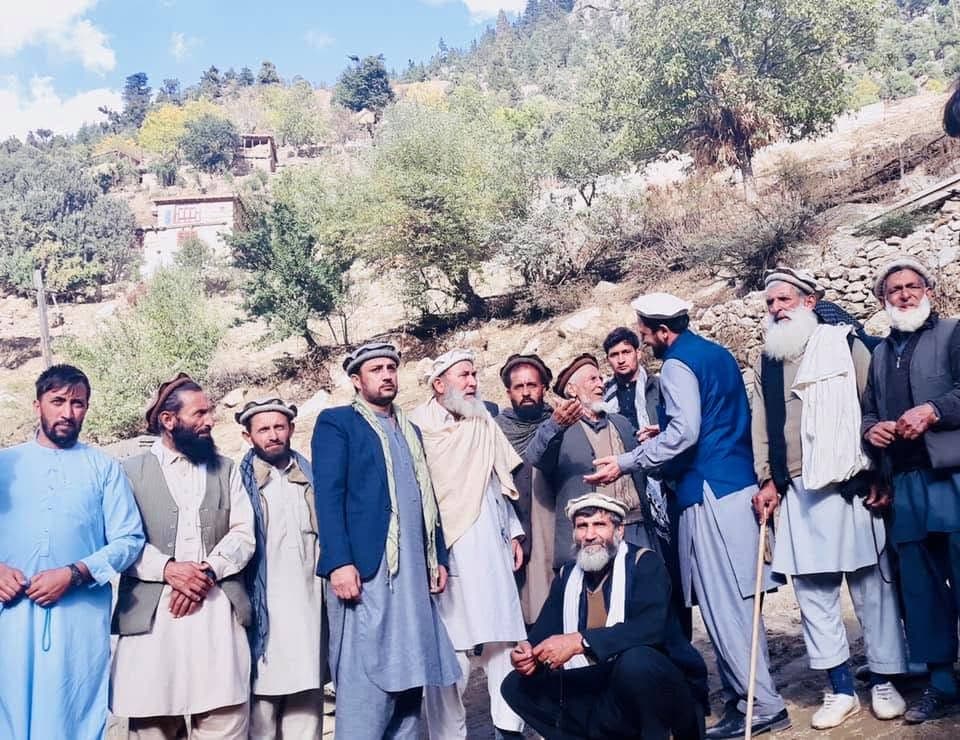
The village is the unit that matters. Each has its clans, its elders and its council, and for most of history each ran its own affairs, made its own alliances and fought its own feuds. Britannica's description is fair: intensely loyal to their own people, and strongly attached to their independence. The Afghan state has governed Nuristan lightly at the best of times, and in the long absence of any central authority the old mediating bodies of elders have come back into use, settling disputes over land, water and honour much as their grandfathers did.
Two things shaped the old society and still shape the new. One is rank earned by giving. In Kafiristan a man rose by hosting feasts for his whole village, and that is why generosity to a guest is still a matter of honour rather than manners. The other is a division between the landowning families and a hereditary class of craftsmen, the bari, who did the carving, smithing, pottery and weaving. The bari were once bound to the families they served and were treated as impure by the old religion. Islam removed the religious basis for that and the twentieth century removed the bondage, but the distinction has been slow to fade, and it is one of the things Nuristanis argue about among themselves.
Women and men: who does what
Visitors are often surprised to learn that farming in Nuristan is women's work. In the traditional division of labour the men keep the goats and cattle, taking them up to the high pastures each summer and bringing them down in autumn, while the women grow the wheat, maize, barley, millet and beans on terraced plots often no bigger than a room, and gather the firewood. Men provided milk, butter, cheese and meat; women provided bread. The pattern comes from the old religion, which classed the mountains and the herds as pure and the valley soil as the women's domain, and it has outlasted the religion by more than a century. It is changing now, as roads bring shops, schools and wage work, but in most villages the woman in the field and the man on the mountain are still the shape of the year.
Nuristani women are known across Afghanistan for their embroidery, worked in bright thread onto dark dresses and headscarves, and for a directness in speech that visitors from the plains notice. Their lives are hard, as mountain lives are, and the schooling and health care available to them are among the poorest in the country: the clinic in Parun had no female doctor on the night of the July 2026 flood. Anyone who wants to help Nuristan does well to start there.
Dress
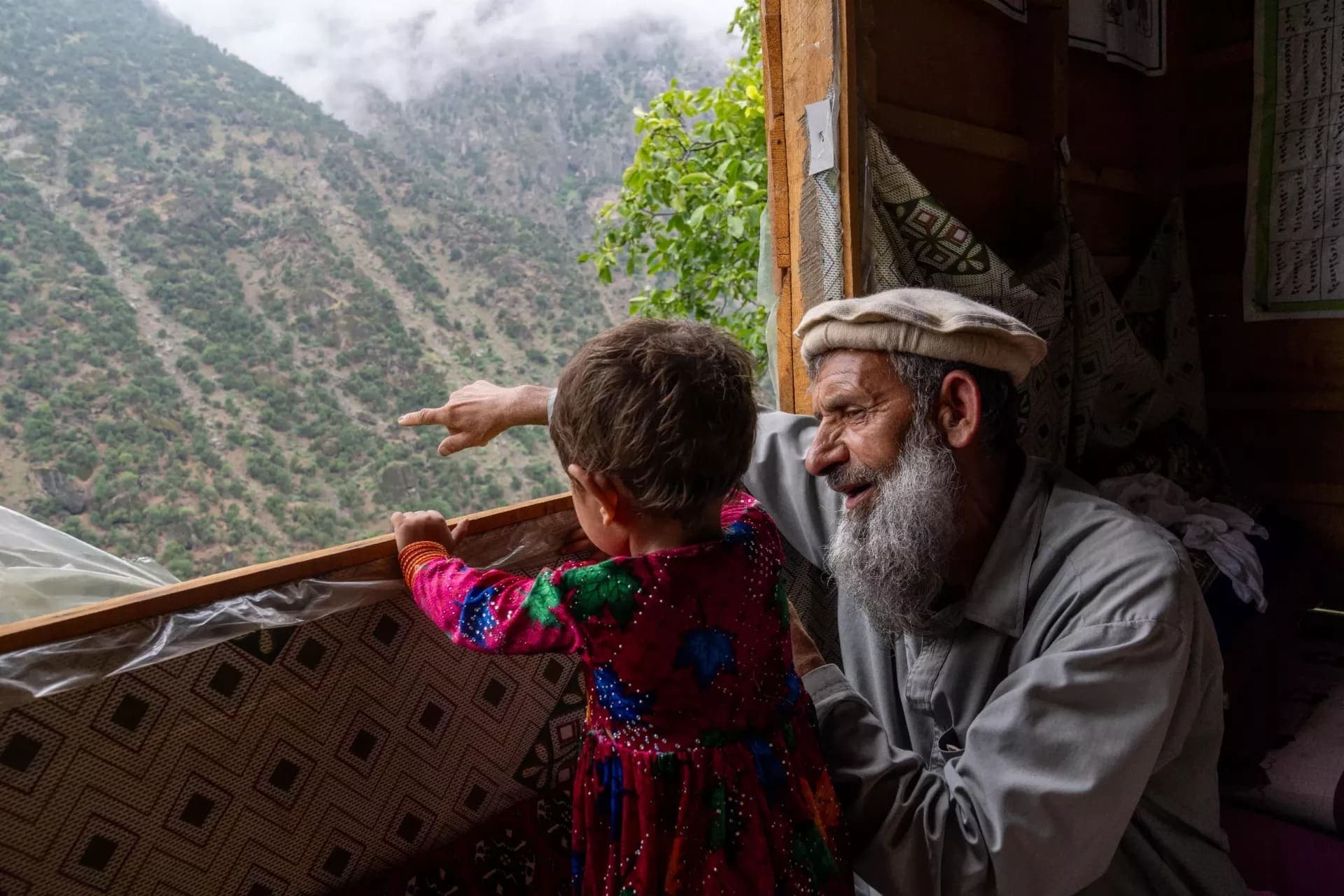
Nuristani men wear the long shirt and loose trousers common to Afghanistan, with a waistcoat and a shawl against the cold, and on their heads the pakol, the rolled-wool cap that came over the passes from Chitral after the conquest and has been Nuristani ever since. Women wear long dresses worked with embroidery and a headscarf, brighter and more heavily decorated than most in the country. Before 1896 the men of the Bashgal wore robes of black goat hair, which is how the Siah-posh got their name, and the older photographs in Robertson's book show a dress that has almost entirely gone.
Character and reputation
For a thousand years the Kafirs had a fearsome reputation among their neighbours, and they earned it. They raided the Muslim villages of the Kunar, counted their killings, and were left alone by every empire that passed. The other side of the same coin was, and is, an extraordinary hospitality: a guest in a Nuristani house is fed first and asked questions afterwards, and a promise of protection is kept. Nuristanis are proud, plain-spoken, slow to forget an insult and slower to forget a kindness. Everyone who has lived among them, from Robertson onward, has said the same thing.
Nuristanis in Afghanistan's story
Since 1896 Nuristanis have served the Afghan state in numbers out of proportion to their population, especially in the army, where the surname Nuristani became familiar on officers' lists. General Mohammed Issa Nuristani, a community leader of the Safed-posh, commanded the Central Army Corps and led some of the first Nuristani resistance to the Soviet invasion in 1979, and was killed early in that war. Nuristan itself was among the first parts of the country to rise against the communist government in 1978, and its valleys were never held by the Soviet army. The surname you will meet in Kabul, London and Los Angeles, Nuristani or Nooristani, simply means someone from the province, and it is worn with some pride.
Questions people ask
Are Nuristanis Pashtuns?
No. Pashtuns speak Pashto, an Iranian language, and live around Nuristan on three sides. Nuristanis speak their own languages and have a separate history, religion before Islam and culture. Most Nuristanis speak Pashto as a second language, which is where the confusion comes from.
What religion are the Nuristani people?
Sunni Islam, since the conversion of 1895 to 1896. Before that the valleys followed an ancient polytheistic religion, the last of its kind in the region, which survives today only among the related Kalash of Chitral.
Are the Nuristanis and the Kalash the same people?
Cousins, not the same. The Kalash of Chitral kept the old religion because they were on the British side of the 1893 border. Their language is Indo-Aryan rather than Nuristani, but their customs, feasts and gods were closely related to those of the eastern Kati, and the Waygal Nuristanis still call themselves Kalasha.
How many Nuristani people are there?
Between roughly 150,000 and 300,000, depending on the source and on whether the diaspora is counted. Nuristan province itself had an estimated 175,500 people in 2024.
Why is Nuristan called the Land of Light?
Because Amir Abdur Rahman Khan renamed Kafiristan, the land of the unbelievers, as Nuristan, the land of light, when its people were converted to Islam in 1896. The light meant the light of the faith.
Sources
- Max Klimburg, Nuristan, Encyclopaedia Iranica (2004, updated 2012)
- Encyclopaedia Britannica: Nuristani
- Encyclopedia of World Cultures: Nuristanis (encyclopedia.com)
- Wikipedia: Nuristanis
- Richard Strand, Nuristan: Hidden Land of the Hindu-Kush (the peoples and their languages)
- Haber et al., Afghanistan's Ethnic Groups Share a Y-Chromosomal Heritage Structured by Historical Events, PLOS ONE 2012
- George Scott Robertson, The Kafirs of the Hindu-Kush (1896), full text at the Internet Archive
- Wikipedia: Mohammed Issa Nuristani