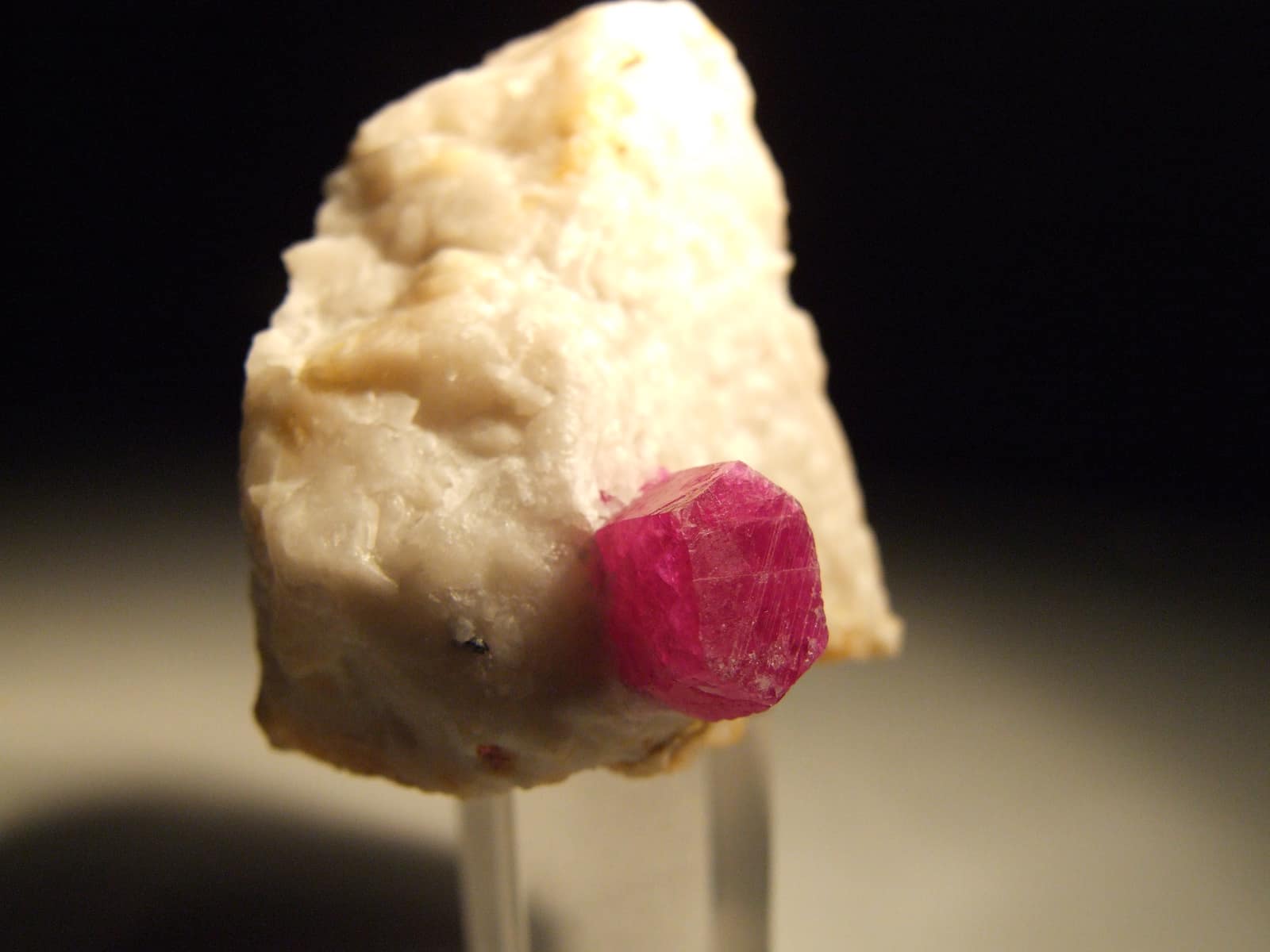
Afghan ruby
Ruby and pink sapphire from the Jegdalek marble east of Kabul: what the mines give, how a laboratory knows the stone, how it is treated and faked, what it sells for, and how to buy it.
Mogok's cousin, in smaller measure
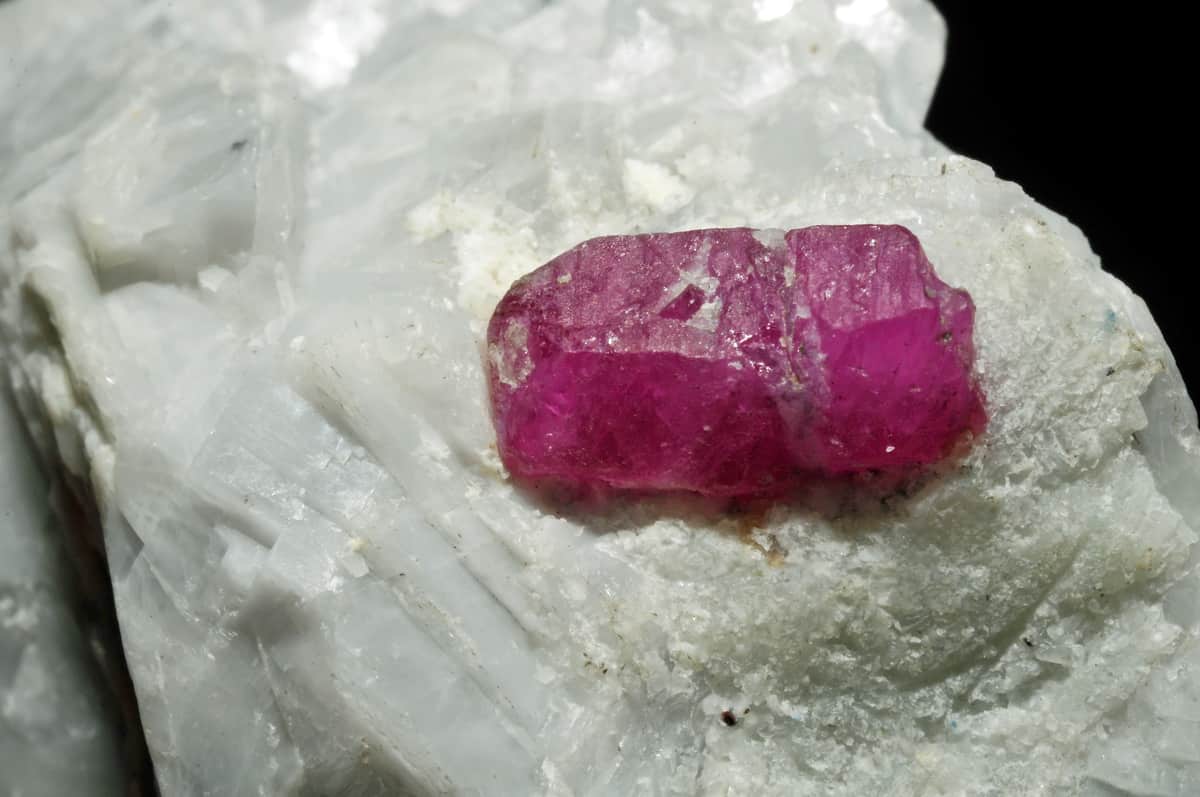
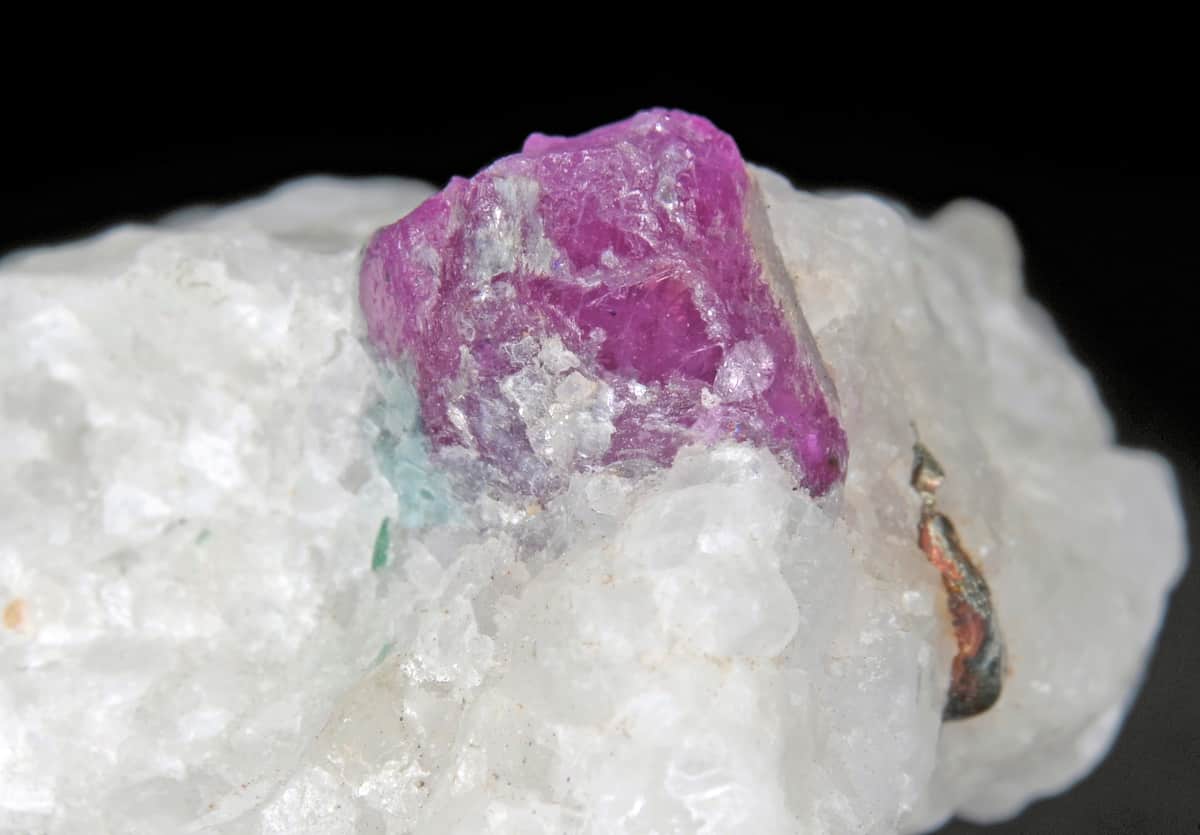
Afghan ruby comes from one place: the marble hills of Jegdalek in Sorobi district, east of Kabul, where ruby and pink sapphire have been dug from white calcite marble since at least the nineteenth century and traded, by the old accounts, since the Mongol khans. The best stones have been compared with Burma's Mogok, with the same low iron and the same strong red glow under ultraviolet light, and a blue zoning in some crystals that marks them as Afghan. Most of the production is pink sapphire rather than ruby, only a small fraction cuts clean, and fine stones over five carats are rare.
This page is for people thinking of buying it. It covers the mines and what is in them, how a laboratory tells Jegdalek ruby from Burmese and African stone, how it is heated and glass-filled and the fakes sold under its name, what it sells for with the source and date of every figure, who controls the mine now and how the stones leave, and the law, including why Burmese ruby is barred from the United States and Afghan ruby is not. We are from Nuristan; Jegdalek is a day's drive from our valleys, and we source its ruby at first hand and sell it as what it is, Jegdalek ruby.
- Where
- Jegdalek, Sorobi district, Kabul province, east of Kabul
- Altitude
- Workings at 1,550 to 2,000 metres; open all year
- The rock
- Pure calcite marble cut by Oligocene granite
- What comes out
- About 15 per cent ruby, 75 per cent pink sapphire, 5 per cent blue
- Facetable
- Only about 3 per cent of the corundum; fine stones rarely over 5 carats
- Signature
- Strong red fluorescence, low iron, blue colour zoning in some stones
- Treatment
- Unheated at the mine; often heated or glass-filled downstream
- Contract
- Awarded to a private company in February 2024, 44 per cent to the state
Jegdalek: marble, granite and two thousand pits
The Jegdalek deposit lies in the southern part of Sorobi district, about 60 kilometres east-south-east of Kabul as the crow flies and four to six hours by road, with the workings between 1,550 and 2,000 metres. The ruby grows in beds of almost pure calcite marble hundreds of metres thick and up to eight kilometres long, cut by granite dikes of the Laghman complex about thirty million years old, the same granites whose pegmatites give Nuristan its tourmaline. Some twenty named workings and more than two thousand pits spread across an area the Afghan press puts at fifteen square kilometres; the sub-localities include Lal-Poor, Chongay, Taghar, Warmankai and Mirkalwat, and the Chongay stones run pink and are not the best.
What comes out is mostly not ruby. The GIA's study of 2000 and the British Geological Survey agree on the split: about 75 per cent pink sapphire, 15 per cent ruby, 5 per cent blue sapphire and 5 per cent mixed blue and red crystals, and only about 3 per cent of all the corundum is facetable. Crystals of 174 carats have been seen and good rubies cut to 32 carats, but top-quality stones rarely pass five carats, and the miners' rough is typically semi-transparent pieces of one and a half to three centimetres. Unlike the lapis mines of Badakhshan, Jegdalek can be worked all year.
From the khans to a fifteen-year contract
Merchants were selling Afghan rubies to Kublai Khan in the thirteenth century and could already tell ruby from spinel, which is more than many later buyers managed. The marble of Jegdalek was quarried in 1637 for the Taj Mahal, though whether rubies were taken then is uncertain; the local families say the mines have been theirs since the amirs Dost Mohammad and Sher Ali in the nineteenth century, and a British geologist counted three hundred men working with hammers and chisels in 1886. For most of the twentieth century the Afghan government owned and sporadically worked the mines; the Soviets ran them for a few months after 1979; through the wars local commanders took about five per cent of what came out, and by 2014 the Taliban were reckoned to take as much as 16 million US dollars a year from unlicensed ruby digging in Kabul province, sorting the stones in Peshawar.
In July 2023 the Ministry of Mines put the Jegdalek project out to tender, and in February 2024 it awarded a fifteen-year contract to a private company, Ariana Highland, over 6.9 square kilometres, with an investment of 27.5 million US dollars plus 5 million for local services and a 44 per cent share of the proceeds to the state. How the villagers who have dug the hills for generations fit into that contract has not been published.
The glow, the blue zoning and what the laboratory sees
Jegdalek ruby is a marble-hosted ruby, which puts it in the family of Mogok rather than of Mozambique or Thailand. It is low in iron, so it fluoresces an even medium to strong red under long-wave ultraviolet light, the glow that gives the finest Burmese stones their fire, and the best Afghan stones have been called pigeon's blood in the same breath as Mogok's. The GIA's 2000 study measured chromium as the most variable trace element, with titanium, iron, vanadium and gallium behind it.
Under the loupe the stones carry dense healed and unhealed fractures with a frosted texture, twin planes, and crystals of calcite, apatite, zircon, mica, graphite, rutile and iron sulphides, the sulphides lining the fractures and twin planes. Colour zoning is common, and the most striking feature, reported by every study since 1985, is a strong blue zoning in some rubies: red or pink stones with blue cores, bands or patches, which no other major source shows in unheated stone. The GIA's 2019 origin work describes fine rutile needles and fine particulate clouds in angular or hexagonal patterns in Afghan rubies, distinct from the milky clouds of Vietnam and the coarser silk of Mogok. Laboratories including Lotus Gemology in Bangkok issue reports naming Afghanistan as origin; so, for ruby, does GIA. Aluminium hydroxide in the infrared spectrum tells a laboratory the stone has not been heated.
Three rubies compared
| Aspect | Afghan, Jegdalek | Burmese, Mogok | Mozambique |
|---|---|---|---|
| Rock | Calcite marble, Jegdalek | Marble, Mogok | Amphibolite and other rocks, Mozambique |
| Iron and glow | Low iron; strong red fluorescence | Low iron; strong red fluorescence | Higher iron; weaker fluorescence |
| Tell-tale | Blue zoning in some unheated stones; sulphides on fractures | Coarser rutile silk; the classic pigeon's blood | Cleaner, larger, iron-rich |
| Size | Fine stones rarely over 5 carats | Fine stones to 10 carats and more, at a price | Large clean stones common |
| US import | Permitted | Effectively barred since the 2021 sanctions on Myanma Gems Enterprise | Permitted |
Heated, glass-filled, synthetic on matrix
Stones bought at the mine are unheated; much of what is sold onward is not. Heating deepens and evens the red, and lead-glass filling, which fills the fractures with high-lead glass, turns heavily cracked low-grade corundum into something that photographs like ruby and is worth a few dollars a carat. Glass filling shows gas bubbles, blue or orange flashes in the filled fractures and flow structures under the loupe, and a laboratory finds the lead at once and reports the stone as a ruby-glass composite. Soldiers and travellers buying rubies in Afghan bazaars have, by the forums' consensus, mostly bought glass-filled African stone worth about ten dollars a carat.
The fakes go further than treatment. GIA's Winter 2025 field report from Pakistan's markets found a ruby sold in Namak Mandi as Jegdalek that was a synthetic crystal set into natural rock, a 77 carat parcel labelled natural Jegdalek ruby that mixed unheated, heated, glass-filled and synthetic stones, and marble specimens glued together with resin; its advice was to suspect alteration unless it is proved otherwise, and to put no weight on the words from the mine. For Afghan ruby of any value that means a laboratory report, and for a specimen on matrix a close look at the join.
What Afghan ruby sells for
Prices asked or paid at the dates stated, with sources. Ruby spans the widest range of any coloured stone, and Afghan ruby spans most of it.
| Stone or lot | Price | Source |
|---|---|---|
| Annual output of gem corundum from Jegdalek, late 1990s | About 500,000 US dollars a year | GIA, Gems and Gemology, 2000 |
| Rough rubies and sapphires in Peshawar, 1999 | Over 100,000 carats with a wholesale value near 1 million US dollars, about 10 a carat | GIA, Gems and Gemology, 2000 |
| Afghan ruby, 2.69 carats, vivid red, slightly included, US dealer, 2026 | 7,465 US dollars, about 2,775 a carat | The Natural Ruby Company |
| Afghan ruby, 4.13 carats, intense red, included, US dealer, 2026 | 413 US dollars, about 100 a carat | The Natural Ruby Company |
| Afghan ruby cabochon, 63.72 carats, US dealer, 2026 | 5,894 US dollars, about 93 a carat | The Natural Ruby Company |
| Fine untreated Jegdalek ruby, retail, single dealer's statement, 2025 | 5,000 to 10,000 US dollars a carat | MineralAuctions.com listing |
| Stones sold as Jegdalek by Peshawar-based online sellers, 2025 to 2026 | About 35 to 230 US dollars a carat asked | eBay and 1stDibs listings |
| Jegdalek ruby in marble specimens at auction, 2018 to 2025 | 312 to 5,000 US dollars a specimen | Heritage Auctions |
| Unheated premium over heated ruby, general guide | 30 to 200 per cent depending on size and colour | The Natural Ruby Company pricing guide |
Ruby is the most expensive of all coloured stones at the top and nearly worthless at the bottom, and Afghan ruby spans the range. Fine, clean, unheated Jegdalek stones of good red are scarce and command thousands of dollars a carat; most of what reaches the market is pink, included, small or treated, and sells for tens or hundreds. The figures above are asked or paid at the dates given. There is no published Pakistani price list, whatever a search for the Afghan ruby price in Pakistan suggests; the rupee figures online are single sellers' asking prices.
Three things set the price of a ruby wherever it is from: the red, which should be vivid and neither purplish nor orange; the clarity, which in marble rubies is rarely clean; and the treatment, with unheated stones carrying a premium of 30 to 200 per cent over heated ones and glass-filled stones in another category altogether. Origin matters most at the top, where a Burmese report adds a premium; Afghan origin is a mark of authenticity rather than of price.
Peshawar, Bangkok, and why Afghan ruby is legal where Burmese is not
Most Jegdalek corundum is sold in Peshawar and goes on to Karachi and New Delhi, with about five per cent of the lower grades taken to India through Kabul and some reaching the Thai market; sorting and much of the heating happen outside Afghanistan, and a stone sold in Bangkok as Afghan may have been there for years. Since the 2024 contract the mine's output is, on paper, the company's and the state's, with the 44 per cent share to the treasury; how much still leaves the old way is not known.
The law for a buyer abroad is the same as for every Afghan stone, with one point in ruby's favour. Burmese ruby has been barred from the United States twice, under the 2008 JADE Act and, since April 2021, through sanctions on Myanmar's state gem enterprise that effectively ban Burmese gems again; Afghan ruby is not affected, enters the United States free of duty under heading 7103.91, and is admitted commercially under the Afghanistan general licence with the conditions explained in our buying guide. The United Kingdom and the European Union have no ban on Afghan goods and charge no duty on ruby.
Two things are called Afghan ruby that are not. The balas rubies of the medieval travellers, named for Badakhshan, were red spinel from Kuh-i-Lal on the Panj river, today on the Tajik side; the Black Prince's Ruby and the Timur Ruby in the British crown jewels are spinels of that kind. And the stones announced in July 2025 as the first rubies from Nuristan's mines were sold without any gemmological identification; nothing in the geology of our province suggests ruby, and until a laboratory says otherwise we do not call them ruby.
How to buy Afghan ruby well
Buy Afghan ruby with a laboratory report for any stone of value, from GIA, Lotus Gemology, SSEF, Gübelin or AGL, stating the treatment and, where you want it, the origin. Look for the red glow under ultraviolet light and the blue zoning that only an unheated marble ruby shows, and be suspicious of a clean red stone over three carats at a bargain price. For rough, see it in daylight with weights before paying and remember that most of a Jegdalek parcel is pink sapphire. For a specimen on matrix, look at the join.
If you want Afghan ruby or pink sapphire sourced, cut or rough, write to us with colour, sizes, quantity, budget and your import country. Our wholesale page sets out how an order works and what we put in writing.
Asked about Afghan ruby
How much is Afghan ruby worth per carat?
From about 100 US dollars a carat for included pink-red stones to roughly 2,800 dollars a carat for a vivid, slightly included 2.7 carat stone at a US dealer in 2026, and a single dealer's claim of 5,000 to 10,000 dollars a carat for fine untreated Jegdalek ruby. Rough averaged about 10 dollars a carat wholesale in Peshawar in 1999. Every figure on this page carries its source and date.
Where do Afghan rubies come from?
From Jegdalek in Sorobi district, Kabul province, east of Kabul, where ruby and pink sapphire grow in white calcite marble cut by granite at 1,550 to 2,000 metres. It is Afghanistan's only significant ruby deposit. The famous balas rubies of Badakhshan were spinel, and the rubies announced from Nuristan in 2025 have never been identified by a laboratory.
Is Afghan ruby good quality?
The best is very good: low in iron like Burmese stone, with a strong red glow and colours that have been called pigeon's blood. But only about 15 per cent of what comes out of Jegdalek is ruby rather than pink sapphire, only about 3 per cent of the corundum cuts at all, and fine stones over five carats are rare. Good Afghan ruby is scarce and priced accordingly.
What are the inclusions in Afghan ruby?
Dense healed and unhealed fractures with a frosted look, twin planes, and crystals of calcite, apatite, zircon, mica, graphite and rutile, with iron sulphides lining the fractures. Colour zoning is common, and the strong blue zoning in some stones is Jegdalek's signature. GIA also describes fine rutile needles and particulate clouds in hexagonal patterns.
Afghan ruby or Burmese ruby?
They are cousins: both marble-hosted, low in iron, with strong red fluorescence. Burmese ruby from Mogok sets the top of the market and carries an origin premium that Afghan stone does not, and Afghan stones are smaller and more included on average. Burmese ruby has also been effectively barred from the United States since 2021; Afghan ruby is not.
Is Afghan ruby heated?
At the mine, no: the GIA's 2000 study found stones bought on site unheated. Downstream, much of it is heated, and low-grade corundum is glass-filled. A laboratory report states the treatment; an unheated stone carries a premium of 30 to 200 per cent over a heated one.
Are the rubies sold in Afghan bazaars real?
Often not, or not as described. Buyers who have had bazaar rubies tested report mostly glass-filled African stone worth about ten dollars a carat, and GIA's 2025 field report from Pakistan's markets found synthetic ruby set in natural rock and parcels mixing natural, heated, filled and synthetic stones under the Jegdalek name. Have any ruby of value tested before you pay.
Can a laboratory confirm that a ruby is from Afghanistan?
Yes. Ruby is one of the species for which GIA offers geographic origin, and Lotus Gemology in Bangkok issues reports naming Afghanistan; the inclusions, the blue zoning, the fluorescence and the trace elements together identify Jegdalek stone.
Is it legal to buy Afghan ruby in the United States?
Yes. Afghanistan is not under comprehensive sanctions and General License 20 allows commercial imports, with conditions on payments to the authorities that a buyer should read. Ruby enters free of duty under heading 7103.91. This is unlike Burmese ruby, which has been effectively barred since the 2021 sanctions on Myanmar's state gem enterprise.
On this site
- Gemstones of Afghanistan: the map, province by province
- Wholesale gemstones from Afghanistan
- How to buy gemstones from Afghanistan: law, prices, reports and scams
- Investing in gemstones from Afghanistan: what holds value
- Panjshir emerald
- Afghan lapis lazuli: Sar-e Sang
- Nuristan gemstones: tourmaline and kunzite
- Nuristan's gemstone auctions, where the 2025 rubies were announced
- Bowersox, Foord, Laurs, Shigley and Smith, Ruby and Sapphire from Jegdalek, Afghanistan, Gems and Gemology, Summer 2000
- Gary Bowersox, A Status Report on Gemstones from Afghanistan, Gems and Gemology, Winter 1985
- McIntosh and Benham, Minerals in Afghanistan: Gemstones of Afghanistan, Afghanistan Geological Survey and British Geological Survey, 2007
- Palke, Saeseaw, Renfro, Sun and McClure, Geographic Origin Determination of Ruby, Gems and Gemology, Winter 2019
- Bakht and Shah, Reconstructed Specimens and the Rise of Deceptive Practices in Pakistan, Gems and Gemology, Winter 2025
- GIA Lab Notes, Spring 2021: lead-glass-filled laboratory-grown ruby
- International Gem Society: natural rubies clarity enhanced with lead glass
- Gübelin Gem Lab and SSEF: the harmonised definition of pigeon's blood red
- Pajhwok Mines, 21 April 2025: ruby in Afghanistan
- Amu TV, 23 February 2024: Jegdalek ruby mine contract awarded to Ariana Highland
- Pajhwok Afghan News, 24 February 2024: 27.5 million dollar contract for the Jegdalek ruby mine
- Ministry of Mines and Petroleum: Jegdalek ruby and Herat barite contracts
- Matthew DuPee, The Taliban Stones Commission and the Insurgent Windfall from Illegal Mining, CTC Sentinel, March 2017
- Al Jazeera 101 East, Crystal Dreams, 9 August 2013
- Pajhwok Afghan News, 14 July 2025: beryl and unidentified rubies sold in Nuristan
- Rob Bates, New US Sanctions Effectively Ban Burmese Gems, JCK, 9 April 2021
- GIA FAQ: Burma ruby and the origin premium
- The Natural Ruby Company: Afghanistan ruby listings and pricing guide (retrieved October 2026)
- Heritage Auctions: Jegdalek ruby specimens, 2018 to 2025
- Pricescope forum: Afghan stones bought in bazaars
- Katerina Perez: Spinel from Kuh-i-Lal, the balas ruby
- OFAC: Afghanistan-related sanctions FAQ 951 and General License 20
Plan your Nuristan journey
Ready to plan a visit, source Nuristani products, or discuss an investment? Your message goes to Obaid, who is from Nuristan, and his team in Afghanistan and the UK. We reply to every message.