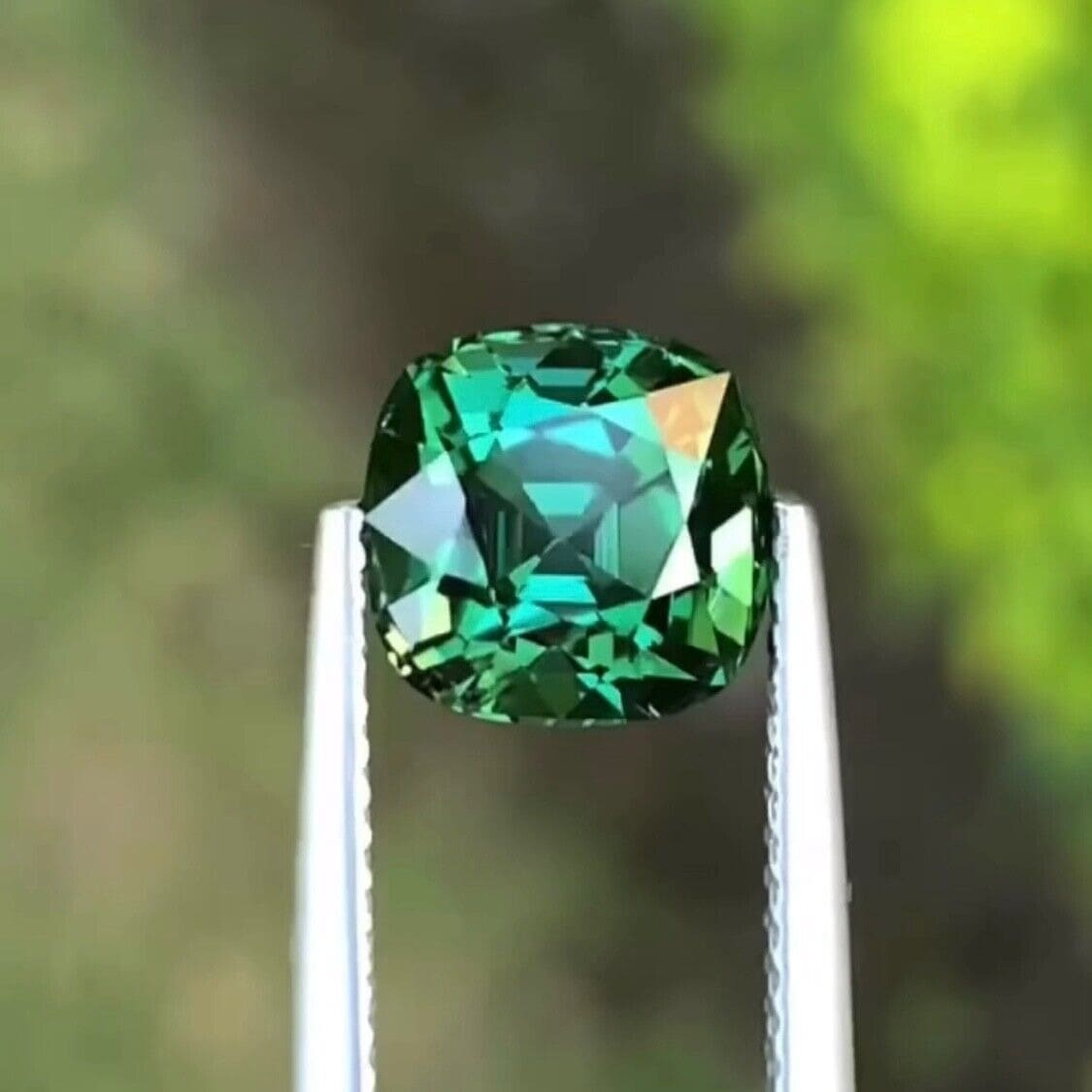
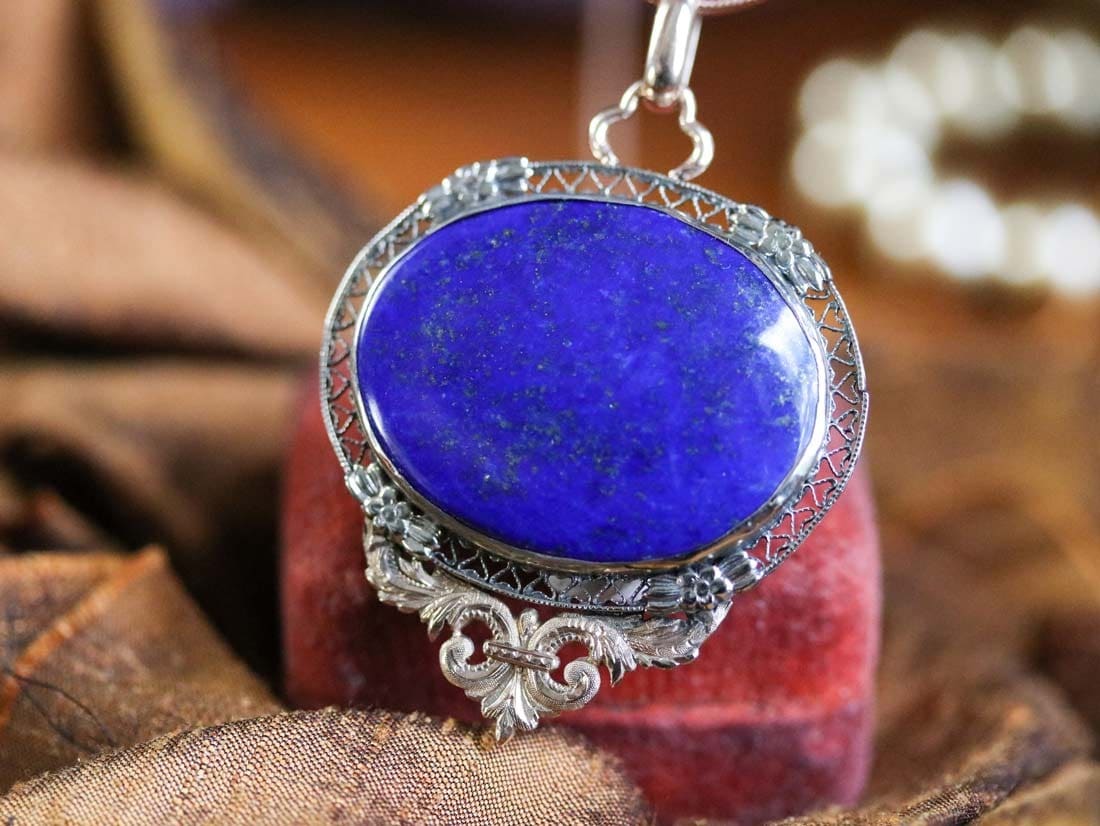
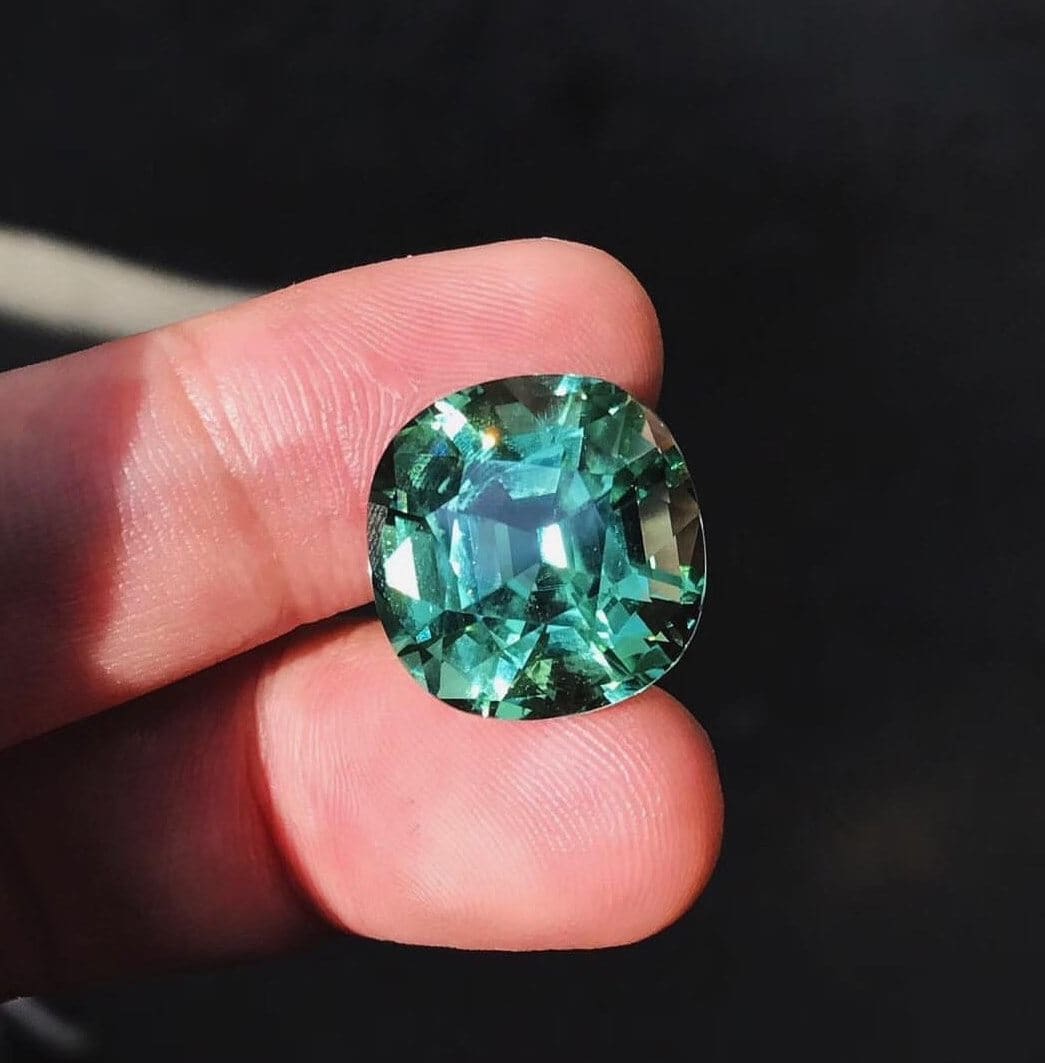
Tourmaline, kunzite, emerald, lapis lazuli and ruby in quantity, sourced at first hand from the people who mine them, with the treatment in writing and the export papers in order.
Most Afghan gemstones reach a jeweller in London or a cutter in Idar-Oberstein after four or five pairs of hands, each adding a margin and subtracting a fact. We are from Nuristan and we buy at the first pair of hands: from the people who mine or find the stones in our own valleys, and from the first dealers in Panjshir, Badakhshan, Jegdalek and Kunar. A stone from Nuristan is sold as Nuristan; a stone from anywhere else is sold under its own place. This page is for companies that want to buy that way, in quantity, with the paperwork in order.
Our founder's father, the late Engineer Amir Jan Nuristani, was a geologist. In the 1970s he surveyed precious stones in Nuristan, Kunar, Badakhshan and Panjshir for the Afghan government and went on to direct the survey of mines and geology, and gemstones remained his great interest for the rest of his life. Those four provinces are still where we source most of our stones.
It sets out what we can source and in what forms, how an order works from enquiry to delivery, what we put in writing on every invoice, how we quote, what the law asks of you and of us in the United Kingdom, the European Union, the United States and Afghanistan, and the risks we would rather you heard from us. Our terms are written on every quote.
Nuristan, Kunar and Laghman; Panjshir; Badakhshan; Jegdalek
Forms
Rough by the kilogram or lot, cut parcels by the carat, specimens
Before you pay
Daylight photographs and video, weights, treatment in writing
Lab reports
GIA, Gübelin, SSEF, AGL, GIT or Lotus on request; origin for emerald and ruby
Payment
Wire before shipment, or escrow, for first orders
Shipping
Specialist valuables carrier or insured hand carry; never ordinary courier
Origin
Nuristan stones sold as Nuristan; others under their own place
What we source
Six stones, in the forms the trade buys them
Paprok, Kantiwa and Korgal in Nuristan; the Pech valley in Kunar
Tourmaline
Facet rough by the gram and kilogram; cut parcels by the carat; crystals and specimens
Pink, green, blue and bicolour elbaite. Our own valleys, our own contacts. Treatment stated as N or H; irradiation disclosed where known; no copper-bearing stone offered as Paraiba.
Rough by the kilogram, including the large clean crystals the field is known for; cut stones to a hundred carats and more
Lilac to pink spodumene. We say which parcels have been sunned, irradiated or heated, as far as the chain of hands allows, and we remind every buyer that the colour fades in light.
Rough lots from licensed miners and the provincial auctions; cut stones by the carat
Bluish green Panjshir emerald, the one Afghan stone whose origin a laboratory can confirm. Oiling or resin stated with its degree on every invoice; origin reports from GIA, Gübelin or SSEF at your cost if you want them.
Rough and cut, mostly under five carats; crystals in marble as specimens
Marble-hosted ruby, strongly fluorescent, with its blue zoning. Heated or unheated stated; glass-filled stone refused; origin reports available for ruby.
Buying rough to cut or carve? Our rough gemstones page covers the grades, the sourced prices per gram and kilogram, and the cutting yield.
How an order works
From your brief to your bench, in seven steps
1
Tell us what you need
Species, colour, rough or cut, sizes or calibration, quantity, budget, and the country you import into. The more exact the brief, the better the parcel. A reply comes from a person who knows the valleys.
2
We source and show you
We go to our contacts at the mine or the first dealer, assemble the parcel, and send photographs and video taken in daylight, with weights, before any money moves. Peshawar's dealers show stones only to a real buyer and in daylight; so do we.
3
A written quote
Per carat for cut stones, per gram or kilogram for rough, or a lot price for a mixed parcel, with our terms written in and the treatment code for each line. Grading in plain words: colour, clarity, cut, and the trade's commercial, good, fine and extra fine bands where they help.
4
Laboratory reports if you want them
GIA, Gübelin, SSEF, AGL, GIT in Bangkok or Lotus Gemology, at your cost and with the fees and turnaround those laboratories publish. Origin reports exist for emerald and ruby; for tourmaline, kunzite, aquamarine and morganite a report confirms the species and the treatments it can detect, and no laboratory will state origin.
5
Payment
For a first order, payment by bank transfer before shipment or through an escrow service that holds the money until you have inspected the stones. Memo and consignment are for established accounts, in writing, with a term and a return window agreed in advance.
6
Documents and shipment
An export permit from the Ministry of Mines and Petroleum's cadastre department, a certificate of origin from the Afghanistan Chamber of Commerce and Investment, a commercial invoice and packing list, and the customs export declaration. Shipment by a specialist valuables carrier or insured hand carry: DHL prohibits loose precious stones, and FedEx and UPS cap the value they will carry. Who pays freight and insurance is written on the quote.
7
Acceptance and after
An inspection window and return terms agreed before shipment. If a parcel is not what was described, it comes back and the sale is cancelled. That is what escrow is for, and it is how we expect to be judged.
Treatment codes, honest origin, and no claims we cannot prove
Every line of every invoice carries the treatment code the American Gem Trade Association requires its members to disclose at the point of sale: N for natural and untreated as far as can be determined, H for heated, O for oiled or resin-infused with the degree stated, F for filled, R for irradiated, D for dyed. We follow CIBJO's nomenclature for species and varieties, so a stone is called what it is. We give origin as the place we know a stone came from: a Nuristan stone is sold as Nuristan, an emerald as Panjshir, lapis as Sar-e Sang, ruby as Jegdalek, and when we do not know, we say so rather than borrow a famous name.
What we will not write is a claim we cannot prove. We do not describe stones as untreated, conflict-free or ethically sourced without a laboratory report or an audit behind the words, we are not certified by the Responsible Jewellery Council or any other scheme, and we do not say a stone carries an origin premium it does not. We follow the due diligence steps the OECD guidance and CIBJO's responsible-sourcing toolkit set out for small firms: we know our suppliers, we screen the people we pay against the sanctions lists, and we keep the receipts.
How we quote
Against the trade's own references, parcel by parcel
There is no price list for coloured stones, and anyone who sends you one without seeing your brief is guessing. The trade prices against GemGuide, the wholesale guide published since 1982, in bands by species, size and quality, and the International Gem Society's rule of thumb is that wholesale runs at about a third of retail. We quote parcel by parcel against those references and the market as we find it at the source.
For scale, the published figures that exist: Panjshir emerald rough sold at the provincial auctions in 2025 at roughly 47 to 137 US dollars a carat for whole lots, and a Dubai house that mines and cuts Panjshir stone lists finished emeralds from 1,000 to 60,000 dollars a carat; mixed Mawi lots of kunzite, beryl and morganite sold at auction in Du Ab at about 10,000 afghanis a kilogram; fine Afghan tourmaline rough was quoted at 250 to 500 dollars a gram with a cutting yield of 28 to 35 per cent. Every stone page on this site gives its prices with the source and the date.
The legal side
For your compliance team
As the rules stood on 6 October 2026, from the published regulations, tariffs and guidance. Sources at the foot.
United Kingdom
No sanctions apply to Afghan goods; the Afghanistan regime targets designated persons only, and we screen everyone we pay against the UK Sanctions List.
Precious stones under tariff heading 7103, rough or cut, carry 0 per cent duty, with import VAT at 20 per cent on the declared value. The Kimberley Process applies to rough diamonds only and has nothing to do with coloured stones.
If your business accepts or makes cash payments of 10,000 euros or more for goods you are a high value dealer and must be registered with HMRC. We do not deal in cash.
European Union
Heading 7103 carries 0 per cent duty into the Union, with import VAT at your member state's rate; Afghanistan is an Everything But Arms beneficiary.
Traders in goods fall under the anti-money-laundering directive for cash transactions of 10,000 euros or more, and from 10 July 2027 traders in precious metals and stones become obliged entities in their own right under the new EU regulation, with customer due diligence and a Union-wide cash cap.
United States
Afghanistan is not under comprehensive sanctions. General License 20 authorises commercial imports from Afghanistan but bars payments to the Taliban other than taxes, fees, duties, permits and licences that do not relate to luxury items. Whether a gemstone royalty or auction levy falls inside that exception has not been answered by the Treasury, and the acting mines minister is on the United Nations sanctions list, so a US company should take counsel's view before its first order. We will not tell you that you are clear.
Unworked stones and cut unset stones for jewellery enter free of duty; simply sawn rough and other worked stones carry 10.5 per cent; the surcharges of 2025 and 2026 came and went, so check the schedule at the time of entry.
A dealer who in a year both buys and sells more than 50,000 dollars of precious stones must have a written anti-money-laundering programme under the USA PATRIOT Act, and a retailer who buys more than that from a foreign supplier loses the retailer exemption.
Afghanistan
No mineral may be exported without a permit from the cadastre department of the Ministry of Mines and Petroleum, which checks that the stones came from a licensed source; the application fee is 10,000 afghanis, and stones of unproven source can be charged double royalty.
The royalty on gemstones is 7.5 per cent of value as a primary product, and buyers at the provincial auctions pay a 10 per cent levy before the stones are released.
Since September 2025 mining exports are declared through a dedicated module of the customs system linked to the ministry, checking weight, value, tariff code and exporter. The Chamber of Commerce issues the certificate of origin, usually within a day, on sight of the ministry's permission.
Stones taken out through Pakistan carry Pakistani paperwork and lose their Afghan origin on the documents. We export from Afghanistan with Afghan papers.
Risks
What we would rather you heard from us
The sanctions question is open
The stones are not sanctioned and the United Kingdom and the European Union have no bar on them. The United States permits imports but has not said whether gemstone levies paid to the ministry are the kind of fee its general licence allows. Until it does, a US buyer needs counsel, and we say so on every page.
Export is not quick
A permit, a certificate of origin, a customs declaration and a valuables carrier take time, and we will not promise a date we cannot keep. Anyone who tells you Afghan stones ship by express courier in a week is describing the informal route, which leaves no paper and no recourse.
The market is soft
The International Colored Gemstone Association's president put demand about 30 per cent below 2022 at the start of 2026, with fine untreated stone holding its price and commercial goods not. We quote the market as it is.
Fraud is common upstream
Glued specimens, synthetic ruby in natural rock, foil-stamped copies of laboratory reports, retouched photographs and parcels with one good stone are all documented in the regional trade. Our answer is daylight video before payment, weights at every hand-over, laboratory reports for anything of value, and escrow for anyone who does not yet know us.
Insurance and transit
Declared value with a courier is not insurance and most couriers exclude loose stones. Shipments move by a specialist carrier or insured hand carry, and your own jewellers block policy should carry a transit endorsement.
Who we work with
Jewellers, cutters, dealers, and anyone who wants a stone with a valley behind it
Jewellers and designers who want stones with a valley behind them. Cutters who buy facet rough by the gram. Bead and cabochon houses buying lapis by the kilogram. Mineral dealers who want crystals on matrix with a locality they can stand behind. Importers in the Gulf who already know Afghan stone and want a source with papers. If you will be at Tucson, Bangkok, Hong Kong or Munich, tell us and we will arrange to meet where we can.
We also answer collectors and private buyers; the buyer's guide is written for them, and every stone page carries a way to write to us.
Which gemstones can you supply wholesale from Afghanistan?
Tourmaline, kunzite, aquamarine and morganite from Nuristan and Kunar, emerald from Panjshir, lapis lazuli from Badakhshan, ruby and pink sapphire from Jegdalek, and nephrite from Kunar, as rough by the kilogram or lot, cut parcels by the carat, and specimens. Tell us the brief and we will say what is available.
Is there a minimum order?
No fixed minimum. Lot sizes are agreed per order, because a kilogram of lapis and a five-carat emerald are different businesses. A clear brief with quantity, sizes and budget lets us tell you quickly whether it is worth both our time.
How do I know the stones are what you say?
You see daylight photographs and video with weights before you pay, the treatment code is written on every line of the quote and invoice, and for anything of value we arrange a report from GIA, Gübelin, SSEF, AGL, GIT or Lotus at your cost. Emerald and ruby can also have their origin confirmed by those laboratories; tourmaline and kunzite cannot, and no one should tell you otherwise.
Do you offer memo or consignment?
For established accounts, in writing, with a term and a return window agreed in advance. For a first order we ask for payment by bank transfer before shipment or through an escrow service that releases the money after you have inspected the stones.
How are the stones shipped from Afghanistan?
With an export permit from the Ministry of Mines and Petroleum, a certificate of origin from the Afghan Chamber of Commerce, an invoice and packing list and a customs declaration, by a specialist valuables carrier or insured hand carry. DHL prohibits loose precious stones and FedEx and UPS cap the value they will carry, so we do not use ordinary express couriers.
Can a company in the United States buy from you?
Afghanistan is not under comprehensive US sanctions and General License 20 authorises commercial imports, but it bars payments to the Taliban beyond taxes, fees and licences not related to luxury items, and the Treasury has not said whether gemstone levies fall inside that line. A US company should take its counsel's view before its first order. We will not tell you that you are clear.
What duty will I pay?
None in the United Kingdom or the European Union on precious stones under heading 7103, plus import VAT. In the United States unworked stones and cut unset stones for jewellery enter free, while simply sawn rough and other worked stones carry 10.5 per cent; check the schedule at the time of entry.
Are the stones treated?
Some are, and we say which. Tourmaline is commonly heated, kunzite is often sunned, irradiated or heated, nearly all aquamarine is heated, emerald is oiled or resin-filled as a rule, and ruby is often heated. We state the code on every line and we do not sell glass-filled ruby or dyed lapis as anything else.
How do you charge?
Our terms are agreed before you commit and written on the quote, with nothing hidden on top. The price covers the sourcing, the checking, the photographs, the paperwork and the people in the valleys who make it possible.
Can I come to Afghanistan to buy?
We do not recommend it for a first purchase. The trade is run from Kabul and Peshawar in rooms where a stranger is quoted one price and a known buyer another, and the documented frauds are aimed at visitors. Let us bring the parcel to you in photographs and video first, and talk about a visit once we know each other.
Sources
Where the rules and figures on this page come from
Ready to plan a visit, source Nuristani products, or discuss an investment? Your message goes to Obaid, who is from Nuristan, and his team in Afghanistan and the UK. We reply to every message.