Nuristani names
What Nuristani and Nooristani mean, how a child was named in old Kafiristan, and the names people carried before 1896.
One surname, and much older names beneath it
Nuristani is a name before it is anything else. It is the name of a people, of a family of languages, and of many families in Afghanistan and abroad who carry it as a surname, spelled Nuristani, Nooristani, Nouristani and half a dozen other ways. It means of Nuristan, the land of light, and it is not much more than a century old.
Under it lie much older names. Until 1896 the people of these valleys named their children by a custom recorded nowhere else, called one another by their fathers' names and their nicknames, and belonged to clans that still exist. This page sets out the surname and where it came from, the old way of naming and the names it produced, and what Nuristanis are called today.
- Meaning
- Of Nuristan, the land of light
- From
- Persian nur, light, and -estan, land, with -i, of
- In use since
- The early twentieth century
- Spellings
- Nuristani, Nooristani, Nouristani, Nuristany, Noorestani
- In Dari and Pashto
- نورستانی
- Old custom
- Father's name first, then one's own
- Clan names
- A founder's name with -dari or -deri
- Today
- Muslim given names, with Nuristani or a valley name after
What Nuristani means, and where it comes from
The surname is a plain description. Nuristan is Persian for the land of light, from nur, light, and the ending -estan, land, and the final -i means of or from. A Nuristani is a person from Nuristan, in the way a Kabuli is from Kabul and a Panjshiri from Panjshir. The province was given the name after the conquest of 1895 to 1896, when it ceased to be Kafiristan, so the surname cannot be older than that.
Most Afghans traditionally had no family name at all. A man was known by his own name and his father's, by his tribe, his village, his trade or his title. Surnames came in during the twentieth century, first among families in the cities, the army and the schools, and people usually took one that said where they were from. For Nuristanis who left the valleys the obvious choice was Nuristani. After the conquest many young men from Kafiristan were taken to Kabul and trained for military service, and the name appears early in the army: an officer called Nuristani was serving at Kandahar by 1913.
By the middle of the century it was a familiar name in Kabul. Seven of the fourteen players in Afghanistan's hockey team at the London Olympics of 1948 are listed with the surname Nuristani. Not everyone who carries it is Nuristani by descent, since a family that lived or served in the province might take its name.
Nuristani, Nooristani, Nouristani
There is one name and many spellings, because Dari and Pashto are written in the Arabic script and each family, clerk and passport office has turned نورستانی into Latin letters in its own way. Nuristani is the spelling of scholars and of this site. Nooristani is the commonest alternative in English-speaking countries, Nouristani follows French habits, and Nurestani and Noorestani follow the Persian of Iran. Nuristany and Nooristany are the same name with a different ending.
It is not a common surname outside Afghanistan. One surname database estimates about 205 people called Nuristani and about 175 called Nooristani worldwide, most of the latter in the United States and Canada, with smaller numbers under the other spellings. It certainly undercounts Afghanistan itself, where no such record exists.
How a child was named in Kafiristan
The child chose. This is the custom as it was recorded at Kamdesh in 1890 and 1891.
The only full account of how the Kafirs named their children was written down by George Scott Robertson, who lived among the Kom at Kamdesh in 1890 and 1891. When a child was born it was put to its mother's breast while an old woman of the family recited the names of its ancestors, one after another: the men of the line for a boy, the women for a girl. The name being spoken at the moment the baby began to feed was its name for life.
Because the choice was left to the child, two brothers could end up with the same name, and then they were told apart as the elder and the younger. Robertson knew a headman called Dan Malik whose son was Kansta Dan, Dan junior.
A person's full name put the father first. Chandlu Astan was Astan the son of Chandlu, and it was the same for women. If the name was a common one the grandfather's was added in front, and very occasionally the mother's was used. A father and son could share a name, so that a man might be called Merik Merik. Torag Merak, said to be the richest man in Kafiristan in Robertson's day, was Merak the son of Torag.
Nicknames did the rest. They were adjectives set in front of the name: red, stout, lame, one-eyed, thin, tall. Robertson met a Lame Astan and a Slender Shyok. Rank had its titles too. A jast was a headman who had earned his place by giving feasts, a mir had the right to sit on a stool out of doors, and the utah was the priest. A woman could hold rank in her own right: Sumri of Kamdesh was a mir.
Names recorded before the conversion
The personal names of men and women that George Scott Robertson wrote down among the Kom.
Men's names
- Utahding
- Shyok
- Malkan
- Bachik
- Malding
- Bilizhe
- Sunra
- Paluk
- Mirjan
- Garak
- Mori
- Karuk
- Samar
- Aza
- Aror
- Kuli
- Widing
- Arakon
- Aramallick
- Katamir
- Tong
- Utamir
- Chara
- Baril
- Malik
- Basti
- Chimiding
- Samata
- Barmuk
- Astan
- Merak
- Torag
Women's names
- Sumri
- Azakanni
- Kazan
- Baza
- Saggi
- Kazhirbri
- Gumli
- Kori
- Dimilli
- Ilkani
- Wazbri
- Mirza
- Mirkani
- Malkanni
- Tromgatti
- Bangu
- Arubri
- Wazi
- Chabri
- Marangzi
- Muzik
- Sunik
- Gumali
- Areni
- Aurulli
- Boza
- Konzo
- Tramgudi
- Bodza
- Malaki
These are names of the Kom of the Bashgal valley as Robertson spelled them in English in the 1890s, so the spellings are approximate. He gave no meanings and we have not guessed at any. The linguist Richard Strand records a few Kom ancestors' names with their meanings, and they are nicknames: Kana, the blind one; Lana, the mangy one; Buta, the hollow one; and a woman, Arani, the rich woman.
The names of lineages
Above the family is the lineage, and it has a name too. Among the Kom a lineage is called after its founder, with the ending -dara, which Robertson wrote -dari and Strand translates as boys: the Dumu-dara are Dumu's boys. Robertson listed the clans of Kamdesh in his day, among them the Utahdari, the priests' clan, the Demidari, the Garakdari, the Bilezhedari and the Waidari, and among the Kati of the upper Bashgal the Jannahdari, who were the leading clan, and the Barmodari.
In Waygal the ending is -deri: the Let-deri of Zhonchigal are the lineage of Let. The recorded line of one Waygal family runs Wai Din, Ara Din, Ulust, Mogul Kan and then Mohammad Amin. When a lineage in Waygal grew too small to stand alone it was taken into a larger one after a feast and took that lineage's name. These lineage names are still how a Nuristani says who his people are, and they do the work that surnames do elsewhere.
What Nuristanis are called now
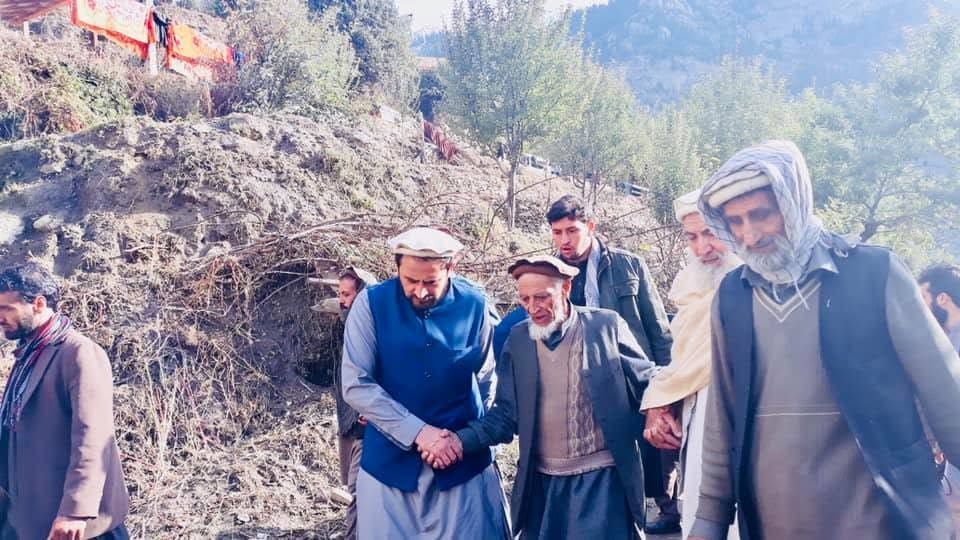
Muslim names, and a few survivals
The conversion of 1896 changed the names within a generation. Converts took Muslim names, though for a time people went on using the old ones among themselves: Robertson noted that the son of Torag Merak became Gul Muhammad Khan and was still called Torag by his own tribe. A Kati man of Bargi Matal named Azar signed himself Shaikh Abdullah Khan.
By the middle of the twentieth century the names scholars recorded in the valleys were the names of Muslims anywhere in Afghanistan: Abdullah, Abdul Rahim, Amir Mohammad, Mohammad Afzal, Gul Mohammad, Homayun. Names built on Abdul with one of the names of God, or ending in -ullah, count as a single name. Titles are used as part of a name in the Afghan way: Mawlawi for a religious scholar, Haji for one who has made the pilgrimage, Qazi for a judge, Wakil for a representative. Now and then an old name survived. In Parun in 1964 the Danish scholar Lennart Edelberg met a house-owner whose name, he noted, did not sound Islamic at all.
The old order of names has not quite gone either: people in Kamdesh still say Paliuk's son Azor. And the second name a Nuristani carries outside the valleys is usually Nuristani, or the name of his valley, such as Kamdeshi.
Do you know an old name?
The old names are slipping out of memory. If your grandparents or great-grandparents carried names from before the conversion, or if your family has a name for its lineage, we would like to record them here with the valley they come from. Write to us through the contact page.
Asked about Nuristani names
What does the name Nuristani mean?
It means of or from Nuristan. Nuristan is Persian for the land of light, from nur, light, and -estan, land, and the ending -i means of. The province was given that name in 1896, so the surname is little more than a century old.
Where does the surname Nooristani come from?
It is the same name as Nuristani in a different English spelling, and it comes from Nuristan province in eastern Afghanistan. Families from the province took it as a surname in the twentieth century, when Afghans began to need family names for the army, schools and identity papers.
Is Nuristani a common last name?
No. Outside Afghanistan it is rare: one surname database estimates about 205 people called Nuristani and about 175 called Nooristani worldwide, most of them in North America and Europe. Inside Afghanistan it is well known, and there is no reliable count.
What are some traditional Nuristani names?
Names recorded in the Bashgal valley in 1890 and 1891 include, for men, Shyok, Widing, Garak, Malik, Astan and Merak, and for women Sumri, Gumli, Kori, Wazi and Malaki. Today Nuristanis have Muslim names like other Afghans, such as Abdullah, Mohammad Afzal and Gul Mohammad.
What are Nuristani girl names?
The women's names written down before the conversion include Sumri, Azakanni, Kazan, Saggi, Gumli, Kori, Dimilli, Wazi, Areni, Konzo and Malaki. Their meanings were not recorded. Girls in Nuristan today are given Muslim names, as elsewhere in Afghanistan.
Do Nuristanis have surnames?
Traditionally no. A person was known by their father's name followed by their own, and belonged to a named lineage such as the Utahdari of Kamdesh. Surnames are modern, and the usual one is Nuristani or the name of a valley, such as Kamdeshi.
How were children named in Kafiristan?
At birth the baby was put to the breast while an old woman recited the names of its ancestors. The name being spoken when the child began to feed became its name for life. The custom was recorded by George Scott Robertson among the Kom in 1890 and 1891.
On this site
- Who are the Nuristani people?
- Kafiristan: the history of Nuristan before 1896
- The Nuristani languages, valley by valley
- Words and numbers in the Nuristani languages
- A glossary of Nuristan: tribes, valleys, gods and words
- Kamdesh, where Robertson recorded the names
- Nuristani religion, before and after 1896
- The history of Nuristan
- George Scott Robertson, The Kafirs of the Hindu-Kush (1896), pages 596 to 598 on naming and the lists of names; pages 85 to 88 on the clans
- Richard Strand: Kom kin groups and their names
- Richard Strand: the genealogy of the Kom
- Lennart Edelberg, Nuristani Buildings (1984), for Waygal lineages and names recorded between 1948 and 1970
- Cultures of the Hindukush (1974), for Kati and Waygal descent lines
- Ludwig Adamec, Historical and Political Who's Who of Afghanistan (1975)
- Wiktionary: Nuristani (etymology)
- Karine Megerdoomian, The Structure of Afghan Names
- Forebears: the surname Nuristani (estimates)
- Forebears: the surname Nooristani (estimates)
- Encyclopaedia Iranica: Nuristan
Plan your Nuristan journey
Ready to plan a visit, source Nuristani products, or discuss an investment? Your message goes to Obaid, who is from Nuristan, and his team in Afghanistan and the UK. We reply to every message.