The Kalash people
A few thousand people in three valleys of Chitral who never gave up the old religion of the Hindu Kush, and the nearest relatives the Nuristanis have.
The last of the old Hindu Kush
The Kalash are a people of about seven and a half thousand who live in three narrow valleys of Chitral, in the far north-west of Pakistan, a hard day's walk from the border of Nuristan. About four thousand of them still follow the religion of their ancestors, with its own gods, altars and festivals. They are the last people in the Hindu Kush who never converted. Until 1896 the same could have been said of us: Nuristan was Kafiristan then, and the Kalash valleys were its eastern edge.
This page is about who the Kalash are: where they live, how many there are, what is known and not known about where they came from, the language they speak, and how they are related to the Nuristanis. We are from Waygal, the Nuristani valley whose language carries the same name as theirs, so we have our own reasons for wanting to get it right. The scholarship we used is listed at the foot, and where the scholars disagree we say so.
- Where
- Bumburet, Rumbur and Birir valleys, Lower Chitral, Pakistan
- How many
- 7,466 Kalasha speakers in the 2023 census
- Old religion
- About 4,000 still follow it
- Language
- Kalasha, an Indo-Aryan language close to Khowar
- Their own names
- Mumuret, Rukmu and Biriu for the three valleys
- Festivals
- Chilam Joshi, Uchal, Pul and Chawmos
- Nearest relatives
- The Nuristanis, across the border in Afghanistan
- UNESCO
- Suri Jagek listed in 2018; the valleys on the tentative list, 2026
Three valleys in Chitral
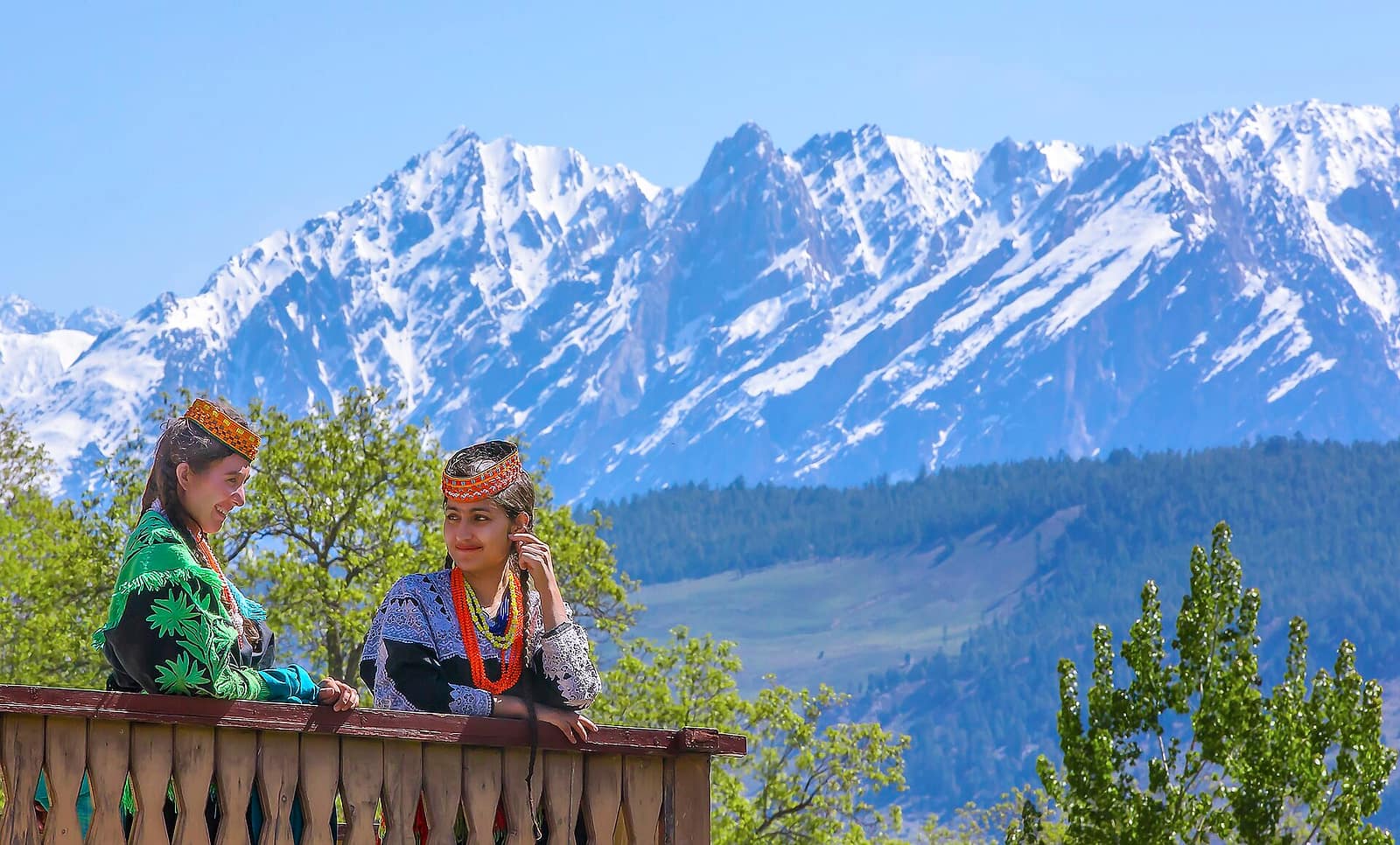
The Kalash live in Pakistan, in three side valleys that run west from the Chitral river towards the Afghan border and Nuristan.
The three valleys run west from the Chitral river, which lower down becomes the Kunar, up towards the crest of the Hindu Kush and the Afghan border. They open about twenty kilometres south of Chitral town. The road leaves the main valley at Ayun and forks, to Birir in the south and to Rumbur and Bumburet in the north. The villages sit at about two thousand metres. Over the passes at the heads of the valleys is the Bashgal, in Nuristan.
There used to be more Kalash country than this. When the Norwegian linguist Georg Morgenstierne came in 1929 there were five Kalasha valleys. Two of them, Jinjeret Kuh and Urtsun, converted to Islam between 1910 and 1940, and Kalash tradition remembers a time when their chiefs held southern Chitral from Lutkho down to Asmar.
Pakistan's census of 2023 was the first to ask about the language, and it counted 7,466 people whose mother tongue is Kalasha. Not all of them follow the old religion. Pakistan's human rights commission put those who do at about 4,000, and a local count in 2019 gave 4,100, up from about 2,500 in the 1980s. The rest are Kalasha-speaking Muslims. By custom a Kalash who converts leaves the community, and in time the family usually takes up Khowar, the main language of Chitral.
Mumuret in Kalasha
Bumburet
The largest and most visited of the three, with most of the guesthouses and the Kalasha Dur museum. Mahandeo and Ingaw have their altars here. The top of the valley was settled by Nuristani refugees from the Bashgal after 1896.
Rukmu in Kalasha
Rumbur
Narrower and quieter, to the north of Bumburet. The altar of Sajigor, the valley's own god, stands here under its trees. Nuristani families from the Bashgal settled at the head of this valley too, at Kunisht.
Biriu in Kalasha
Birir
The southernmost valley and the least visited. Birir has its own gods, Warin and Praba, and keeps a festival the other two do not: Pul, at the grape and walnut harvest in autumn.
Where the Kalash come from
There are three accounts: the one the Kalash give themselves, the one about Alexander's soldiers, and the one the geneticists have pieced together. They do not fully agree.
Ask the Kalash, and the oldest answer is that their ancestors came from a place called Tsiam, which nobody has ever found on a map. One tradition, written down in the 1970s, traces them from the youngest son and daughter of Adam, who settled first in Tsiam. Another tells of a migration under a legendary leader, Shalak Shah. The Italian scholars Alberto and Augusto Cacopardo think the story may remember an expulsion from northern Chitral, and they do not accept the old idea that Tsiam means Syria.
Kalash tradition also remembers chiefs of their own, Bulasing and Raja Wai, who held Chitral before its Muslim rulers, the Rais, defeated them. The chronicles of Chitral date that to 1320. Augusto Cacopardo thinks it happened far later, around 1700, and that there was a Kalasha country but never a Kalasha state. From then until the early 1950s the Kalash lived as serfs of the rulers of Chitral, paying special taxes and owing forced labour.
Then there is the story everybody has heard: that the Kalash descend from soldiers of Alexander the Great, who crossed the Hindu Kush in the 320s BC. It is an old story in this part of the world. Marco Polo heard it told of the rulers of Badakhshan, and British writers of the nineteenth century told it of the Kafirs of what is now Nuristan. Augusto Cacopardo, who has traced it among the Kalash, found that it was not part of their own inherited tradition and reached Rumbur in the 1970s. It is told in the valleys now, as it is in ours, and many people hold to it. The geneticists have looked for it, and what they found is in the table.
| Study | What it looked at | What it found |
|---|---|---|
| Firasat and others, 2007 | The Y chromosomes of 952 men across Pakistan, set beside those of 77 Greeks. | No large Greek contribution anywhere in Pakistan. A small signal among Pathans, and none among the Kalash. |
| Hellenthal and others, 2014 | Whole-genome data from populations around the world, used to date when peoples mixed. | A mixing event among the Kalash between about 990 and 210 BC, from a source related to western Eurasians. The dates include Alexander's, but the authors would not say it was his army. |
| Ayub and others, 2015 | The genomes of 23 Kalash. | A people who split from their neighbours about 11,800 years ago and stayed apart, with no detectable gene flow from them. Their likeness to western Eurasians is put down to very old shared ancestry. The paper calls Nuristan their ancestral homeland. |
| Hellenthal and others, 2016 | The 2015 data again, in a reply to that paper. | Signs of mixing 92 to 125 generations ago are still there. Whether Alexander had anything to do with it is left unresolved. |
| Siddiqi and others, 2021 | The maternal lines of 111 Kalash. | 98.8 per cent belong to western Eurasian lineages. |
| Shahid and others, 2025 | A further genetic survey of the Kalash and their neighbours. | A distinct population shaped by long isolation, with some affinity to western Eurasians. |
Put together, the studies say this much. The Kalash are an old and long-isolated people, and their resemblance to Europeans goes back to ancestors that Europeans and South Asians shared many thousands of years ago. No study has found a Greek contribution. One group of geneticists still sees the trace of some mixing in the first millennium BC and another does not, so the question is not closed. Nobody has measured how common fair hair and light eyes are among the Kalash, although every visitor remarks on them, as they do in Nuristan.
The detail that matters most to us is where the studies and the scholars point. The 2015 paper calls Nuristan the ancestral homeland of the Kalash. Richard Strand, the American linguist who has spent a lifetime on the Nuristani languages, thinks that a group of Kalasha from Waygal crossed into lower Chitral around the fifteenth century, ruled there, and gave the people their name. One of the old Kalash chiefs is remembered as Raja Wai, and Wai is an old name for the people of Waygal.
In Waygal the older people say something very like it: that a great many of our people went over the mountains to Chitral, and that this is why the Kalash look, dress and keep house so much like us. The valley's tradition places the crossing in the winter of 1895, when the Amir's army came, and the linguist places it four centuries earlier. There may have been more than one crossing.
Kalasha, and the other Kalasha in Waygal
Two languages on two sides of the mountains carry the same name. We come from the valley that speaks one of them.
The Kalash call their language Kalasha, or Kalashamon. Linguists place it in the Indo-Aryan family, in the group loosely called Dardic, and its nearest relative is Khowar, the language of the rest of Chitral. Georg Morgenstierne thought the two came down from the first wave of Indo-Aryan speech to enter these mountains. About 7,500 people speak it (Pakistan's 2023 census counted 7,466), and UNESCO's atlas lists it among the world's languages in danger. It was not written until recently. An Arabic-based spelling was tried first; then a meeting of Kalasha delegates in Islamabad voted for the Roman alphabet, in use since 2001, and the first alphabet book was printed in 2003.
Across the border, in the Waygal valley of Nuristan, there is another language with the same name. The books call it Kalasha-ala, or Nuristani Kalasha, and older books call it Waigali. We call it Waygali-ala. Ala means in the language, so our name for it is simply Waygali, and the book name is Kalasha. It belongs to the Nuristani family, which stands as a branch of its own beside the Iranian and the Indo-Aryan languages. So the two Kalashas are not one language, and a speaker of one cannot follow the other.
Why the same name, then? The scholars do not agree. Wolfgang Lentz, in the 1930s, saw no connection between the two names. Richard Strand thinks the name travelled with the Kalasha of Waygal who crossed into Chitral. Samiullah Taza, a Nuristani scholar who is himself from the valley, describes the Kalasha as one of the large tribes of the Nuristani nation, taking in the people of Waygal, of the Ashkun country and of Wama, and counts the Kalash of Chitral as historically part of it. In Waygal today we say Waygali, and we know the two are kin. The languages have lived on either side of the same passes for centuries and share a great many words, and words are what a listener hears first.
The religion they kept
Many gods, three great festivals
The Kalash religion has one creator, Dezau, and a company of gods beneath him: Sajigor in Rumbur, Mahandeo in Bumburet, Jestak who keeps the family, Dezalik who watches over birth, and Balumain, who rides in from the west each December. Goats are sacrificed at open-air altars under old trees, juniper is burned to make things clean, and a line between the pure and the impure runs through every part of life.
It is a cousin of the religion Nuristan followed until 1896, close enough that scholars use each to explain the other. It is not Hinduism, though it shares very old roots with the religion of the earliest Indian hymns.
The year has four festivals: Chilam Joshi in May, Uchal in August, Pul in Birir in the autumn, and Chawmos, the great winter feast, in December.
The Kalash and the Nuristanis
The Kalash valleys and the Nuristani valleys were one world until 1896. This is where that shows, and where it does not.
| The Kalash of Chitral | Nuristan | |
|---|---|---|
| Religion | The old religion, still kept in the three valleys by about 4,000 people. | Sunni Islam since 1896; the old religion remembered, not practised. |
| The gods | Dezau the creator, Sajigor, Mahandeo, Balumain, Jestak, Dezalik. | Imra the creator, Moni, Gish, Disani, Bagisht, Indr. |
| Language | Kalasha, which the linguists place with the Indo-Aryan languages. It shares its name and many words with the language of Waygal. | Five Nuristani languages, a branch of their own. Waygal's is Waygali-ala, called Kalasha-ala in the books. Kati is spoken on both sides of the border. |
| The year | Chilam Joshi in May, Uchal in August, Pul in autumn, Chawmos in December. | The two Eids and the wedding season; the old festivals survive in Robertson's pages. |
| Food | Walnuts and mulberries, goat cheese, flat bread, goat at the feasts, and wine. | The same table, without the wine since 1896. |
| Houses | Timber and stone, stepped up the slope, one roof the terrace of the house above. | The same way of building, in cedar, with more of the carving. |
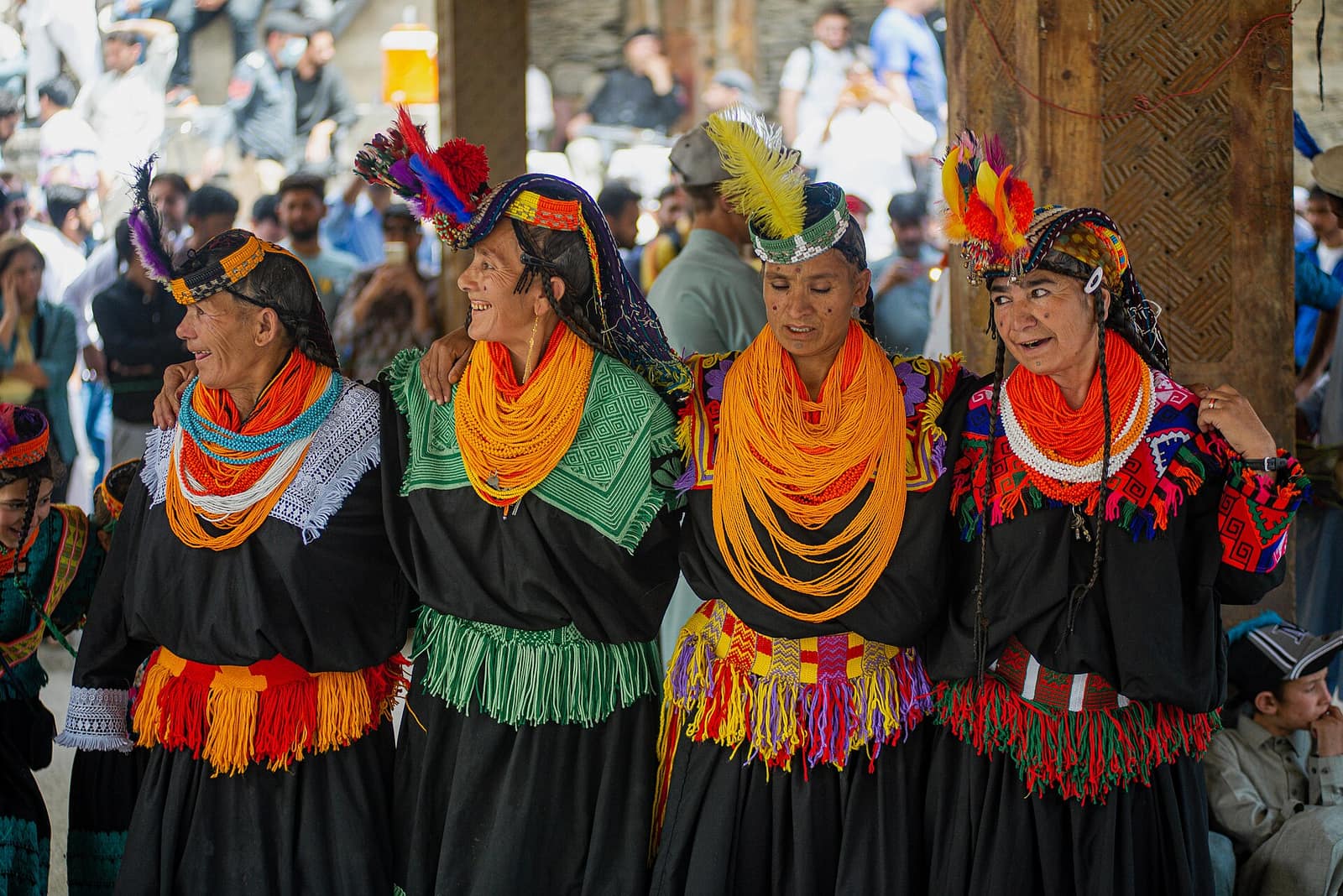
| Dress | Women in black robes worked in bright thread, with cowrie-shell headdresses; men in shalwar kameez and the pakol. | Women in dark dresses worked in bright thread, closest of all to the Kalash in Waygal; men in shalwar kameez, waistcoat and pakol. |
| Pure and impure | The goats and the high pastures pure; the bashali for birth and seclusion. | The same division shaped the old society, and the split of work between men and women outlasted the religion. |
| Rank | Feasts of merit remembered, and honour still earned by giving. | The feasts of merit ended in 1896; hospitality kept their weight. |
Most of what the two peoples share comes from one inheritance. Before 1896 the Kafir world ran without a break from the Alingar in the west to the Kalash valleys in the east, and the Kalash were part of it: the same kind of gods under different names, the same sacrifices and feasts, the same rule of pure and impure, the same way of building a village up a mountainside. Outsiders called all of them Kafirs. Centuries of marriage, trade and raiding across the passes kept the two sides close.
The differences are real too, and we do not blur them. Kalasha is an Indo-Aryan language and ours are Nuristani, so a Nuristani and a Kalash cannot understand each other. The Kalash never converted; Nuristan did, and has been Muslim for five generations. And the Kalash escaped the conquest of 1895 only because of a line on a map. The Durand agreement of 1893 left their valleys under Chitral and British India, so the Amir's army stopped at the crest.
Some Nuristanis ended up on their side of it. When the army entered the Bashgal, a chief named Sardar Kashmir left Bargi Matal with about six hundred followers and crossed to Bumburet, and other families followed. They built their villages above the Kalash, at the heads of Bumburet and Rumbur, and kept the old religion there for another generation. The last of them converted in the 1930s. Their descendants, Kati-speaking Muslims, still live there, and our page on Chitral tells their story.
The Kalash now
A small people under a great deal of attention
For most of the twentieth century the Kalash were poor and growing fewer. They were freed from serfdom only in the early 1950s, and by the 1980s those who kept the religion were down to about 2,500. The number has since recovered to about 4,000. Conversions, which once emptied whole valleys, now run at five to ten people a year by a local count.
Recognition has come slowly. In 2017 the Peshawar High Court ordered that the Kalash religion be given its own entry on the census form. Identity cards can now record it, though Pakistan's human rights commission found that passports and birth certificates still could not. In July 2026 the Khyber Pakhtunkhwa assembly passed a Kalash marriage law, the first family law in Pakistan written for an indigenous people, moved by Wazirzada, the first Kalash member of the assembly. In 2018 UNESCO listed Suri Jagek, the Kalash way of fixing the calendar by watching the sun against the ridges, as heritage in need of urgent safeguarding, and in 2026 Pakistan placed the valleys on its tentative list for World Heritage.
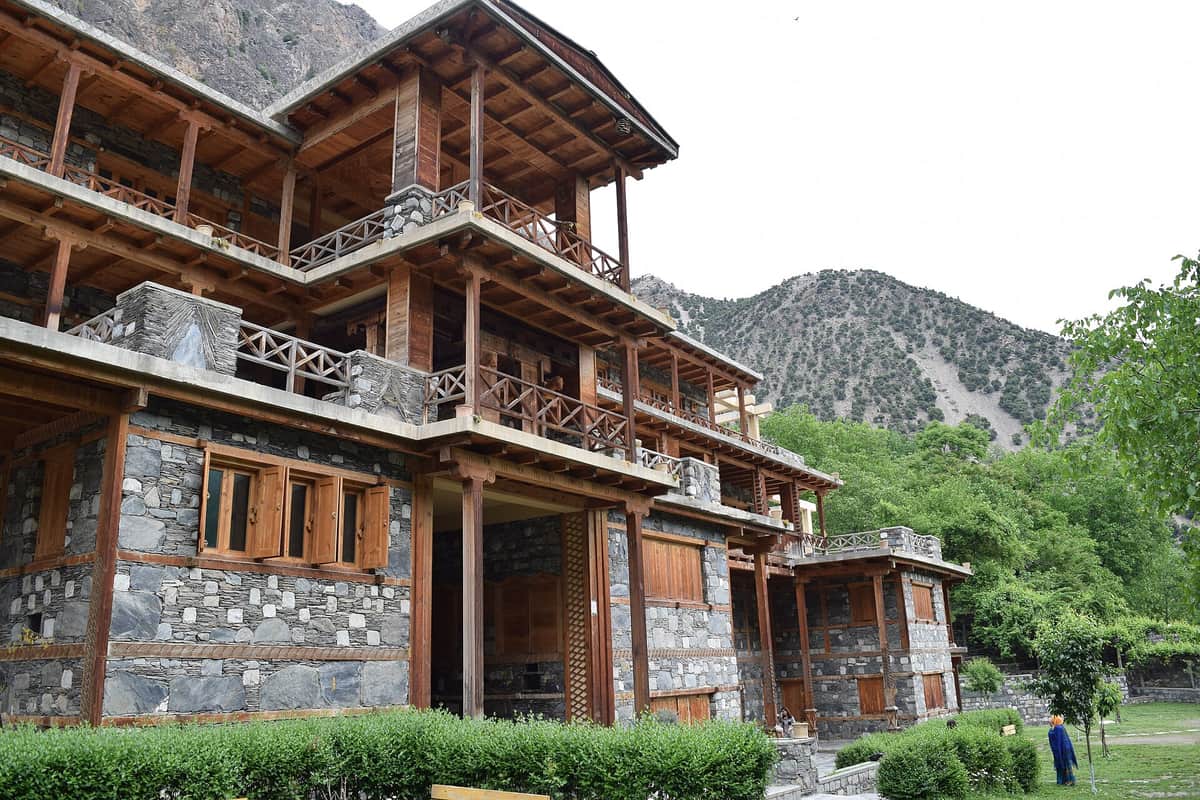
The Kalash are visited and photographed more than any people their size in South Asia. The commission's report describes tourists treating people as exhibits, and the old custom of leaving the dead in open coffins has had to end because the graves were disturbed. The Kalasha Dur in Bumburet, in the photograph, was built with Greek volunteers and finished in 2004, and it holds the community's own museum. Anyone from Nuristan will recognise the pressures: land, schooling in someone else's language, and visitors who come for the pictures.
Going to the Kalash valleys
The valleys are reached from Chitral town by way of Ayun, and Chitral from Peshawar by road through the Lowari tunnel or by air when the weather allows. Our page on Chitral has the route. Foreign visitors have needed permits or registration for the Kalash valleys at different times, so check the current rules with a Pakistani operator before you travel.
The festivals are religious occasions and not performances. Ask before you photograph anyone, keep away from the bashali, the altars and the graveyards unless you are invited, and stay and buy with Kalash families so that the money remains in the valleys. From the Nuristan side the border is closed. The nearest a visitor to Nuristan can come to the Kalash is the upper Bashgal above Bargi Matal, where the old paths to Chitral leave the valley.
Asked about the Kalash people
Who are the Kalash people?
A people of about 7,500 who live in the Bumburet, Rumbur and Birir valleys of Chitral, in north-west Pakistan. About 4,000 of them still follow their own ancient religion, which makes them the last people of the Hindu Kush who never converted to Islam. Their nearest relatives in culture and history are the Nuristanis of Afghanistan.
Are Kalash people Greek?
It has not been shown. The story that they descend from Alexander the Great's soldiers is told in the valleys today, but the scholar who traced it found that it reached the Kalash only in the 1970s, and a study of Y chromosomes found no Greek contribution. One genetic study dates some mixing to between 990 and 210 BC, which includes Alexander's time, and its authors and others still disagree about what that means.
What is the DNA of Kalash people?
The genetic studies describe a small population that has been isolated for a very long time. A 2015 study of 23 genomes found that the Kalash split from their neighbours about 11,800 years ago with no detectable mixing since, and a 2021 study found that 98.8 per cent of their maternal lines are western Eurasian. Their likeness to Europeans is put down to very old shared ancestry.
Why do Kalash people look European?
Fair hair and light eyes are often remarked on among the Kalash, as among the Nuristanis, though nobody has measured how common they are. The geneticists who studied the Kalash in 2015 tie the resemblance to ancient northern Eurasian ancestry that Europeans also carry, kept visible by thousands of years of isolation, and not to recent European settlers.
What country are the Kalash from?
Pakistan. The Kalash valleys are in Lower Chitral district, Khyber Pakhtunkhwa, close to the border with Afghanistan's Nuristan province. Their own traditions speak of an earlier homeland called Tsiam, and one genetic study and the linguist Richard Strand both point to Nuristan.
How many Kalash people are left?
Pakistan's 2023 census counted 7,466 people whose mother tongue is Kalasha. About 4,000 of them still follow the Kalash religion, up from about 2,500 in the 1980s.
Are the Kalash and the Nuristanis the same people?
They are close relatives, not the same people. Until 1896 they shared a religion and a way of life, and the language of Waygal in Nuristan is called Kalasha in the books, as theirs is. But Kalasha of Chitral is an Indo-Aryan language and the Nuristani languages are a separate branch, and the Nuristanis have been Muslims since 1896 while the Kalash kept the old religion.
What language do the Kalash speak?
Kalasha, also called Kalashamon, an Indo-Aryan language of the Dardic group whose nearest relative is Khowar, the main language of Chitral. About 7,500 people speak it and it is written in the Roman alphabet. It is a different language from the Kalasha-ala, or Waygali, of Nuristan.
On this site
- Kalasha religion: the gods, the festivals and the rules
- Chitral, and the Nuristanis who live there
- Who are the Nuristani people?
- Nuristani religion: Islam today, the old gods before 1896
- Kafiristan: the history of Nuristan before 1896
- The Nuristani languages, valley by valley
- Waygal, the valley whose language shares the Kalasha name
- All of Nuristan's neighbours, with the map
- Pakistan Bureau of Statistics: National Census Report 2023 (mother tongue tables)
- National Commission for Human Rights, Pakistan: Saga of Survival, a report on the Kalash
- Dawn: the Kalash population count of 2019
- Augusto Cacopardo, Are the Kalasha really of Greek origin? The legend of Alexander and the pre-Islamic world of the Hindu Kush (Acta Orientalia, 2011)
- Wynne Maggi, Our Women Are Free: Gender and Ethnicity in the Hindukush (2001), opening chapter
- Cultures of the Hindukush (1974), with Wazir Ali Shah's notes on Kalash tradition and the Bashgal refugees
- Ayub and others, The Kalash Genetic Isolate (American Journal of Human Genetics, 2015)
- Hellenthal and others, A Genetic Atlas of Human Admixture History (Science, 2014)
- Firasat and others, Y-chromosomal evidence for a limited Greek contribution to the Pathan population of Pakistan (2007)
- Richard Strand: the Kalasha of Nuristan and their name
- Jakob Halfmann, Terminological proposals for the Nuristani languages (Himalayan Linguistics, 2021), on the name Kalasha
- Kalasha.org: how the Kalasha alphabet was chosen
- Dawn: the High Court orders the Kalash religion onto the census form (2017)
- Chitral Today: the Kalash marriage bill passes (20 July 2026)
- UNESCO: Suri Jagek, inscribed 2018 on the List of Intangible Cultural Heritage in Need of Urgent Safeguarding
- UNESCO World Heritage Centre: Pakistan's tentative list
- Dawn: the Kalasha Dur museum (2007)
Photographs
- Kalash women dancing at Chilam Joshi, 2022: photograph by Jugni, CC BY-SA 3.0, via Wikimedia Commons
- Kalash women in Birir valley, Chitral: photograph by Tahsin A Shah, CC BY-SA 4.0, via Wikimedia Commons
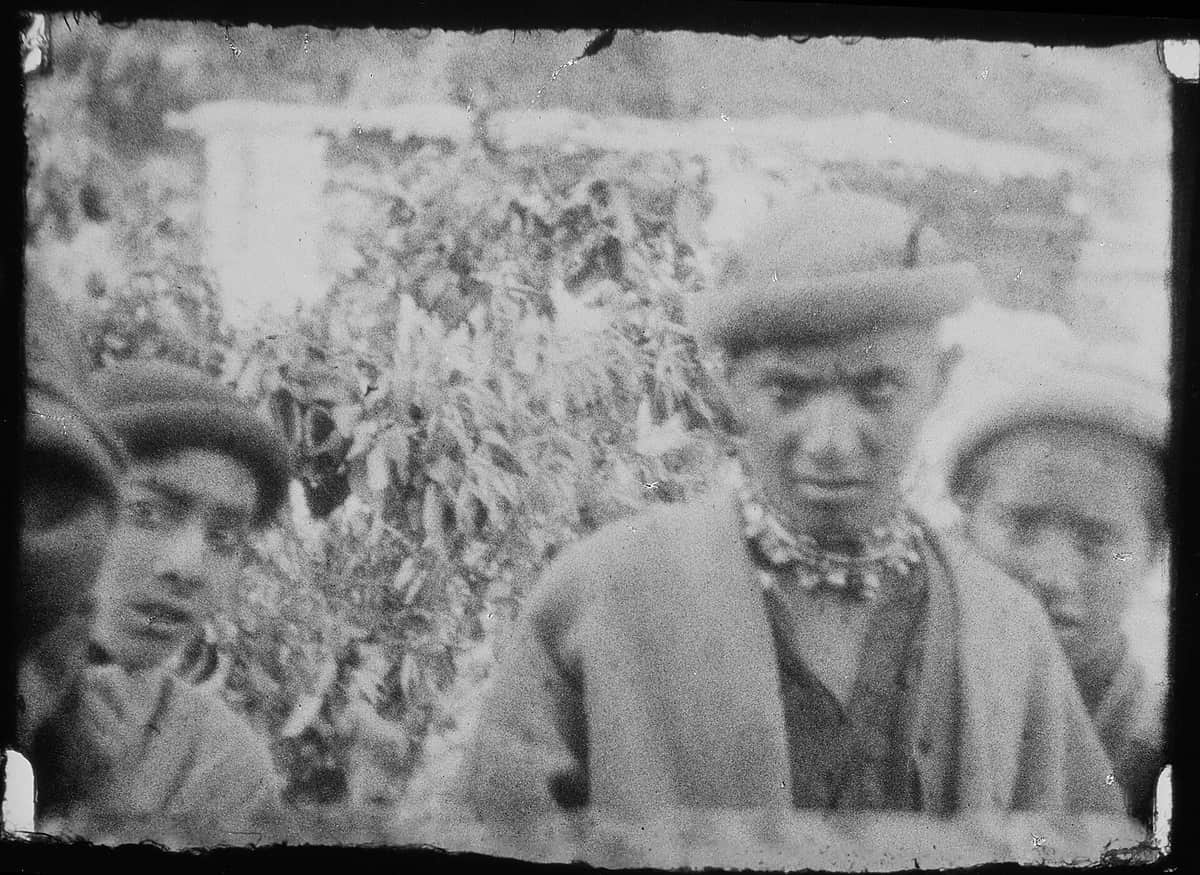
- Kalasha youths at the Shing-mou altar, Rumbur, 1929: Georg Morgenstierne, National Library of Norway, public domain, via Wikimedia Commons
- The Kalasha Dur, Bumburet: photograph by Zeeshan-ul-hassan Usmani, CC BY-SA 4.0, via Wikimedia Commons
The site's own photographs are of Nuristan; these are used under their licences until we have our own from Chitral.
Plan your Nuristan journey
Ready to plan a visit, source Nuristani products, or discuss an investment? Your message goes to Obaid, who is from Nuristan, and his team in Afghanistan and the UK. We reply to every message.