Since December 2024 Nuristan's rough kunzite, beryl, morganite and tourmaline have been sold by open auction in Du Ab, Parun and Kamdesh, for sums that now run past 120 million afghanis a sale. What was sold, who bought it, where the money went, and what a buyer abroad should take from it.
For fifty years the gemstones of Nuristan left the province the same way: carried out of the valleys by the men who dug them, sold to a trader, and sold again in Peshawar. Mining and selling them was outside the law until 2009, and even after that most stones went unrecorded. Since December 2024 a second route has opened. The provincial Directorate of Mines and Petroleum now gathers the rough from the mines, mostly from the Mawi workings in Du Ab, and sells it by open bidding, announcing the result each time. This article puts those announcements together, because no English-language account of them exists, and explains what they do and do not tell a buyer abroad.
What has been sold, and for how much
- 30 December 2024, Parun: tourmaline, which the valleys call biroj, sold at public auction for 8 million afghanis, about 113,000 US dollars at the time.
- 16 March 2025, Mawi, Du Ab: kunzite, beryl and morganite sold for 64,768,000 afghanis.
- 13 July 2025, Nuristan: 165 kilograms of beryl sold for 120 million afghanis, with 12 per cent to the state. The same sale included stones announced as the first rubies from Nuristan's mines, with no price, quantity or identification given.
- 29 August 2025, Kamdesh: 124 kilograms of beryl sold for 54.5 million afghanis, 5.4 million of it to the treasury.
- 16 September 2025, Mawi, Du Ab: about 9,000 kilograms of beryl, kunzite, morganite and quartz sold for 95,123,500 afghanis, with 150 domestic traders and several Chinese businessmen bidding and 9.5 million afghanis to the treasury. Two days later five kilograms of beryl from Pashgardara in Nurgaram sold for 1.81 million afghanis.
- 27 November 2025, Du Ab: 8,785 kilograms of beryl, kunzite and morganite sold to 50 local traders for 111.557 million afghanis, with 11.155 million afghanis collected in tax.
- 16 May 2026, Mawi, Du Ab: beryl, kunzite and morganite sold for 52.62 million afghanis, with 5.226 million to the treasury. The directorate said 242 kilograms of beryl had been sold the week before for nearly 25 million afghanis.
- 2 September 2026, Mawi, Du Ab: about two tonnes of kunzite with beryl, quartz and morganite sold for 122.5 million afghanis, with 12,250,910 afghanis to the treasury.
- 9 September 2026, Nuristan: 102 kilograms of mixed stones sold, with 39,500 afghanis to the treasury, which points to a sale of about 395,000 afghanis.
The neighbouring provinces run the same system. Kunar's directorate sold more than 1,500 kilograms of tourmaline from the Pech valley for about 119.3 million afghanis in July 2026, and Panjshir has held more than twenty rounds of emerald auctions. Taken together, the eastern provinces have moved a great deal of rough through state sales in two years.
Where the stones come from
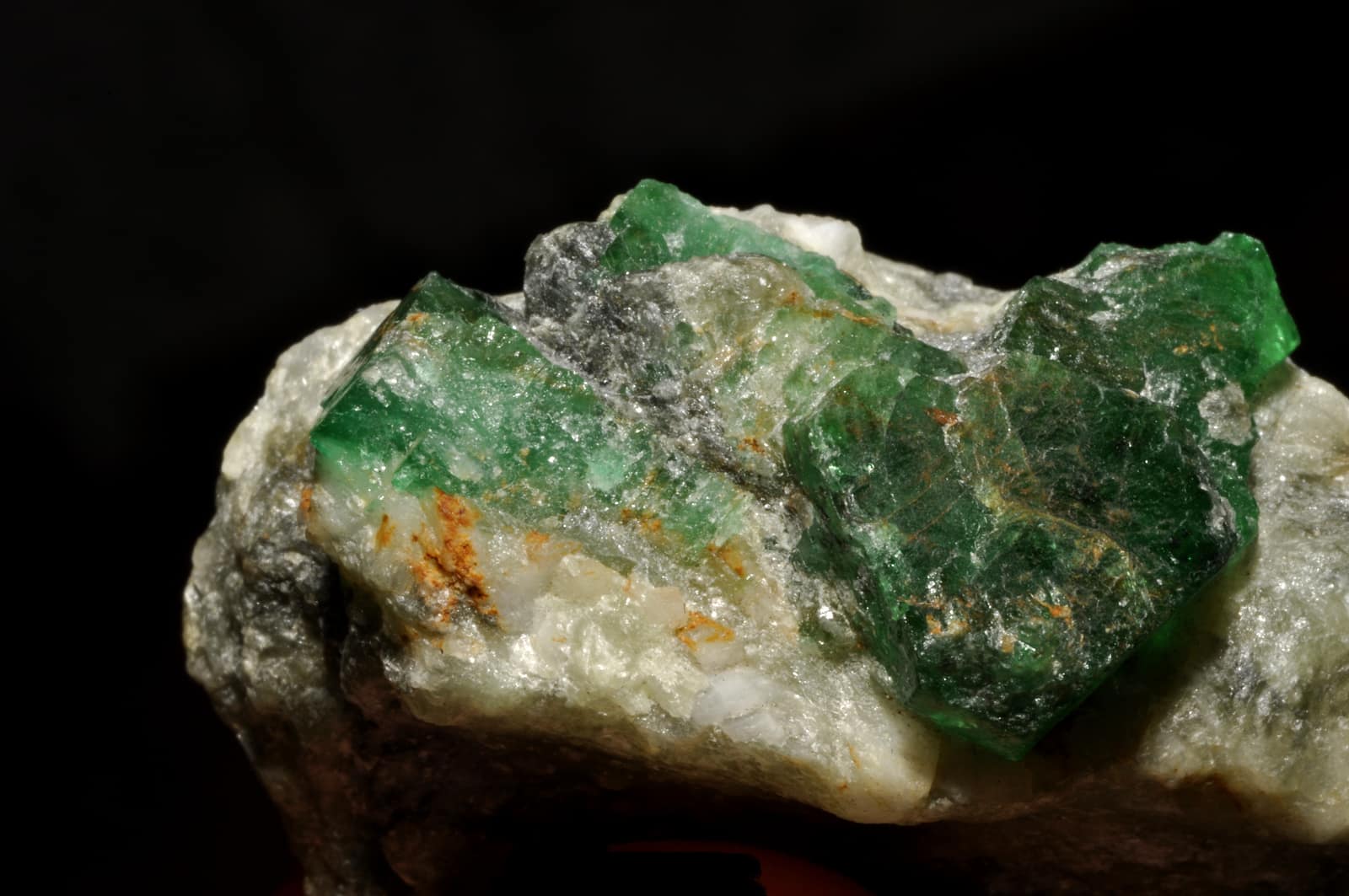
Nearly every large lot is from Mawi. The Mawi and Kolum workings in Du Ab, at the heart of the Nilaw-Kolum pegmatite field that runs over into Mandol, have been the great kunzite mines of Afghanistan since the early 1970s, when Soviet geologists recorded more than 1,260 kilograms of gem kunzite coming out in three years. The field also gives beryl in its blue and pink forms, aquamarine and morganite, which is why those three names recur in the announcements. Older labels, and the US Geological Survey tables built on Soviet maps, file Mawi under Laghman province; the published coordinates fall inside Du Ab on the government's own district map, and the directorate that sells the stones is Nuristan's.
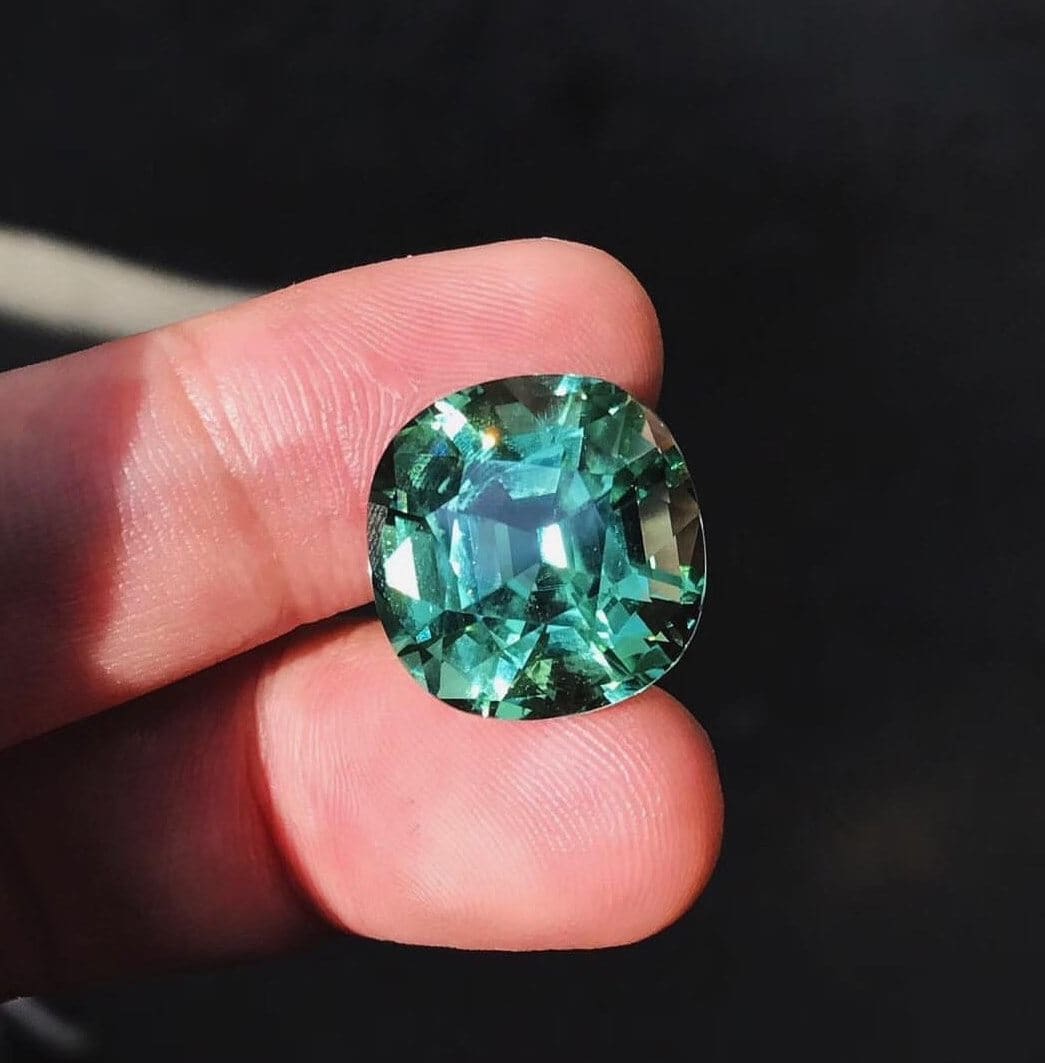
The smaller sales show the rest of the map. Tourmaline came from Parun, where the Pajhwok news agency's mines desk lists workings at Astawi, Frons, Diwah, Koshtki, Sosom and Pashki. Beryl came from Kamdesh, the district of the Paprok tourmaline mine, and from Pashgardara in Nurgaram, near the Korgal green tourmaline veins. The directorate also names four workings in Du Ab and five in the Waygal valley, at Watoz and Kishton among other places, and says Wama has tourmaline that has never been surveyed.
Who buys
The reports describe the bidders as domestic traders: 150 of them at the September 2025 sale, 50 in November, 85 in early 2026. Several Chinese businessmen attended in September 2025. These are the same dealers who have always carried Nuristan's rough to Kabul's Shahr-i-Naw and over the border to Namak Mandi in Peshawar, where Afghan traders made most of the sales until the late 2000s and where the onward buyers come from Thailand, Sri Lanka, China, Hong Kong and the West. A stone bought at a Du Ab auction may be cut in Thailand and sold in London with a lab report that says tourmaline and nothing about where it was dug.
Where the money goes
The announced treasury share is steady at about ten per cent of the hammer price: 9.5 million on 95 million, 11.2 million on 111.6 million, 5.2 million on 52.6 million, 12.25 million on 122.5 million. One report said 12 per cent on the July 2025 beryl. The Kabul Tribune, quoting the directorate, said the remainder of the May 2026 sale was distributed among the miners. At the mine itself, miners in the Pech valley told Al Jazeera in 2023 that they paid two per cent of their takings to the local authorities and that the rate had been doubled that March, with the four per cent split between the government, the village and the local religious schools.
What is not published is as telling as what is. No sale gives a per-kilogram price by grade, none names the buyers, and none says what the miners were paid for the rough before it reached the saleroom. The outlets that carry the announcements, several of them critical of the authorities, say the same thing: without independent oversight, the figures describe revenue to the state and not the fate of the valleys.
What this means for a buyer abroad
- A paper trail exists now. Rough bought through the auction route can, in principle, be traced to a sale, a district and a date. Ask a seller which auction a parcel came from; a serious dealer will know.
- The lots are rough and mixed. Beryl, kunzite, morganite and quartz are sold together by the tonne, so the headline prices say little about the value of a cut stone. On the announced figures the big Mawi lots averaged roughly 10,000 afghanis a kilogram, and the Kunar tourmaline about 79,500 afghanis a kilogram, with quality unstated.
- Origin on a label is still loose. Stones from Kunar and Laghman have always been sold as Nuristan, and Nuristan stones as Laghman. The auction announcements name the district, which is more than most lab reports ever will.
- The buyer's money reaches a state treasury. For a reader in the United Kingdom or the European Union, no law bars buying Afghan gemstones, and the stones carry no import duty under heading 7103. In the United States, General License 20 allows commercial imports from Afghanistan but bars payments to the Taliban other than taxes, fees and licences that do not relate to luxury items; whether a gemstone auction levy falls inside that line has no published answer, and a US buyer should ask a lawyer rather than a website. Our buying guide sets out what is known.
What to watch
Three things would change this picture. A published mining procedure for Nuristan, which the provincial mines director said in 2023 had been sent to Kabul for approval, so that the workings are dug and sold under written rules. Independent reporting of the quantities and the buyers, so that the per-kilogram figures mean something. And a market for the stones in the province itself, where the cutting, grading and selling now done in Peshawar and Bangkok could keep some of the value in the valleys that produce it. We will add each sale to this page as it is announced.
Read on
- Nuristan gemstones: the mines, the stones and the trade
- Afghan kunzite: Mawi and Nuristan's pink spodumene
- Afghan tourmaline: colours, mines and prices
- How to buy gemstones from Afghanistan
- Rough gemstones from Afghanistan: grades, prices and yield
- Mining in Nuristan: gemstones, lithium and the rules
- Du Ab, the district of the Mawi mines
Questions people ask
How are Nuristan's gemstones sold?
Since late 2024 the provincial Directorate of Mines and Petroleum has sold rough stones by open auction, mostly in Du Ab district from the Mawi workings and also in Parun and Kamdesh. Domestic traders bid, a share of about ten per cent goes to the state treasury, and the stones then move on to Kabul and to Peshawar's gem market in Pakistan.
How much have Nuristan's gemstone auctions raised?
The announced sales run from 8 million afghanis for tourmaline in Parun in December 2024 to 122.5 million afghanis for about two tonnes of kunzite with beryl and morganite from Mawi in September 2026. Four sales in 2025 and 2026 each passed 95 million afghanis. The figures are the directorate's own and have not been independently audited.
Which stones are sold at the Nuristan auctions?
Beryl, kunzite and morganite from the Mawi mines in Du Ab make up most lots, with quartz and garnet. Tourmaline was sold in Parun in December 2024, and 124 kilograms of beryl from Kamdesh in August 2025. Stones announced as the province's first rubies in July 2025 were not identified or priced.
Can a foreign buyer bid at a Nuristan gemstone auction?
The reports describe the bidders as domestic traders, with several Chinese businessmen present at the September 2025 sale. Nothing published sets out rules for foreign bidders. In practice the stones reach buyers abroad through those traders, through Kabul, and through Peshawar.
Sources
- Amu TV, 30 December 2024: Taliban sell $113,000 worth of tourmaline in Nuristan Province
- Ministry of Mines and Petroleum (Al Emarah English), 16 March 2025: Precious stones auctioned for over 64 million AFN in Nuristan
- Pajhwok Afghan News, 14 July 2025: Beryl worth 120m afs sold in Nuristan
- Bakhtar News Agency, 29 August 2025: Nearly 55 million afs worth of beryl stones sold in Nuristan
- Bakhtar News Agency, 17 September 2025: Precious stones worth 95m afghanis auctioned in Nuristan
- AtlasPress, 17 September 2025: Taliban sell nearly 9,000 kg of gemstones in Nuristan
- Bakhtar News Agency, 18 September 2025: Rare beryl stone worth 2 million AFN auctioned in Nuristan
- AtlasPress, 29 November 2025: Taliban sell over 8,700 kilograms of gemstones in Nuristan auction
- The Kabul Times, 17 May 2026: Precious stones worth over 52 million afghanis sold in Nuristan
- The Kabul Tribune, May 2026: Precious stones worth over AFN 52 million sold from Nuristan mines
- AtlasPress, 3 September 2026: Nuristan gemstones sold for more than 122 million afghanis
- Bakhtar News Agency, 9 September 2026: 102 kilograms of precious and semi-precious stones sold in Nuristan
- Zarin TV, 30 July 2026: over 1,500 kilograms of Kunar tourmaline sold
- Pajhwok Mines: Mineral resources of Nuristan province
- Pajhwok Afghan News, 25 April 2023: Mines unprofessionally dug in Nuristan geological zone
- Al Jazeera, 18 August 2023: The former Afghan soldiers turning to gem mining to survive
- Gary Bowersox, A Status Report on Gemstones from Afghanistan, Gems and Gemology, Winter 1985
- Rehman et al., Namak Mandi: A Pioneering Gemstone Market in Pakistan, Gems and Gemology, Summer 2021
- OFAC, General License No. 20 (Afghanistan), 25 February 2022