What people eat in Nuristan
Bread and cheese from the hearth and the herd, walnuts and honey from the trees, morels from the forest, trout from the river, and green tea with everything.
From the valley, shared from one dish
Nuristani food is mountain food: what a steep valley with a short growing season can produce, cooked at a hearth and shared from one dish. It is not a cuisine of many spices or many courses. It is bread, dairy, nuts and fruit, meat when there is a guest or a celebration, and the things the forest and the river give for free. Anyone who has been offered tea, apples and a wedge of cheese on a Nuristani veranda knows that it is also generous beyond the household's means.
This page describes what people in the valleys eat and why. We are adding dishes and the way they are made as the families of the valleys share them with us, so it will grow.
- Staple grains
- Wheat and maize, as flat bread
- Dairy
- Cheese, butter, yoghurt
- From the trees
- Walnuts, mulberries, apples, apricots
- From the forest
- Morels, honey
- From the river
- Trout and other fish
- Meat
- Goat and lamb, for guests and feasts
- Drink
- Green tea, all day
- Harvest
- Morels in spring, honey and walnuts in autumn
Bread, cheese and the herd
Bread comes first. Wheat grows on the terraces where the valley is warm enough and maize where it is not, and both are ground and baked as flat bread, on a hot stone or an iron plate at the hearth, or in a tandoor in the lower villages. Bread with cheese and a cup of tea is breakfast, and often lunch. Beans, potatoes and onions grow alongside the grain, and rice comes up from the plains for pilaf on days that call for it.
The valley's herds give the rest. Goats and cows go up to the high pastures in summer, and their milk becomes cheese, butter and yoghurt. Nuristan has a name in Afghanistan for its cheese: fresh in summer, when it is eaten with bread and fruit, and dried hard for the winter, when it is the protein that gets a household through the snow. Butter is clarified into ghee, which keeps, and yoghurt is dried into the sour white balls, qurut, that are stirred into stews across the country.
Walnuts, mulberries and the vines
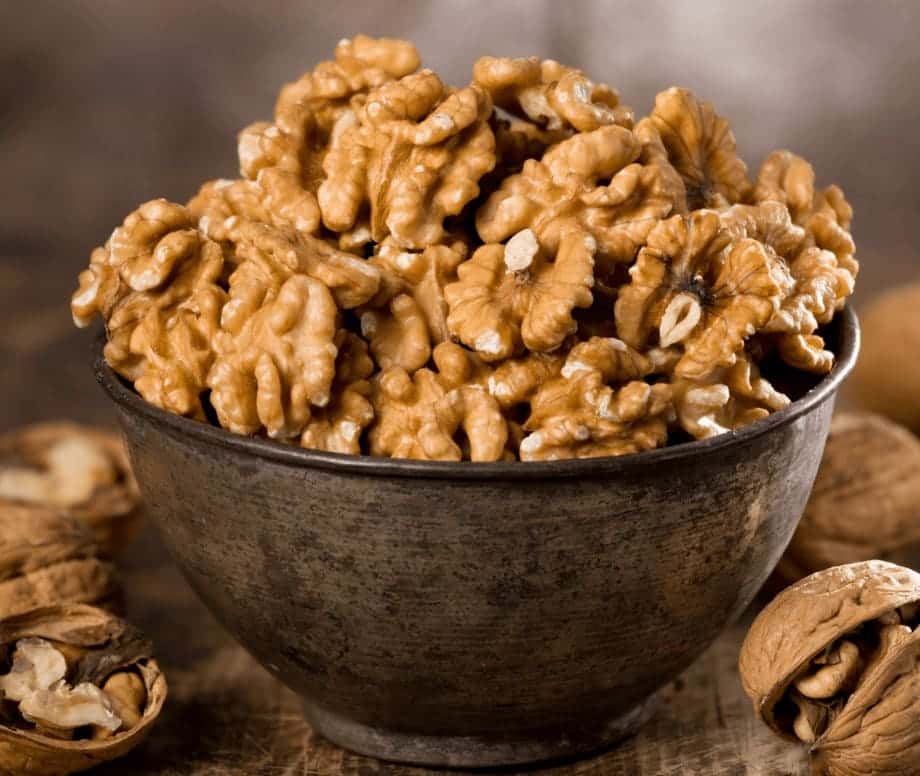
Every village has its walnut trees, and the walnut is the province's most famous harvest: picked by hand in autumn, eaten through the winter, sold down the valley and, increasingly, abroad. Mulberries ripen in early summer and are eaten fresh or dried into a sweet that keeps for months. Apples, apricots and grapes grow on the lower terraces, and in the old days the grapes made wine, which Babur remarked on and Robertson drank at the feasts of Kamdesh. The wine went with the conversion of 1896; the vines did not.
Wild bees in terracotta pots
Nuristan's honey is on Slow Food's Ark of Taste, the international register of foods worth saving. It is made by wild bees, Apis dorsata, which take up residence in terracotta pots that families hang from trees and set under rocks and shrubs, half a kilometre or more apart. The bees forage the forest flowers and the blossom of apple, wild almond and walnut, and the honey is taken in the early morning in August and September, while the bees are out, then worked by hand and stored in earthenware jars. It is eaten at breakfast with bread and nuts, and it goes into majun, a paste of honey, walnuts, almonds, sesame and seeds eaten with milk or tea at night. The Pech and Waygal valleys are the heart of it.
For guests, feasts and the fisherman
Meat is for occasions. A goat or a lamb is killed when a guest comes, when a family marries, at the festivals of the year, and the meat is cooked slowly into stew or grilled as kebab and shared from a common dish, with the best portions passed to the guest. In the old Kafir feasts of merit, hundreds of animals could be slaughtered by one man to earn his rank; the feasting survives, on a humbler scale, in the wedding.
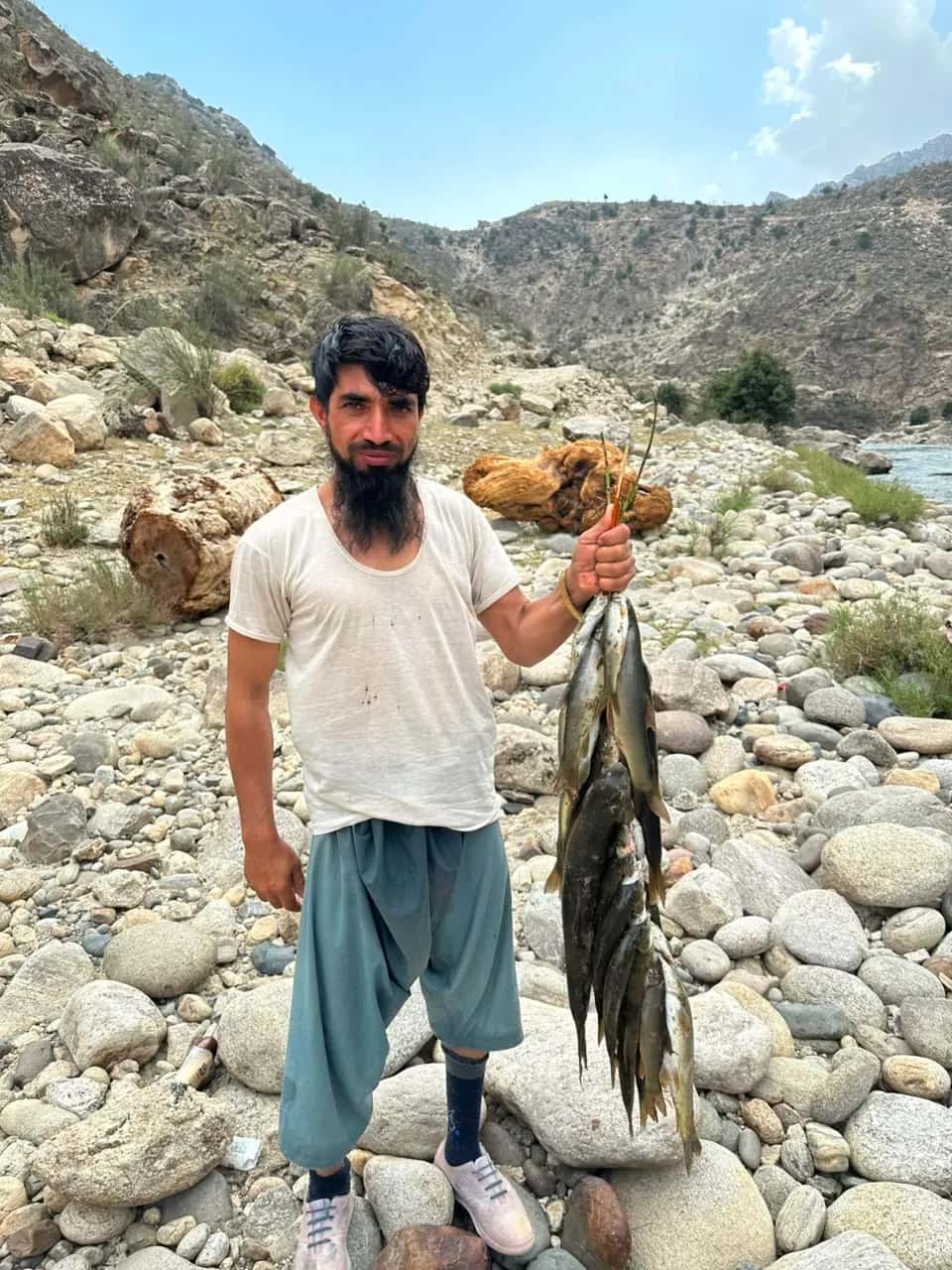
The rivers are full of fish, and in Mandol, Waygal and the Pech people catch them. A string of trout from the river, cleaned and fried over an open fire on the bank, is one of the best meals in the province and one of the least written about.
Morels in spring
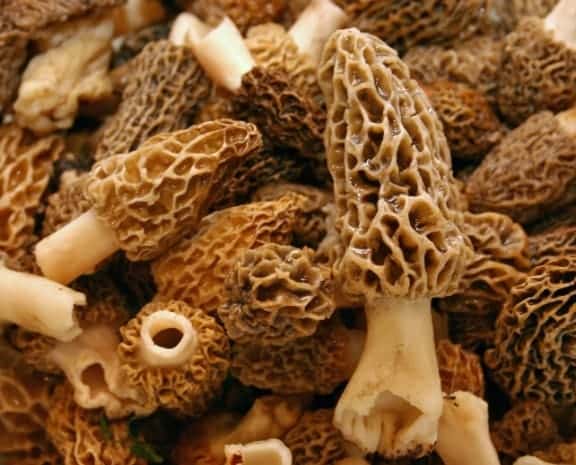
In spring, after the snow, the forest floor gives up morels, the honeycombed mushrooms the valleys call gucchi. Families gather them by hand, thread them and dry them in the sun, and they leave the province as one of its most valuable exports; a good spring can matter more to a household than its wheat. Wild herbs and greens are picked at the same time, and in autumn the forest gives pine nuts, wild fruit and the honey above.
The guest is fed first
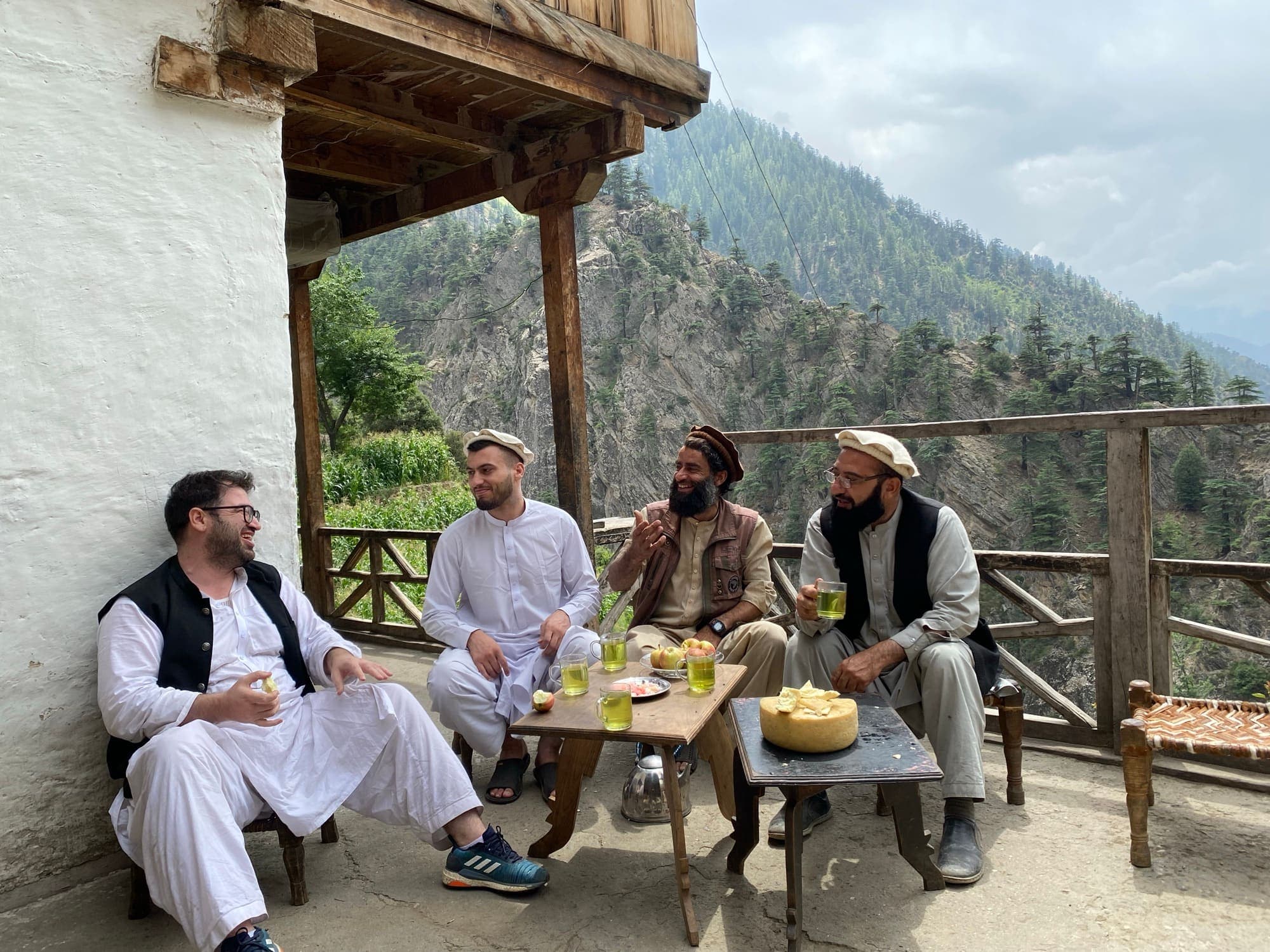
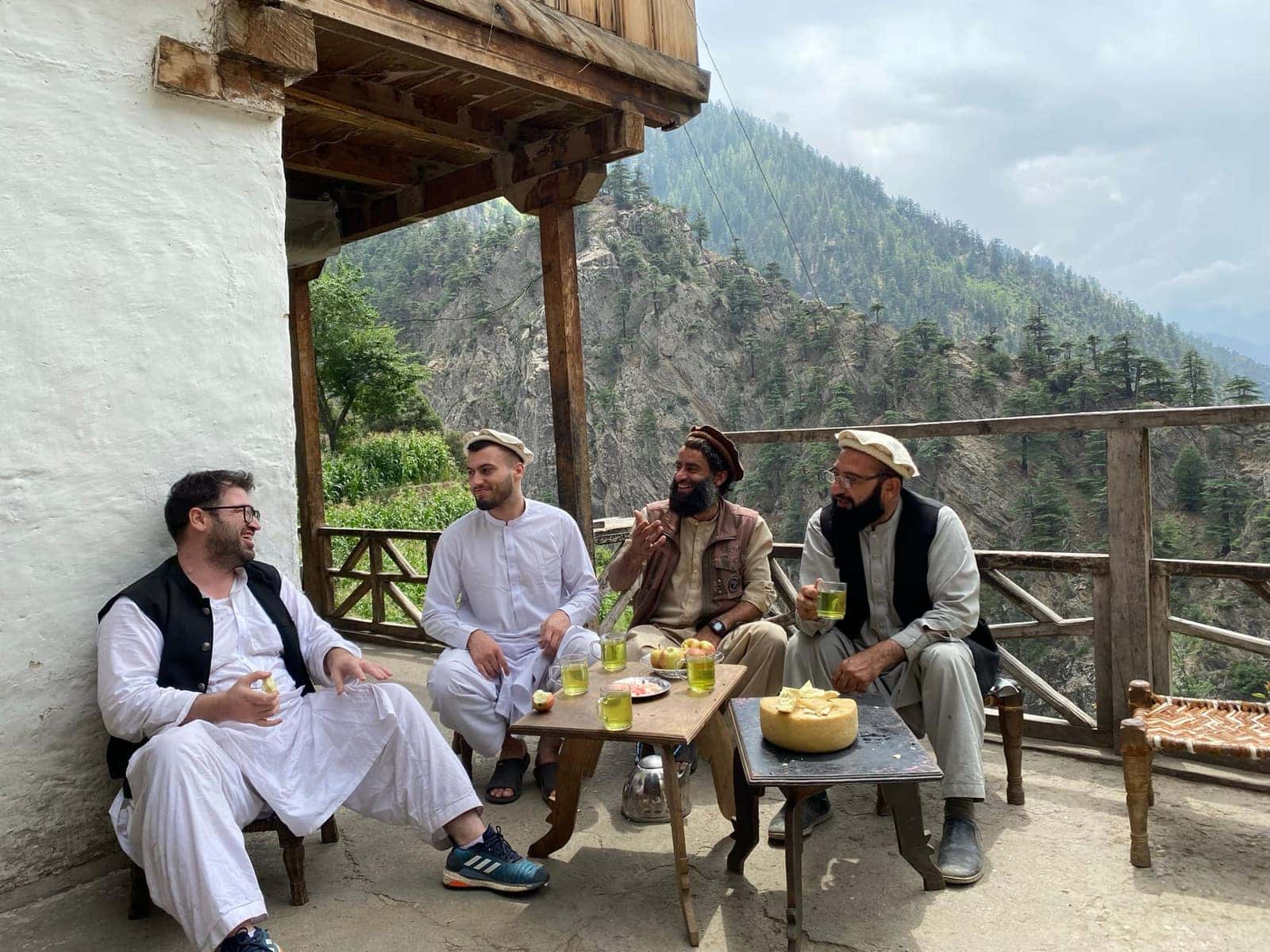
Green tea is the drink of the valleys, taken sweet, at every hour, and it is the first thing a household offers. Hospitality is not optional in Nuristan; a guest is fed before the family is, and refusing is a small insult. If you are offered tea, take it. If bread and cheese come with it, eat. The photograph at the top of this page, four men with a pot of green tea, apples and a slab of local cheese on a carved veranda, is the whole of Nuristani hospitality in one frame.
Food in the valleys
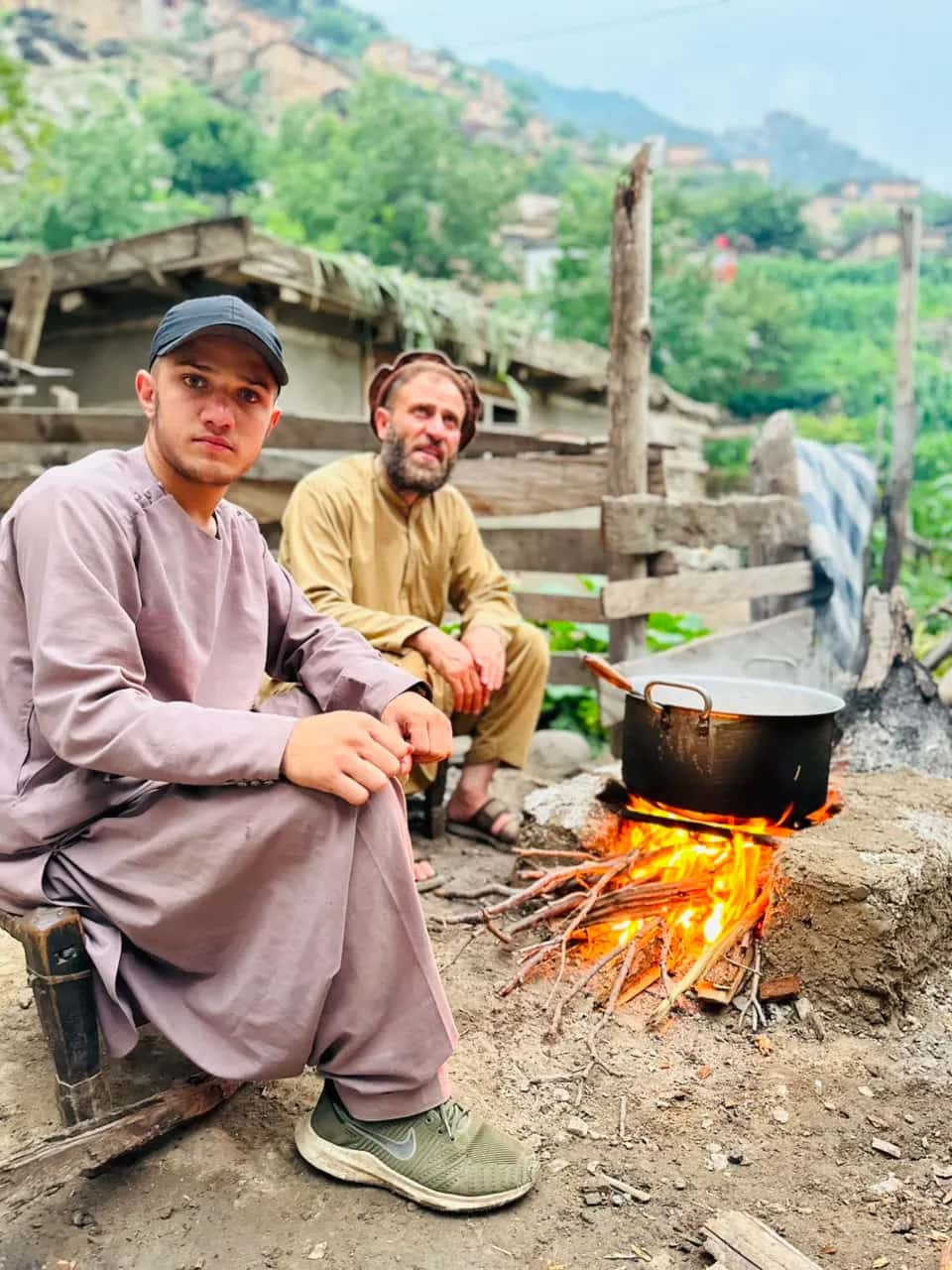
Our own photographs, and the produce the valleys sell.
Asked about Nuristani food
What do people eat in Nuristan?
Flat bread from wheat or maize, cheese, butter and yoghurt from the herds, walnuts, mulberries and orchard fruit, beans and potatoes from the terraces, morels and honey from the forest, fish from the rivers, and goat or lamb when there is a guest or a celebration. Green tea with everything.
What food is Nuristan famous for?
Walnuts, honey, cheese and gucchi morel mushrooms. Nuristan honey is listed on Slow Food's Ark of Taste, and the walnuts and morels are the province's best-known exports.
What is Nuristan honey?
Honey from wild Apis dorsata bees that nest in terracotta pots hung from trees and set under rocks, harvested by hand in August and September in the Pech and Waygal valleys. It is eaten at breakfast with bread and nuts and made into majun, a paste of honey, nuts and seeds.
Do Nuristanis eat fish?
Yes. The rivers of Mandol, Waygal and the Pech are fished, and trout fried on the riverbank is a local favourite.
What should a visitor know about eating in Nuristan?
Accept the tea. Food is shared from a common dish and eaten with the right hand; the guest is served first and given the best pieces, and refusing is a small insult. Treat all water by boiling or filtering.
Tell us how it is made
If you grew up in the valleys and your mother or grandmother made something this page does not name, tell us what it is called, what goes in it and when it is eaten. We will add it, with your name if you want it there.
Plan your Nuristan journey
Ready to plan a visit, source Nuristani products, or discuss an investment? Your message goes to Obaid, who is from Nuristan, and his team in Afghanistan and the UK. We reply to every message.