Skip to content
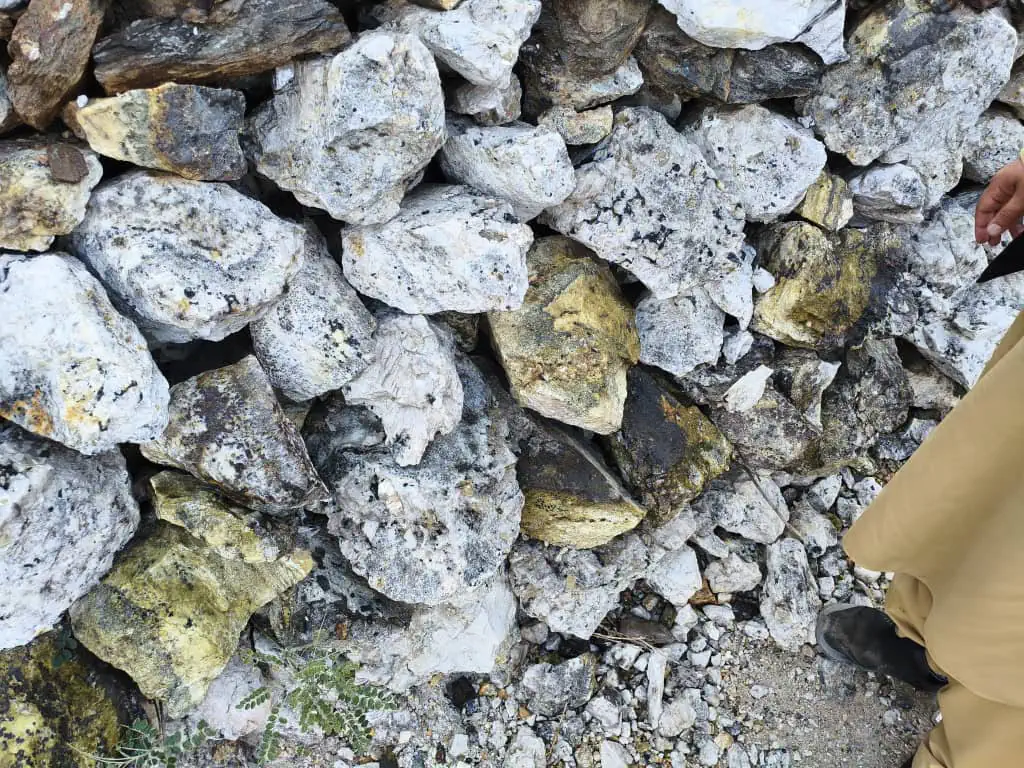
Pale pegmatite rock flecked with black crystals and yellow-green stones heaped on a slope in the Pashagar valley of Nurgaram, Nuristan, the surface sign of gem veins below
Minerals and mining

Mining in Nuristan

Gemstones, lithium and the rare metals in the pegmatite veins of the Hindu Kush: what the surveys found, how mining and selling work now, what the law allows, and what an investor should weigh.

The ground beneath the valleys

A province of veins, mapped once and never drilled

Nuristan's mountains hold one of the largest concentrations of lithium-bearing pegmatite in the world, by the estimate of the Soviet geologists who mapped them in the 1970s, and the same veins have given the gem tourmaline and kunzite the province is known for. Tantalum, niobium, beryllium, caesium and tin ride in the same rock. Almost none of it has been drilled, there is no road to most of it, and every tonne that has left the province in fifty years was dug by hand.

This page is for someone abroad who is weighing the province as a place to do business, or who simply wants the facts behind the headlines about Afghan lithium. It sets out what the surveys found and how much to trust them, what is in the ground district by district, how mining and selling work today, what the law says, how you get there, and the risks, in that order. We are from Nuristan and not geologists or lawyers; every figure carries its source, and where a number is a guess we say so.

The rock
Rare-metal granite pegmatite, two belts either side of the Alingar granite
Fields
21 pegmatite fields mapped by Soviet geologists, 1971 to 1976
Gemstones
Tourmaline, kunzite, aquamarine, morganite; mined since the 1970s
Lithium
About 2.1 million tonnes of lithium oxide estimated to 100 metres, undrilled
Rare metals
Tantalum, niobium, beryllium, caesium, tin
Not recorded
No copper or gold occurrence inside the province in the US survey
Mining today
Hand workings; state auctions of gem rough since 2024
Law
Minerals Law 2018; small-scale licences for Afghans only
The pegmatite belt

Two belts of giant-crystal granite

The pegmatites are veins of very coarse granite that formed when the last, water-rich fraction of the Laghman granites, of Oligocene age by the US Geological Survey's reading, was squeezed into the older schist, gneiss and marble of the Hindu Kush. They run in two belts. The Nuristan belt on the east takes in the Pachigram, Parun, Kantiwa, Darra-i-Pech and Darra-i-Nur fields; the Hindukush belt on the west takes in Mandol, Nilaw-Kolum, Nilaw, Alingar and Shamakat. Soviet survey parties discovered them between 1971 and 1976 and counted 21 fields of ten to eight hundred square kilometres, each with tens and sometimes hundreds of veins. Single veins run from ten metres to two and five kilometres long and from one to sixty metres wide; vein number 8 at Nilaw-Kolum is four kilometres long and averages seven metres thick.

A 2025 review by Afghan geologists counts 76 deposits and occurrences and more than 55 minerals across the national belt, which itself is one segment of a Himalayan pegmatite belt running from Afghanistan through Pakistan to Bhutan. The Soviet geologists remarked on the likeness to the gem pegmatites of Pala and San Diego County in California. The veins have never been dated directly, and published potassium-argon ages on the granites scatter across hundreds of millions of years, so even the age rests on inference. That is the first thing to know about Nuristan's minerals: the maps are fifty years old and nothing systematic has been done since the Soviet withdrawal.

District by district

What is in the ground, and where

The fields follow the valleys, so the districts are the natural units. Older surveys use the provinces that existed before Nuristan, so several of these fields appear under Laghman, Kunar or Nangarhar in the literature.

ParunWaygalKamdeshBargi MatalWamaNurgaramMandolDu AbWantKantiwa
BadakhshanPanjshirLaghmanKunarChitral, Pakistan20 kmN
Tap a district to open its guide. The pegmatite fields run through Parun, Bargi Matal, Kantiwa, Kamdesh, Du Ab, Mandol and Nurgaram.

Parun

The Parun (Jamanak-Pasghushta) field, about 1,158 square kilometres

Lithium above all; tantalum, niobium, tin, caesium; tourmaline and kunzite

The lithium heart of the province. Two long spodumene zones and two shorter ones hold five large lithium deposits in veins up to five kilometres long and forty metres wide, at 3,000 to 4,300 metres. Tourmaline is dug too: the provincial mines directorate sold a lot at auction in Parun in December 2024 and lists workings at Astawi, Frons, Diwah, Koshtki, Sosom and Pashki. Colourless beryl from the Pashki veins was the subject of a 2024 scientific paper.

Bargi Matal

The Pachigram field, about 221 square kilometres

Lithium, tantalum, niobium, tin; almandine garnet; kunzite, beryl, morganite

At least a hundred pegmatite dikes between 3,100 and 4,700 metres, one to twenty metres wide, with lithium oxide from 0.3 to 5 per cent in samples. A garnet mine worked here is filed under Nangarhar in the old literature, a label error inherited from before the province existed. A landslide at a gem working at Pachigram killed three miners in July 2026.

Kantiwa

The Kantiwa field, about 130 square kilometres

Kunzite, green tourmaline, optical quartz, tantalite, cassiterite

Spodumene and albite dikes rich in tantalite, with pockets lined with smoky quartz, green tourmaline and kunzite. Listed as an intermittent small producer in 1995 and still worked by hand.

Kamdesh

The Paprok pegmatites of the Parun field; muscovite occurrences

Polychrome tourmaline, kunzite, lepidolite, columbite-tantalite, cassiterite; mica

Paprok, at about 4,060 metres, is the most famous tourmaline mine in Afghanistan. The provincial directorate sold 124 kilograms of beryl from Kamdesh at auction in August 2025, and the Pajhwok news agency reported in 2026 that Paprok had been worked without licence for twelve years before a recent ban.

Du Ab and Mandol

The Nilaw-Kolum field with the Mawi and Kolum mines; the Mandol field

Kunzite, beryl (aquamarine and morganite), tourmaline, pollucite, spessartine, tantalite, cassiterite

The great kunzite mines of Afghanistan, worked since the early 1970s, and the source of nearly every large lot sold at the state auctions since 2025: about 9,000 kilograms in September 2025, 8,785 in November, about two tonnes of kunzite in September 2026. Older tables place Mawi in Laghman; its coordinates fall inside Du Ab.

Nurgaram

The Korgal and Kalatan fields

Green tourmaline, pollucite, lepidolite, tantalite, beryl; lithium and caesium

Three tourmaline dikes mined by hand at Korgal, and lithium-caesium veins at Kalatan. In the Pashagar valley the pale, crystal-flecked rock on the slopes is what tells local people that gem veins lie nearby. Five kilograms of beryl from Pashgardara were sold at auction in September 2025.

Waygal, Want and Wama

The Waigal zone of the Parun field; occurrences at Boni, Inshakhar and Marid

Spodumene, rubellite and tourmaline; lithium

Lithium occurrences in schist and marble, and tourmaline workings the directorate lists at Watoz and Kishton in the Waygal valley. Wama is said to have tourmaline that has never been surveyed. These are the least documented valleys in the province.
Lithium

The metal in the veins, and how much to believe

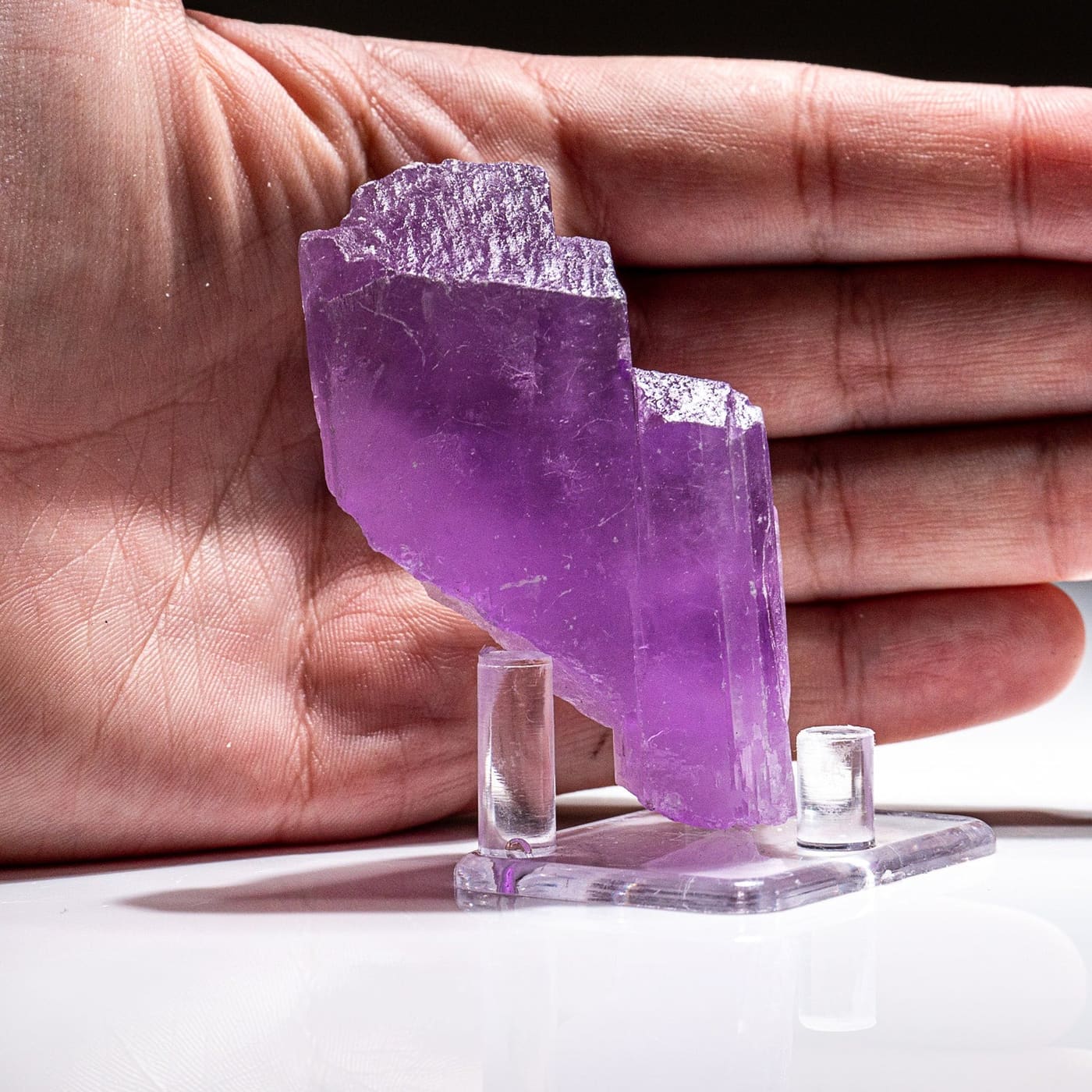
Kunzite is the clear, coloured form of spodumene, and most spodumene is grey and opaque and fills the veins by the tonne. That is Nuristan's lithium. Rossovsky put the content of the albitic pegmatites at 15 to 25 per cent spodumene, or 1 to 2 per cent lithium oxide, and estimated six deposits at Drumgal, Pasghushta, Tsamgal, Jamanak, Pashki and Jarigul at three million tonnes of lithium oxide to a depth of a hundred metres, which he said belonged among the largest in the world. The US Geological Survey's republication of the Soviet figures in 2011 gives a lower total, set out below, and attaches a warning that matters more than the number: the calculations appear to rest on surface exposures and samples, with no sign of drilling, trenching or underground working.

Set beside the world's lithium, these are resources of possibility rather than reserves. The Afghan review of 2025 puts the national figure at about 3.8 million tonnes of lithium oxide across twelve deposits, at roughly 1.7 per cent, and the US Geological Survey's 2024 summary credits Afghanistan with more than 1.8 million tonnes of lithium in resources. The USGS wrote in 2011 that the north-eastern pegmatites could be considered the world's recognised future principal source of lithium, and in the same breath that brines had displaced pegmatites as the main source of the metal. No systematic exploration has been carried out since the Soviet forces left.

The famous phrase, the Saudi Arabia of lithium, comes from an internal Pentagon memo quoted by the New York Times in June 2010 beside a one trillion dollar valuation of Afghanistan's minerals. The memo was about brines in Ghazni province, not Nuristan's pegmatites, and a USGS drilling programme later found the Ghazni pore waters held lithium at about a thousandth of the concentration of South American brines. The number that circulates for Nuristan alone, 2.5 million tonnes, has no traceable source or method. What has happened since 2021 is this: lithium extraction and sale were banned in August 2021; in January 2023 the authorities seized about a thousand tonnes of lithium-bearing rock in Jalalabad said to have come from Nuristan and Kunar, and arrested two Chinese and three Afghan men; a Chinese company offered ten billion dollars for lithium rights in April 2023; a committee inspected Nuristan's lithium mines in February 2023; and no contract has been announced. Chinese buyers were reported to be offering about 3,000 to 3,200 dollars a tonne for rock at five per cent lithium oxide.

Estimated lithium oxide in Nuristan's pegmatite deposits
DepositLithium oxide, tonnesGrade
Pasgusta1,050,0002.14 per cent
Jamanak450,0001.83 per cent
Drumgal253,0001.38 to 1.58 per cent
Yorigal130,000not stated
Pashki127,0001.46 to 2.1 per cent
Pasgusta, lower body124,0002.2 per cent
Total, six deposits2,123,000to a depth of 100 metres

Lithium oxide, in tonnes, as republished by the US Geological Survey in 2011 from the Soviet surveys of the 1970s. The BGS adds Tsamgal at 187,500 tonnes at 1.5 per cent. Surface estimates, undrilled.

A lilac kunzite crystal from Nuristan, the gem form of the lithium mineral spodumene, held up on a stand
Rare metals and the rest

Tantalum, caesium, beryllium, tin, and what is not there

The same veins concentrate the rare metals. Tantalum: at Drumgal the Soviet sampling found 0.03 per cent tantalum oxide over sixty metres of vein and 0.06 per cent over thirty, and at Nilaw the lepidolite dikes average 17 grams of tantalite a tonne; the Afghan review of 2025 counts about 8,070 tonnes of tantalum oxide at 0.025 per cent in five deposits including Yarygul, Drumgal and Kalatan, with 372 tonnes of niobium oxide. Caesium: pollucite, the caesium ore, occurs at Korgal, Paprok, Kolum, Wozgul and Darra-i-Pech, and one estimate puts 66 tonnes of caesium oxide at 9 per cent at Tatang. Beryllium: 130 tonnes of beryl were mined at Dara-i-Nur in Nangarhar between 1950 and 1960, and Kolum holds about fifty tonnes of beryl in bulk. Tin occurs as cassiterite in most dikes but, in the USGS's judgement, would only ever be a by-product.

Of the ordinary minerals, mica is recorded at Kamdesh and Dewoz, and the USGS notes that pegmatite feldspar, quartz and mica could supply local glass, chemical and craft industries. Marble is part of the host rock throughout the province, but no quarry appears in any survey. Iron occurrences are recorded on the Kunar border at Dangam and on the Badakhshan border; no copper or gold occurrence falls inside Nuristan in the USGS inventory of Afghanistan's mines and occurrences, whatever a promoter may say.

Gemstone mining today

How gemstones are mined and sold in Nuristan

Mining in Nuristan is what it has always been: men working a vein by hand. In 1985 about five hundred miners worked the kunzite field daily, following veins ten to twenty metres down and scraping crystals out of the pocket clay, and carrying the rough on foot to the Pakistani border. In 2023 reporters in the Pech valley found former soldiers using home-made explosives, a jackhammer run off a generator and no safety equipment, paying a levy that was doubled that year to four per cent of their takings. In 2018 some four hundred sites in the province were being dug without licence, with half the revenue reported to go to armed groups, and the ministry counted eleven insurgent-controlled mining sites in Nuristan between 2018 and 2020.

What has changed since 2024 is the selling. The provincial Directorate of Mines and Petroleum now gathers gem rough, chiefly from the Mawi workings in Du Ab, and sells it by open auction to domestic traders, with about ten per cent of each sale to the treasury and, by one account, the rest to the miners. Sales ran from 8 million afghanis in December 2024 to 122.5 million in September 2026, and Kunar sold 1,500 kilograms of Pech tourmaline for 119.3 million afghanis in July 2026. The buyers are the same dealers who carry the stones to Kabul and Peshawar. Our account of the auctions is on its own page, and the directorate said in 2023 that a mining procedure for the province had been sent to Kabul for approval so that the workings could be dug professionally; it has not been published.

The law

The Minerals Law, licences and what has changed since 2021

The statute is the Minerals Law of 2018. Royalty is due on the first sale of a mineral at rates set by regulation rather than in the law itself; an accountancy summary cites 7.5 per cent on raw, 5 on semi-processed and 2.5 on processed minerals, but we could not find the regulation. Small-scale licences cover up to one square kilometre and sixty metres of depth for five years and are reserved for Afghan citizens or companies in Afghan majority ownership. Large-scale exploration and exploitation licences are open to foreign companies through the ministry. The minister may prohibit the export of a mineral when processing it at home is judged economically feasible, which is the power behind the lithium ban in force since August 2021.

Since 2021 the ministry has signed about 203 contracts worth over 250 million US dollars, 175 of them small-scale, none of them identified as a Nuristan gemstone or lithium contract. Provincial mines directors are appointed from Kabul. A National Minerals Policy was approved in draft by the Economic Commission in August 2025 and sent to the leadership; its terms have not been published. Reporting from the north-east describes the licensing process in practice as technical and financial documents, a qualification assessment, a licence and then monitoring, and says the process leaves room for abuse and for partnerships with the well connected. There is no gemstone exchange in Kabul; the bourse planned in 2015 was never built, and the Nuristani gemstone association that reached the first legal agreement with the ministry in 2009 has left no recent trace.

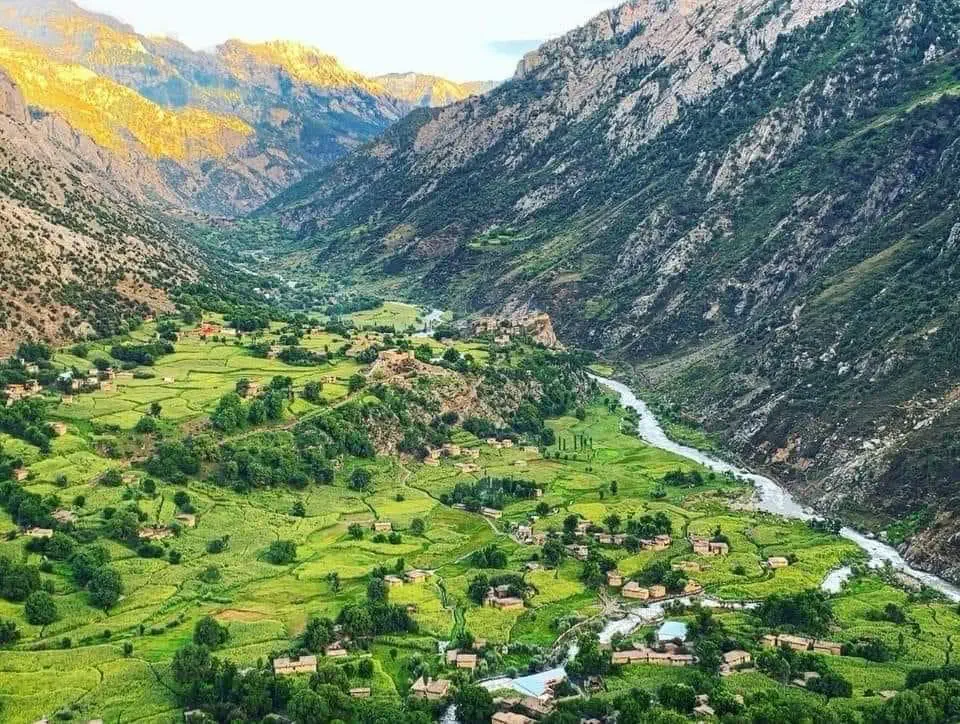
The Kantiwa valley in Nuristan from above, fields and houses along the river below steep rocky mountains that hold the Kantiwa pegmatite field
Access

Getting to the veins, and getting anything out

The veins lie between 3,000 and 4,700 metres, above the villages and above the roads. In 1978 the mineralogists who described the Laghman pegmatites reached Nilaw after two days on foot from the end of the road at Mehtar Lam, and most workings are still reached on foot or by mule from the valley floor. Three river roads enter the province: up the Pech from Asadabad for Wama, Waygal, Parun and Kantiwa, up the Kunar and the Bashgal for Kamdesh and Bargi Matal, and up the Alingar from Laghman for Nurgaram, Mandol and Du Ab. All three are seasonal and all three flood; the July 2026 Parun flood damaged four bridges and six stretches of road in the capital's district alone. Power is from generators and small hydro. There is no rail, no airstrip in regular use, and the nearest cutting and grading industry is in Peshawar.

Risks

What an investor should weigh

The numbers are old and shallow

Every resource figure for Nuristan is a Soviet surface estimate from the 1970s, republished but never tested by drilling. The USGS states there are no reserves for the gem pegmatites at all. An investor would be paying for exploration, not buying a reserve.

Sanctions and counterparties

Afghanistan is not under comprehensive sanctions in the United Kingdom, the European Union or the United States, but the leadership that appoints the mines directors and receives the auction levies is listed. United States General License 20 permits commercial dealings with Afghan governing institutions except payments to the Taliban beyond taxes, fees and licences not related to luxury items. Any contract touching the state needs sanctions counsel in your own country.

Law and ownership

Small-scale licences are for Afghans only; large ones run through a ministry whose new minerals policy is unpublished; contract terms are not disclosed; and the ban on lithium has no announced end. The Afghan press that reports the auctions describes the sector as opaque and says residents see little of the revenue.

Safety and the land

Workings are dug without engineering, at altitude, in country that floods every summer and slides after rain. Three men died at a gem working in Bargi Matal in July 2026. Most of the pegmatite country also lies inside the Nuristan National Park declared in 2020, whose rules have never been written.

Getting it out

Everything leaves on a man's back or a mule to a seasonal road, then by lorry to Jalalabad or over the border. Bulk minerals such as spodumene concentrate have no viable route today; the only mineral that pays for its own transport out of Nuristan is a gemstone.

How we can help

People in the valleys

What we can offer is what no survey can: people in the valleys. Our team in the province knows which workings are active, who holds them, what the miners are paid and what the traders pay, and how the directorate's auctions are run. If you are considering Nuristan for a mineral project, for gemstone sourcing or for the processing and cutting that the province has never had, we can tell you honestly what is there, introduce you to the people you would need to know, and say when something you have been promised is not real. We do not sell licences, hold mineral rights or take commission on contracts.

Questions

Asked about mining in Nuristan

Does Nuristan have lithium?

Yes. The pegmatite veins of Parun, Pachigram and the other fields carry lithium as spodumene, and Soviet surveys of the 1970s estimated about 2.1 million tonnes of lithium oxide in six deposits to a depth of a hundred metres. The figures come from surface sampling with no drilling, so they describe a possibility rather than a proven reserve, and lithium extraction has been banned by the authorities since 2021.

How much lithium does Nuristan have?

About 2,123,000 tonnes of lithium oxide across six deposits, by the US Geological Survey's republication of the Soviet figures, the largest at Pasgusta with about 1.05 million tonnes at 2.14 per cent. Rossovsky's own total was three million tonnes. A figure of 2.5 million tonnes for Nuristan alone circulates online without a traceable source. None of it has been drilled.

Is lithium being mined in Nuristan?

Not legally. Lithium extraction and sale have been banned since August 2021. In January 2023 about a thousand tonnes of lithium-bearing rock said to be from Nuristan and Kunar were seized in Jalalabad and five men arrested. A Chinese company offered ten billion dollars for lithium rights in 2023; no contract has been announced.

What minerals does Nuristan have?

Gem tourmaline, kunzite, aquamarine, morganite, spessartine garnet and quartz; lithium as spodumene; tantalum, niobium, beryllium, caesium and tin in the same pegmatite veins; mica and feldspar; and almandine garnet at Pachigram. No copper or gold occurrence is recorded inside the province in the US Geological Survey's inventory.

Is there gold in Nuristan?

No gold occurrence inside Nuristan appears in the US Geological Survey's inventory of Afghanistan's mines and mineral occurrences; the nearest recorded gold is in Badakhshan. Claims of gold in the province should be treated with care.

Can foreigners invest in mining in Nuristan?

Small-scale licences under the Minerals Law of 2018 are reserved for Afghan citizens and Afghan-majority companies. Larger exploration and exploitation licences run through the Ministry of Mines and Petroleum, whose new minerals policy is unpublished and whose contracts are not disclosed. Any investor would also need sanctions advice at home, because the leadership that controls the ministry is sanctioned even though Afghan goods are not.

How are gemstones mined in Nuristan?

By hand, as they always have been. Miners follow a pegmatite vein ten to twenty metres into the hillside and scrape the crystals out of the clay in its gem pockets; some crews now use home-made explosives and jackhammers run off generators, with no safety equipment. Since late 2024 the provincial mines directorate has gathered the rough and sold it at open auction to domestic traders.

Is gemstone mining legal in Nuristan?

Since 2009, when a Nuristani gemstone association reached an agreement with the ministry, gem mining has had a legal route, and since 2024 the provincial directorate has sold rough by open auction with about ten per cent to the treasury. Much mining is still unlicensed; the Pajhwok news agency reported in 2026 that the Paprok mine had been worked without licence for twelve years before a recent ban.

Who buys Nuristan's gemstones?

Domestic traders, at the provincial auctions and at the mines, who carry the rough to Kabul and to Namak Mandi in Peshawar, where buyers from Thailand, Sri Lanka, China, Hong Kong and the West take it on. Several Chinese businessmen attended the September 2025 auction in Du Ab.

Read on

On this site

  1. US Geological Survey: Nuristan rare-metal pegmatite area of interest (Open-File Report 2011-1204, chapter 24A)
  2. US Geological Survey: Preliminary Non-Fuel Mineral Resource Assessment of Afghanistan 2007, pegmatites
  3. US Geological Survey: Mines and mineral occurrences of Afghanistan (Open-File Report 02-110, 2002)
  4. US Geological Survey Minerals Yearbook: The Mineral Industry of Afghanistan, 2020 and 2021 (December 2024)
  5. L. N. Rossovsky, Rare metallic pegmatite belts of the Hindukush, Eastern Afghanistan (1986)
  6. British Geological Survey and Afghanistan Geological Survey: Minerals in Afghanistan, rare-metal deposits
  7. Arian et al., A review on Afghanistan pegmatite belt: lithium reserves, challenges and prospects, Geopersia 2025
  8. Skublov et al., Trace element zoning of colorless beryl from spodumene pegmatites of the Pashki deposit, Frontiers in Earth Science 2024
  9. Gary Bowersox, A Status Report on Gemstones from Afghanistan, Gems and Gemology, Winter 1985
  10. Islamic Republic of Afghanistan, Minerals Law 2018
  11. Amu TV, 25 August 2025: draft National Minerals Policy approved
  12. 8am Media, 30 July 2026: mining in north-eastern Afghanistan and how licences are issued
  13. Afghanistan International, 2 September 2026: who controls Afghanistan's mineral wealth
  14. VOA, January 2023: lithium smuggling arrests and the ban on lithium
  15. Global Affairs, April 2023: Afghanistan's lithium riches, more mirage than windfall
  16. Mining Technology: the Taliban and Afghanistan's elusive lithium
  17. Ministry of Mines and Petroleum, February 2023: committee inspects Nuristan's lithium mines
  18. Amu TV, 24 July 2023: lithium tenders to be open to all
  19. Al Jazeera, 18 August 2023: the former Afghan soldiers turning to gem mining to survive
  20. Pajhwok Afghan News, 25 April 2023: mines unprofessionally dug in Nuristan
  21. Pajhwok Afghan News, 27 February 2018: gemstones illegally excavated at some 400 Nuristan sites
  22. Pajhwok Mines: Mineral resources of Nuristan province
  23. KabulNow, 24 July 2026: landslide kills three mine workers in Nuristan
  24. OFAC: General License No. 20 and Afghanistan FAQs
  25. USAID: legalising Afghanistan's gemstone sector, the 2009 agreement
  26. RFE/RL, 14 November 2015: Afghanistan to create gemstone bourse
Get in touch

Plan your Nuristan journey

Ready to plan a visit, source Nuristani products, or discuss an investment? Your message goes to Obaid, who is from Nuristan, and his team in Afghanistan and the UK. We reply to every message.