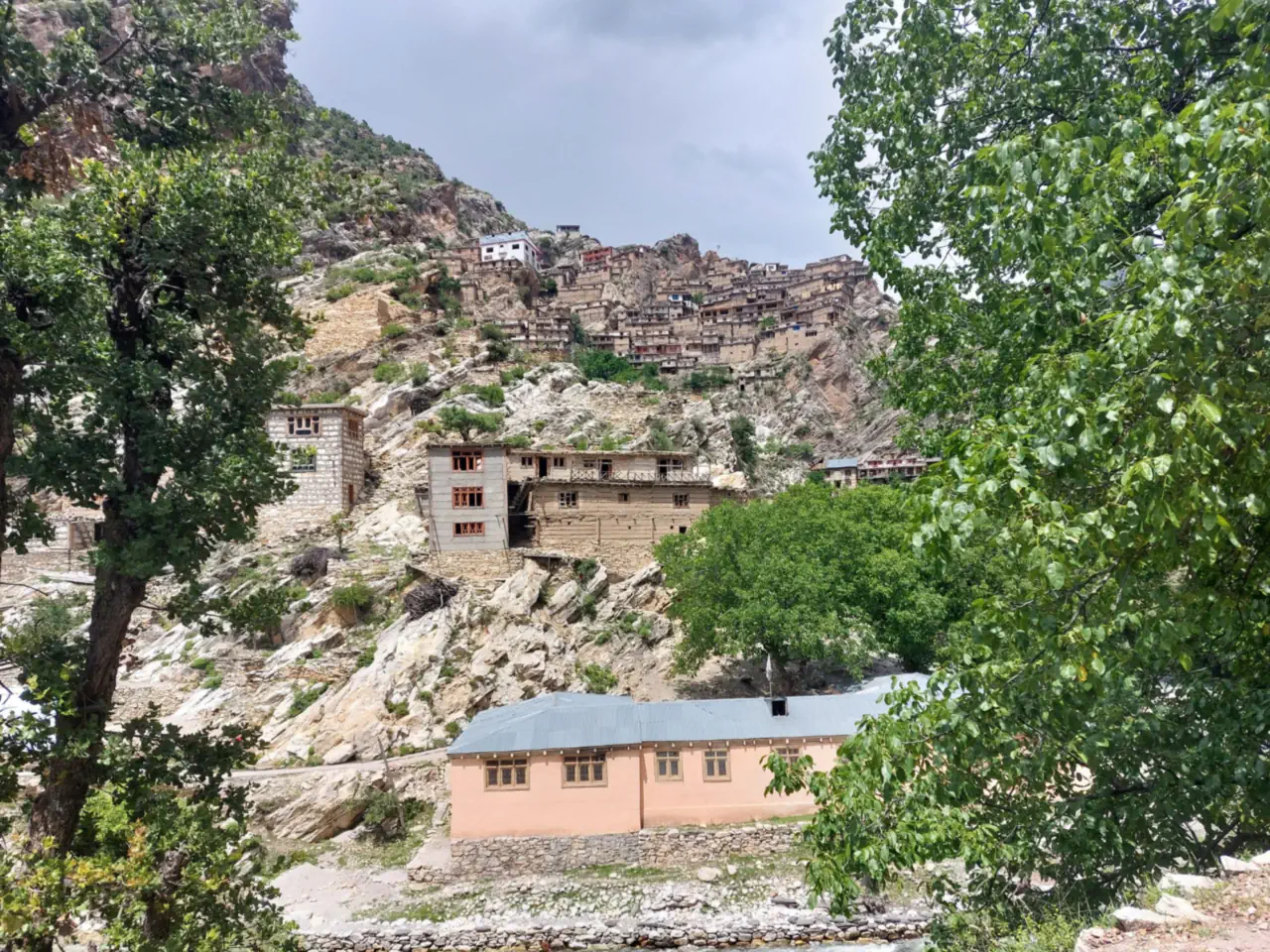
The religion of Nuristan, before and after 1896
Nuristanis are Sunni Muslims, and have been for five generations. For a thousand years before that their valleys kept the last old religion of the Hindu Kush. This page covers both, and how one became the other.
Muslims, and the heirs of Kafiristan
Two answers are true at once. Ask what religion Nuristanis follow and the answer is Islam: Sunni, observant, with a mosque in every village and a reputation across Afghanistan for piety. Ask what the religion of Nuristan is, in the sense most people mean when they search for it, and the answer reaches back before 1896, to the gods of Kafiristan, whose names Nuristani elders can still list and whose shrines stood in these valleys within the lifetimes of our great-grandparents.
This page gives both answers. It starts with the present, because that is what outsiders most often get wrong, and then goes back to the old religion in as much detail as the record allows: the gods, the priests, the sacrifices and festivals, the winter it ended, and what came through. We have written it as Nuristanis and checked it against the scholarship, and we say plainly where the record is thin.
- Religion today
- Sunni Islam
- Since
- The winter of 1895 to 1896
- Before that
- A religion of many gods, Indo-Iranian in origin
- Chief god
- Imra, called Mara in Parun
- Greatest shrine
- The temple of Imra at Kushteki, Parun
- Main record
- Robertson, The Kafirs of the Hindu-Kush, 1896
- Living cousin
- The Kalash of Chitral, Pakistan
- Old name
- Kafiristan, land of the unbelievers
Islam in Nuristan
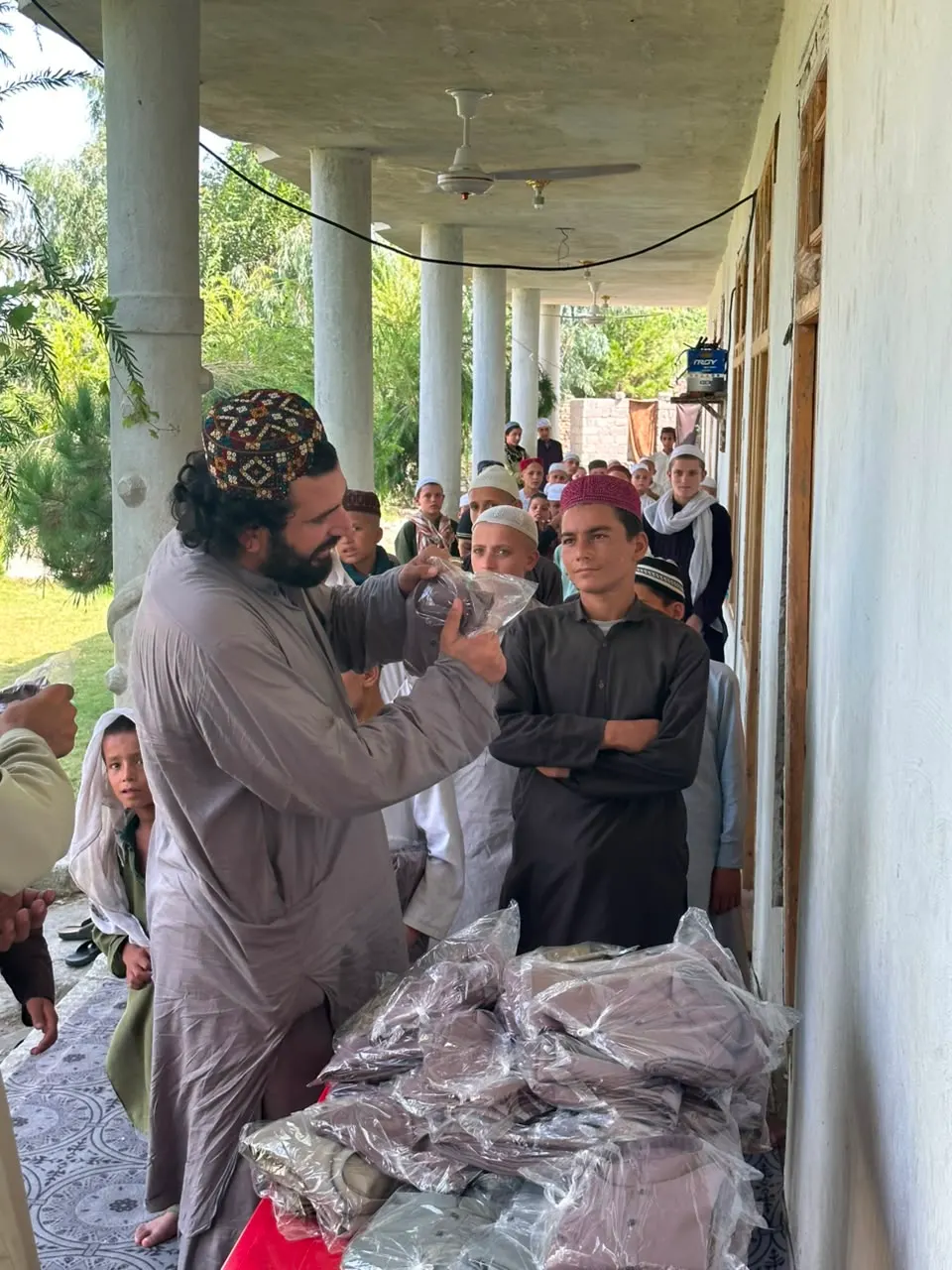
Nuristanis are Sunni Muslims. Islam came to the valleys by conquest in the winter of 1895 to 1896, and within a generation it was the faith of every village, taught by mullahs sent from Kabul and by the first Nuristani boys educated there and sent home. Today there is no Nuristani community that is not Muslim, and no sense in which the old religion is practised. A visitor who arrives expecting hidden pagans will find the mosque, the call to prayer and the fast of Ramadan, kept as carefully as anywhere in Afghanistan.
Most Nuristanis follow the Hanafi school, as most Afghans do. Since the 1980s a Salafi current has also been strong, above all in the eastern valleys of Kamdesh and Bargi Matal. It arrived with scholars trained in the madrasas of Pakistan, and it took political form in the Dawlat, the small Islamic state that Mawlawi Afzal of Bargi Matal ran from Kamdesh through the Soviet war with Saudi and Pakistani backing. Nuristan and neighbouring Kunar remain the part of Afghanistan where that stricter reading of Islam has its deepest roots, and it shows: music and dancing at weddings are rarer than they were, the shrine-visiting common elsewhere in the country is not part of life here, and religious teaching fills much of the schooling children get.
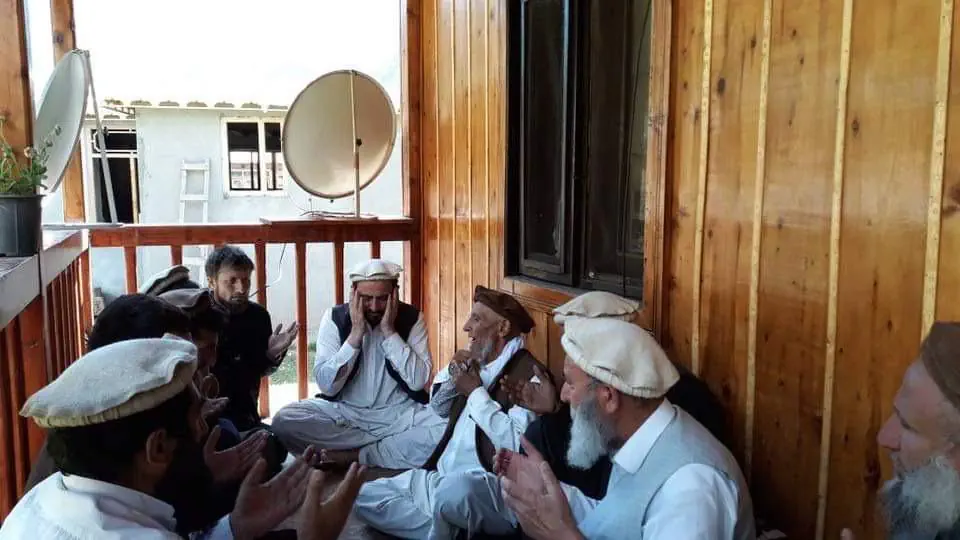
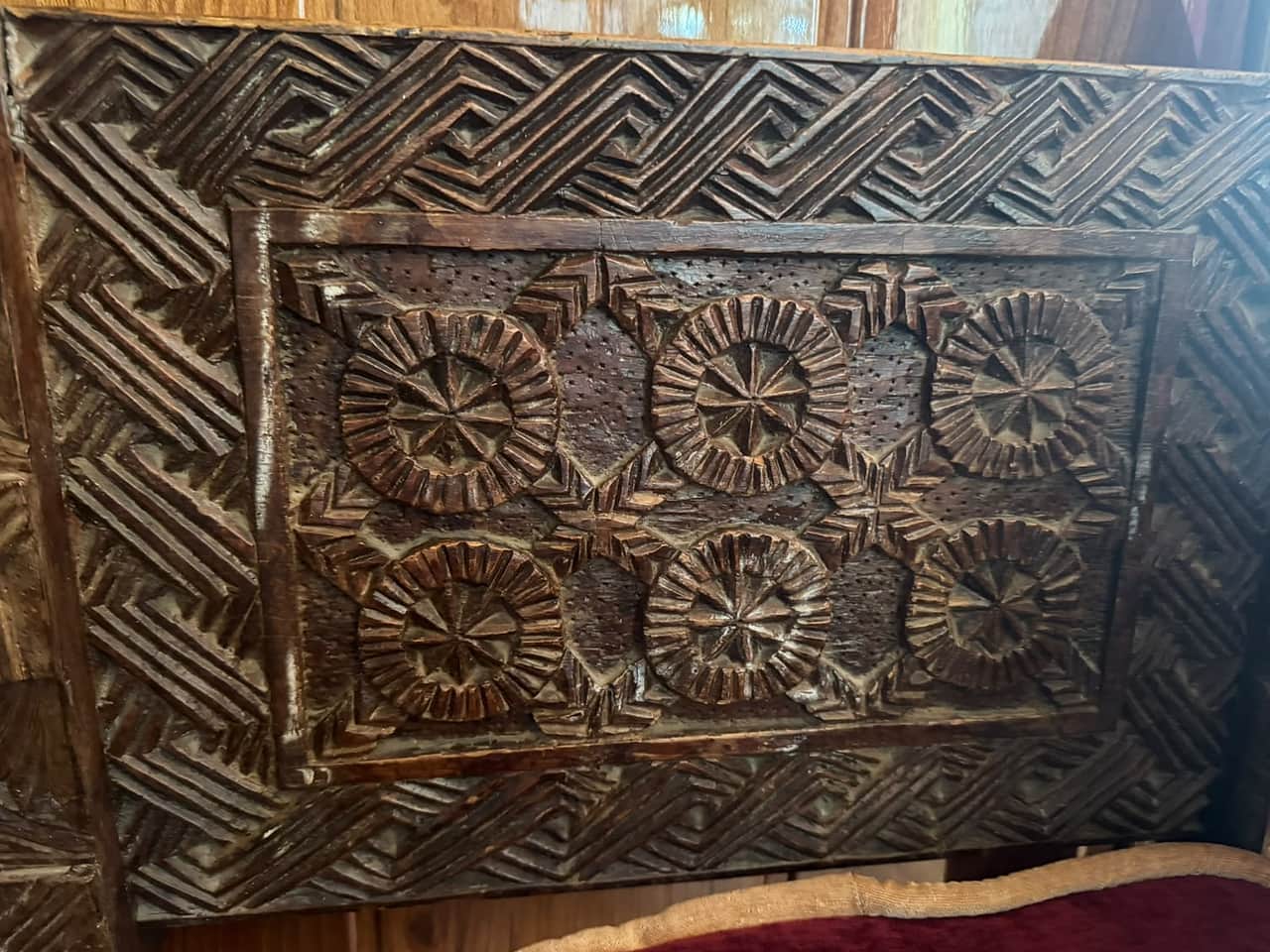
It is also the ordinary faith of a mountain people. The year turns on Ramadan and the two Eids, on Friday prayer in the village mosque and on the recitation of the Qur'an at births, weddings and burials. The carpenters whose grandfathers carved shrines carve the pillars and pulpits of the mosques, and a Nuristani mosque, with its cedar columns and its horn and rosette motifs, looks like nowhere else in the Muslim world.
The past is not hidden. Elders know the names of the old gods, families remember which clan kept which shrine, and the words for honour, purity and hospitality that governed the old religion still govern how people behave. The rest of this page is about that past.
The old religion of Kafiristan
A religion of many gods, descended from the same ancient world as the Vedic hymns, and recorded in detail only once, in the year it ended.
Before 1896 the valleys followed a religion that had no name of its own, because nobody there had ever needed one. The neighbours called it unbelief and its people kafirs. Scholars now call it the pre-Islamic Nuristani religion or, following the linguist Richard Strand, a form of ancient Hinduism with local growth on it. What it was, in plain terms, was a religion of many gods, of animal sacrifice, of feasts and of the honoured dead, descended from the same Indo-Iranian world as the hymns of the Rigveda and the oldest Iranian texts, and kept alive in the mountains for two thousand years after the lowlands had moved on.
Almost everything known about it comes from one witness. George Scott Robertson, a British surgeon and political officer, spent a year among the Kom of Kamdesh in 1890 and 1891 and published The Kafirs of the Hindu-Kush in 1896, the year the religion was ended. He was shown the temple of Imra in Parun but not allowed inside it. Later scholars, above all Max Klimburg, Karl Jettmar and Richard Strand, added what could be recovered from the memories of old people and from the carvings, and the linguist Jakob Halfmann has argued that most of the gods' names are borrowings from Indo-Aryan languages, which says something about how the religion travelled. Everything below leans on those sources, and where the valleys disagreed with one another we say so.
| God | What they governed | Where they were worshipped |
|---|---|---|
| ImraImro in Kati, Yamrai in Waygal, Mara in Parun | The creator, who made the earth and, with his breath, the gods Moni, Gish and Bagisht. His name goes back to Yama, the Indo-Iranian lord of the dead, and he kept the gate of the underworld. | Every valley. His temple at Kushteki in Parun was the largest building in Kafiristan. |
| MoniMandi, Mon | Imra's messenger and prophet in the myths, and a god of the ordinary village shrine. In Kamdesh his shrine stood beside that of Gish. | The Bashgal and Waygal valleys. |
| GishGiwish among the Kom | The god of war, invoked before raids and thanked after them. Robertson's epitaph for the old country, written after the conquest, was that Gish the war god was dead. | Above all the Bashgal, whose fighting clans made him their favourite. |
| Bagisht | The god of waters, worshipped at stones beside the streams and lakes, and one of the three gods Imra breathed into being. | Rivers and springs in every valley. |
| DisaniDizane, Disni | The great goddess, of grain, fertility and the household, with her own festival, Dizanedu. Robertson, finishing his book as news of the conquest arrived, noted that she was by then becoming the Lady Fatima. | Every valley. |
| Indr | The god of the vine and of wine, a direct cousin of the Vedic Indra. The grape terraces of the lower valleys were his, and the wine drunk at the feasts was poured for him. | Waygal and the lower valleys, where grapes grew. |
| KshumaiKime, Krumai | A goddess of the high pastures and the herds, often pictured as a wild goat of the mountains. | The high country, on the pure side of the line. |
| Nirmali | The goddess of birth and of women, who protected the house outside the village where women went to give birth and for their monthly seclusion. | The Bashgal, in Robertson's account. |
Robertson lists a dozen more: Satarám, Sanu, Sudrem, Arom, Nong, Shomde, Panao, Duzhi and others, gods of particular villages and clans about whom he could learn little. In Parun, Klimburg records, each clan also kept its own guardian goddess in a clan house, served by a clan priest who held the office only for a time.
How the gods were served
Worship happened out of doors and in wood. A village shrine was a small carved building, or a niche of cedar boards with the god's face or figure cut into it, set beside a sacred stone and an altar. The great gods had temples. The temple of Imra at Kushteki, in the middle of the Parun valley, was the largest building in Kafiristan, a square timber hall with a carved front and a great door, which Robertson saw from outside and was not allowed to enter. The gods were pictured seated on stools or on goats; Imra alone rode a horse. The horns, rosettes and chevrons cut into those boards are the motifs Nuristani carvers still use.
Three kinds of men served the gods, and Robertson gives their names in the language of Kamdesh. The utah was the priest, from a hereditary family, who made the sacrifices and kept the rites. The pshur was the seer, a man the god entered during a ceremony, who shook, cried out and spoke for the god, and might demand another goat on the god's behalf. The debilala was the chanter, who sang the hymns that told the gods' stories. There were also women who acted as seers in some places, though the record of them is thin.
The centre of the religion was sacrifice. Goats above all, and cattle for the great occasions, were killed at the altar, their blood offered to the god and the meat shared out. Juniper was burned so that the smoke rose with the offering, and flour, butter and wine were thrown on the fire. Klimburg describes the cult as resting on the purifying, god-pleasing effect of a bonfire and its smell of juniper, burnt blood and butterfat, and every account of a Kafir ceremony comes back to that fire.
Beneath it all ran a strict sense of pure and impure. The high pastures, the goats and the men who kept them were pure; the valley floor, the fields and the women who worked them were the other domain, and rules kept the two apart. Women went to a separate house outside the village to give birth and for their monthly seclusion, under the protection of Nirmali. The craftsmen, the bari, who did the carving and smithing, were counted impure and kept out of the rites. That division shaped the whole society, and it has outlasted the religion by more than a century.
Festivals, feasts and rank
The year was a round of festivals, tied to the herds going up to the pastures and coming down, to sowing and harvest, and to midwinter. Robertson lists a dozen for Kamdesh alone, among them Agar, Giche, Duban, Dizanedu, Munzilo and Nilu, and admits he could not fix them all to a date. Each meant sacrifice, a feast for the whole village, dancing to drums and pipes, wine, and the chanting of the old stories. At some of them the dancers wore carved and horned masks, and the rites that made boys and girls into adults ended with the whole village dancing.
Feasting was also how a man rose. Rank in Kafiristan was earned by giving enormous feasts to the village, and the dead of standing were honoured a year on with a carved wooden effigy, seated on a stool or on horseback, set up on the hillside. The Kafiristan article tells that side of the story in full. Here it is enough to say that religion, rank and carving could not be pulled apart: the same feast fed the gods, the village and a man's standing.
How it ended
It ended in one winter. After the Durand Line of 1893 left Kafiristan inside Afghanistan, Amir Abdur Rahman Khan sent his army into the valleys in the winter of 1895 to 1896, when snow closed the passes, with the stated task of destroying the old religion and putting Islam in its place. By his own account the country fell in forty days. The shrines and temples were burned with the effigies in them, the priests were killed, driven out or won over, and mosques were raised where the altars had stood. In 1896 the Amir named the land Nuristan, the land of light.
Not everything burned. More than thirty of the wooden figures were carried to Kabul. Fourteen reached the Kabul Museum, four went to museums in Paris, and the Kabul figures, smashed by the Taliban in 2001, have since been repaired and are on show again. Robertson's book, published that same year, became the only detailed record of the religion made while it was alive.
The conversion was quicker on paper than in the heart. For a generation, the historian Vartan Gregorian and others have written, old rites went on in private or under new names, with prayers said over the old altars and goddesses quietly becoming Muslim saints. Boys were sent to Kabul to be schooled as Muslims and came back as the valleys' first mullahs, and by the time our grandparents were born Islam was simply the faith of Nuristan.
The shape belief left behind
What survived was not belief but the shape belief had given to life. The carving on a Nuristani mosque, a chair or a door is the carving of the shrines: horns for the sacrificed goat, rosettes for the sun, the chevron and the knot. Hospitality still carries the weight it had when a feast bought rank. The division of work between men on the mountain and women in the fields comes straight from the old rules of purity. Place names hold the gods: Kushteki is still Kushteki, and the elders of Parun can point to where the temple stood.
The memory is spoken, not practised. Nobody in Nuristan sacrifices to Imra, and the occasional claim online that some still do is wrong. What people have is a history they know to be theirs, told without embarrassment, and a growing wish, especially among younger Nuristanis abroad, to record the old stories before the last people who heard them from their grandparents are gone. That is part of why this page exists.
The Kalash of Chitral
Across the eastern passes, in three small valleys of Chitral in Pakistan, the Kalash still keep a religion closely related to the one described above. They were on the British side of the 1893 line, so the Amir's army never reached them, and they number a few thousand today. Their gods overlap with the old Kafir pantheon, their festivals follow the same round of the year, and their carved effigies and horned altars look like the ones that burned in Nuristan. Anyone who wants to see what Kafiristan was like within living reach should look there.
They are cousins, not the same people. Kalasha is an Indo-Aryan language, not a Nuristani one, and the Kalash have their own history. But Kalasha-ala, the name the books give to the Waygali language, carries the same word, and the two religions were plainly branches of one tree. Scholars such as Michael Witzel have used Kalash practice to fill gaps in what Robertson recorded, with the caution that a living cousin is not the thing itself.
Asked about Nuristani religion
Are Nuristanis Sunni or Shia?
Sunni. There is no Shia community in Nuristan. Most Nuristanis follow the Hanafi school common to Afghanistan, and in the eastern districts of Kamdesh and Bargi Matal a stricter Salafi reading of Islam has been strong since the 1980s.
What was the religion of Nuristan before Islam?
A religion of many gods with Indo-Iranian roots, related to the Vedic religion of ancient India and to the oldest Iranian beliefs. Imra was the creator, Gish the god of war and Disani the great goddess; worship meant goat sacrifice, juniper smoke, feasts and dancing at open-air shrines. It lasted in the valleys until 1896, the last religion of its kind in the region.
Who was Imra?
The creator god of the old Nuristani religion, called Mara in Parun and Yamrai in Waygal. He made the earth and, with his breath, the gods Moni, Gish and Bagisht, and he kept the gate of the underworld. His name comes from Yama, the Indo-Iranian lord of the dead. His temple at Kushteki in the Parun valley was the largest building in Kafiristan.
Was the old Nuristani religion Hinduism?
Related, not the same. The linguist Richard Strand called it a form of ancient Hinduism with local growth on it, and the god Indr is plainly the Vedic Indra. But it had no scriptures, no Brahmins and no castes in the Indian sense; it was a cousin of the Vedic religion that grew from the same Indo-Iranian root and was kept in isolation for two thousand years. Calling it Hindu is a shorthand, and not one Nuristanis use.
Do any Nuristanis still follow the old religion?
No. Every Nuristani community has been Muslim for more than a century. The old religion survives only among the related Kalash of Chitral, in Pakistan, who were beyond the reach of the 1895 conquest.
Why were Nuristanis called Kafirs?
Kafir is the Arabic word for an unbeliever. The Muslim peoples around the valleys used it for a mountain country that kept its own gods long after everyone else had converted, and Kafiristan, the land of the unbelievers, was the region's name to outsiders for centuries. Nuristanis never used it for themselves, and today it is a historical term, not a description.
What happened to the temples and idols of Kafiristan?
Most were burned in the conquest of 1895 to 1896, with the effigies inside them. More than thirty wooden figures were taken to Kabul; fourteen reached the Kabul Museum, where they were damaged in 2001 and have since been restored, and four went to museums in Paris. Nothing of the temple of Imra at Kushteki stands today.
On this site
- Kafiristan: the history of Nuristan before 1896
- Who are the Nuristani people?
- Parun district, where the temple of Imra stood
- The Nuristan glossary: gods, tribes and valleys
- Nuristani architecture and carving
- The history of Nuristan in order
- George Scott Robertson, The Kafirs of the Hindu-Kush (1896), full text at the Internet Archive
- Max Klimburg, Nuristan, Encyclopaedia Iranica (the religion, the Parun clan houses and the Kushteki temple)
- Wikipedia: Nuristanis (pre-Islamic religion, conversion and religion today, with Strand, Halfmann and Gregorian cited)
- Wikipedia: Imra (the god's names across the Nuristani languages and the link to Yama)
- Michael Witzel, Kalash Religion (on the Kalash as a living relative of the Kafir religion)
- Wikipedia: Mawlawi Afzal and the Islamic Revolutionary State of Afghanistan (the Dawlat)
- Combating Terrorism Center at West Point: The First Islamic State, a look back at the Islamic Emirate of Kunar (Salafism in Kunar and Nuristan)
Plan your Nuristan journey
Ready to plan a visit, source Nuristani products, or discuss an investment? Your message goes to Obaid, who is from Nuristan, and his team in Afghanistan and the UK. We reply to every message.