Emerald from Panjshir, lapis lazuli from Badakhshan, ruby from Jegdalek, tourmaline and kunzite from Nuristan: where each is really mined, how it is sold, and how to buy it.
The map
Six provinces, five great stones
Afghanistan is one of the oldest gem countries on earth and one of the least understood. Its lapis lazuli has been mined at Sar-e Sang in Badakhshan for more than six thousand years and coloured the gold of Tutankhamun and the paintings of the Renaissance. Its emeralds come from the Panjshir valley north of Kabul, its rubies from the marble hills of Jegdalek to the east, and its tourmaline, kunzite, aquamarine and morganite from the granite veins of Nuristan, Kunar and Laghman in the Hindu Kush. Almost all of it is dug by hand, sold to a trader, and sold again in Peshawar, Bangkok or Dubai with a label that says only what mineral it is.
This page is the map. We are from Nuristan, and we buy at first hand: from the people who mine or find the stones in our own valleys, and from the first dealers who handle them in Panjshir, Badakhshan, Jegdalek and Kunar. A stone from Nuristan is sold as Nuristan; a stone from anywhere else is sold under its own place, Panjshir, Sar-e Sang or Jegdalek. Here we set out what each stone is and where it is really from, what is not Afghan whatever the label says, how the stones are sold now, and where to go next: a page for each stone with its mines, its prices with sources, and its treatments, a buyer's guide to the law and the frauds, and a page for companies that want to buy in quantity.
Emerald
Panjshir valley, Panjshir province
Lapis lazuli
Sar-e Sang, Badakhshan, mined for 6,000 years
Ruby and pink sapphire
Jegdalek, Sorobi district, Kabul province
Tourmaline and kunzite
Nuristan, Kunar and Laghman pegmatites
Aquamarine and morganite
Nilaw-Kolum, Mawi and the Pech valley
Nephrite jade
Khas Kunar, Kunar province
Not Afghan
Diamond; there are no diamond mines in Afghanistan
Recorded exports
About 7 million US dollars of precious stones in 2022
Province by province
Where each stone is really from
Labels in the trade follow the price, not the map. These are the provinces as the surveys and the sales record them.
Emerald
Panjshir
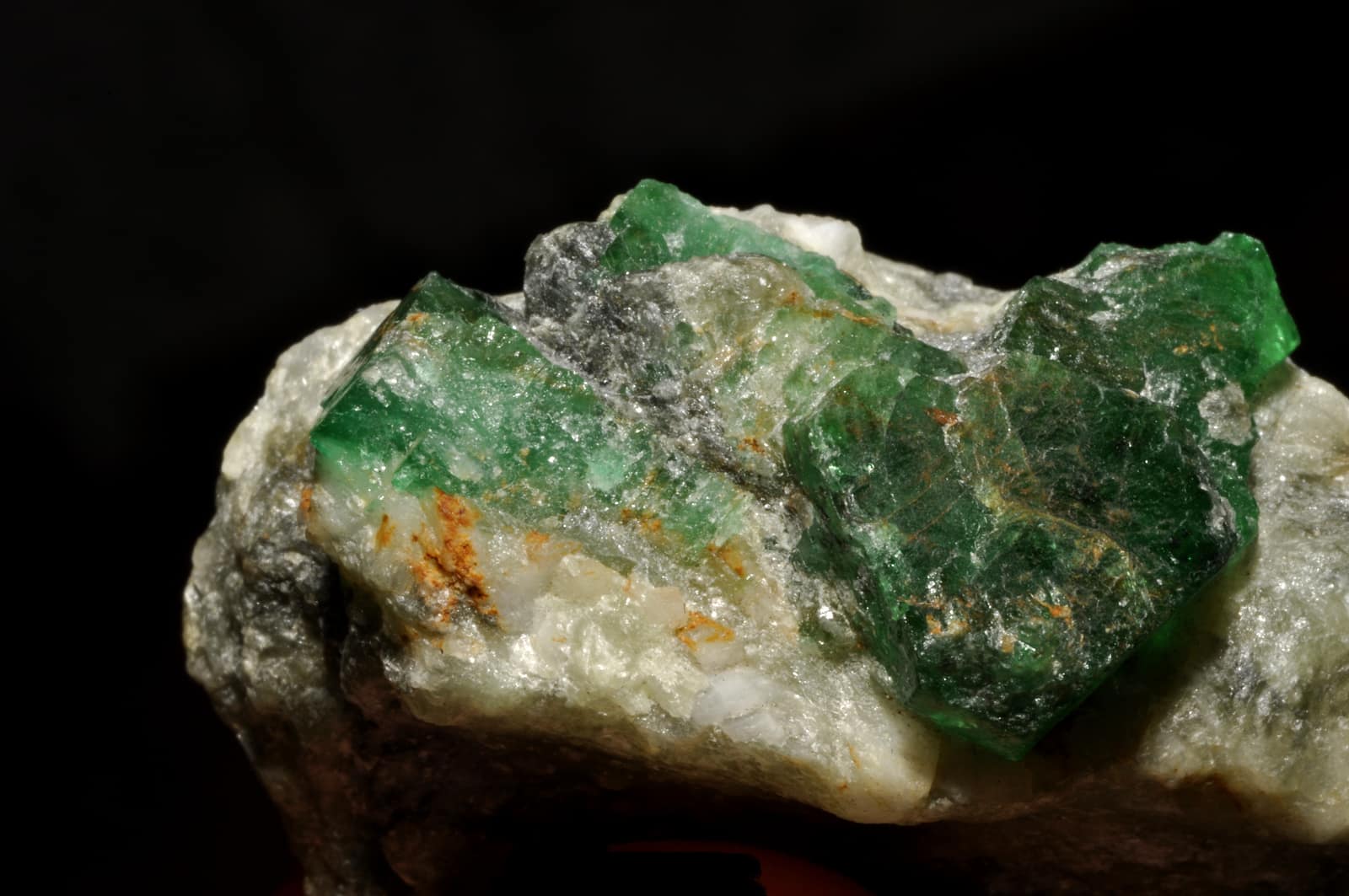
The emerald mines sit in the side valleys above the Panjshir river about 110 kilometres north-east of Kabul, at Khenj, Mikeni, Darkhenj, Butak, Buzmal, Bakhi and Darun, in hydrothermal veins cutting dark metamorphic rock, a geology closer to Colombia's than to the pegmatite emeralds of elsewhere. Organised mining began in the 1970s, financed the valley through the 1980s and 1990s, and since August 2023 has run through licences held by Afghans and weekly auctions in Bazarak: by June 2025 the authorities counted 586 licences and more than 75,000 carats sold for about 4.7 million US dollars, and since March 2026 some 72,000 carats have gone through eleven auctions for over 101 million afghanis. Panjshir emerald is bluish green, often fine, and its origin can be confirmed by the major laboratories.
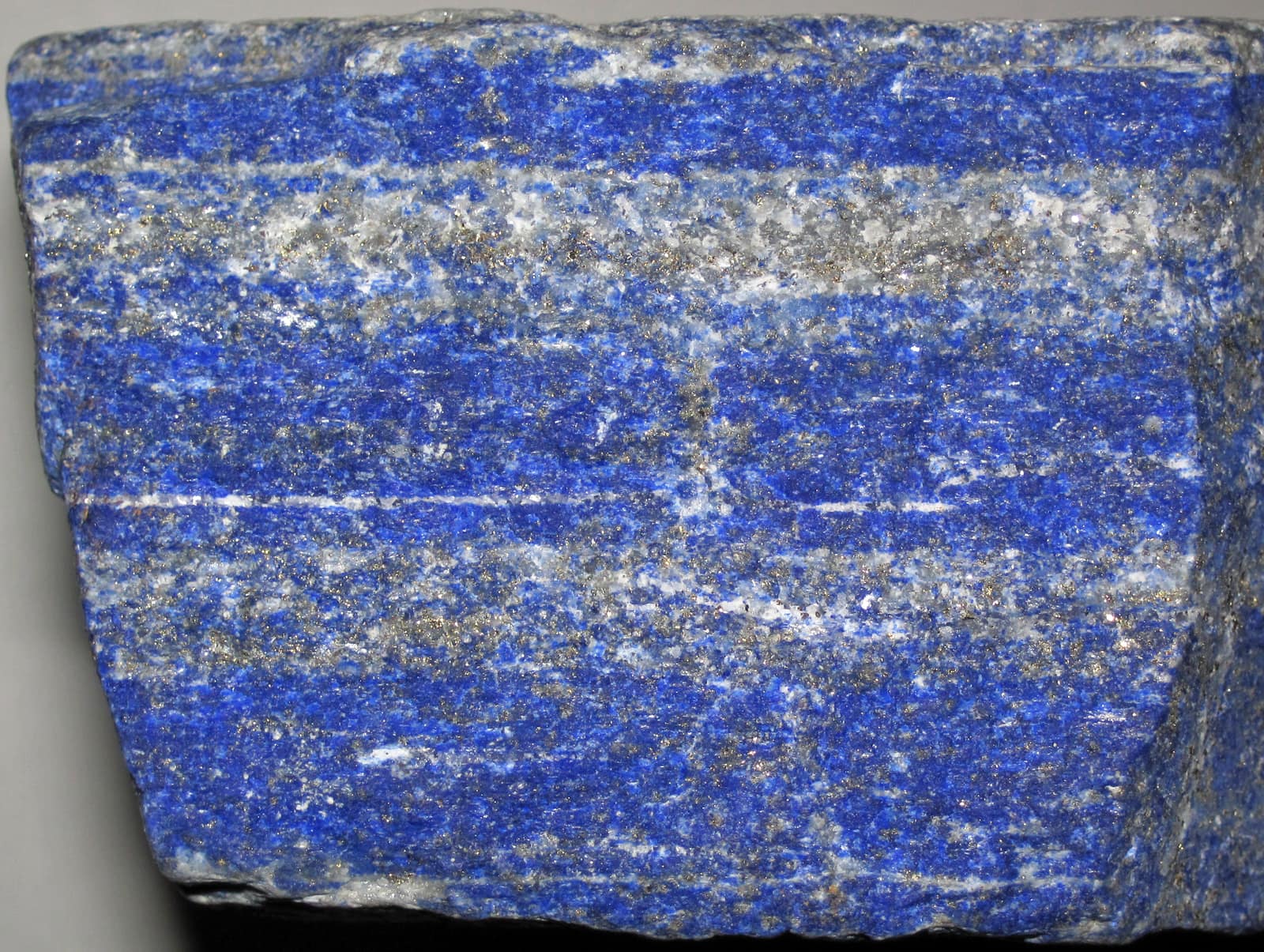
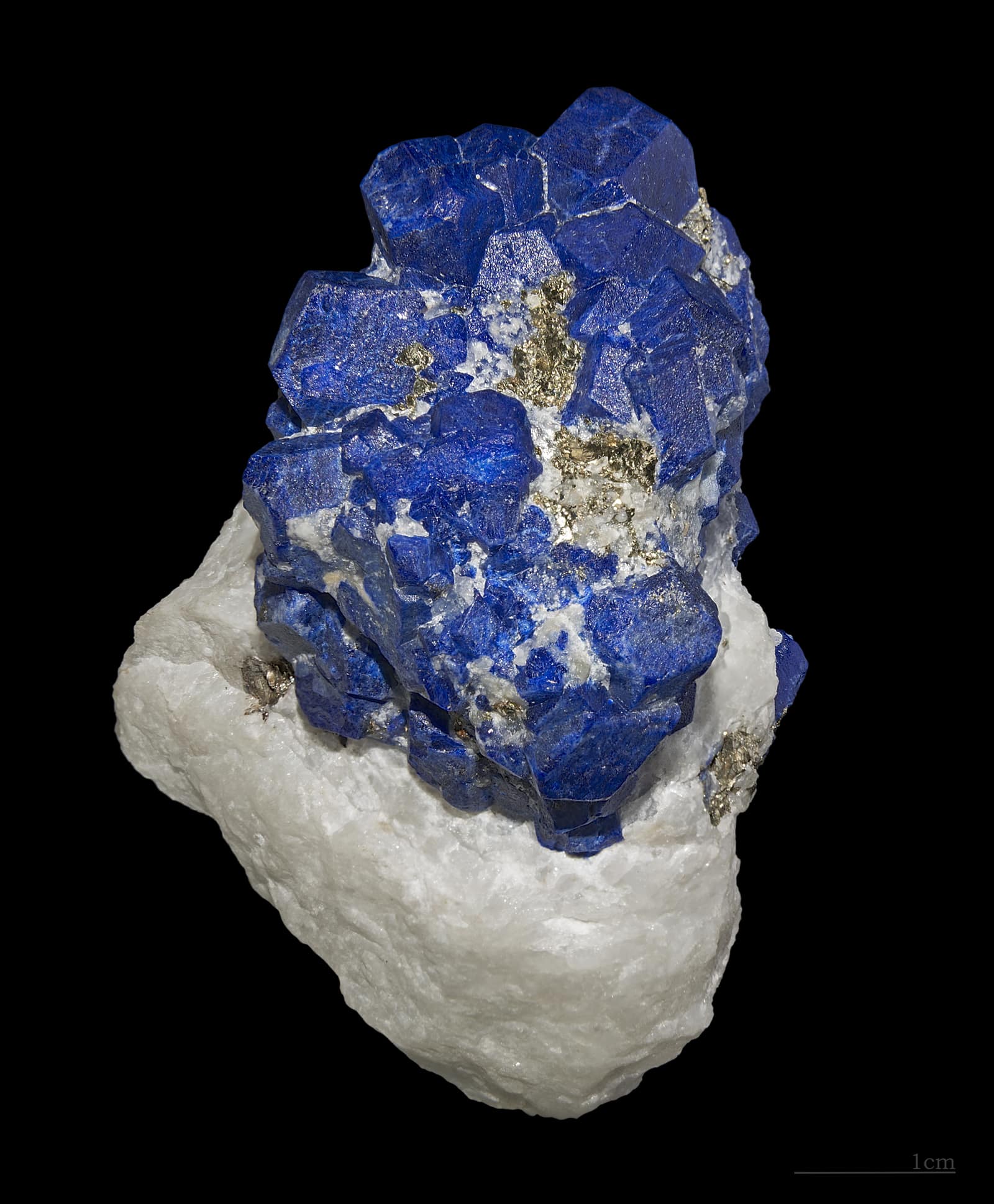
Sar-e Sang in the Kokcha valley, in Kuran wa Munjan district, is the oldest working mine in the world. Lapis occurs there as lenses one to four metres thick in marble at about 3,500 metres, and the season runs from June to September. Output has been put at around 9,000 kilograms a year, and a 1981 estimate gave reserves of 1,300 tonnes. Most of the world's lapis has always come from here. Badakhshan also has a tourmaline mine at Deo Darrah in the Kash and Jurm districts and garnet workings near Ishkashim.
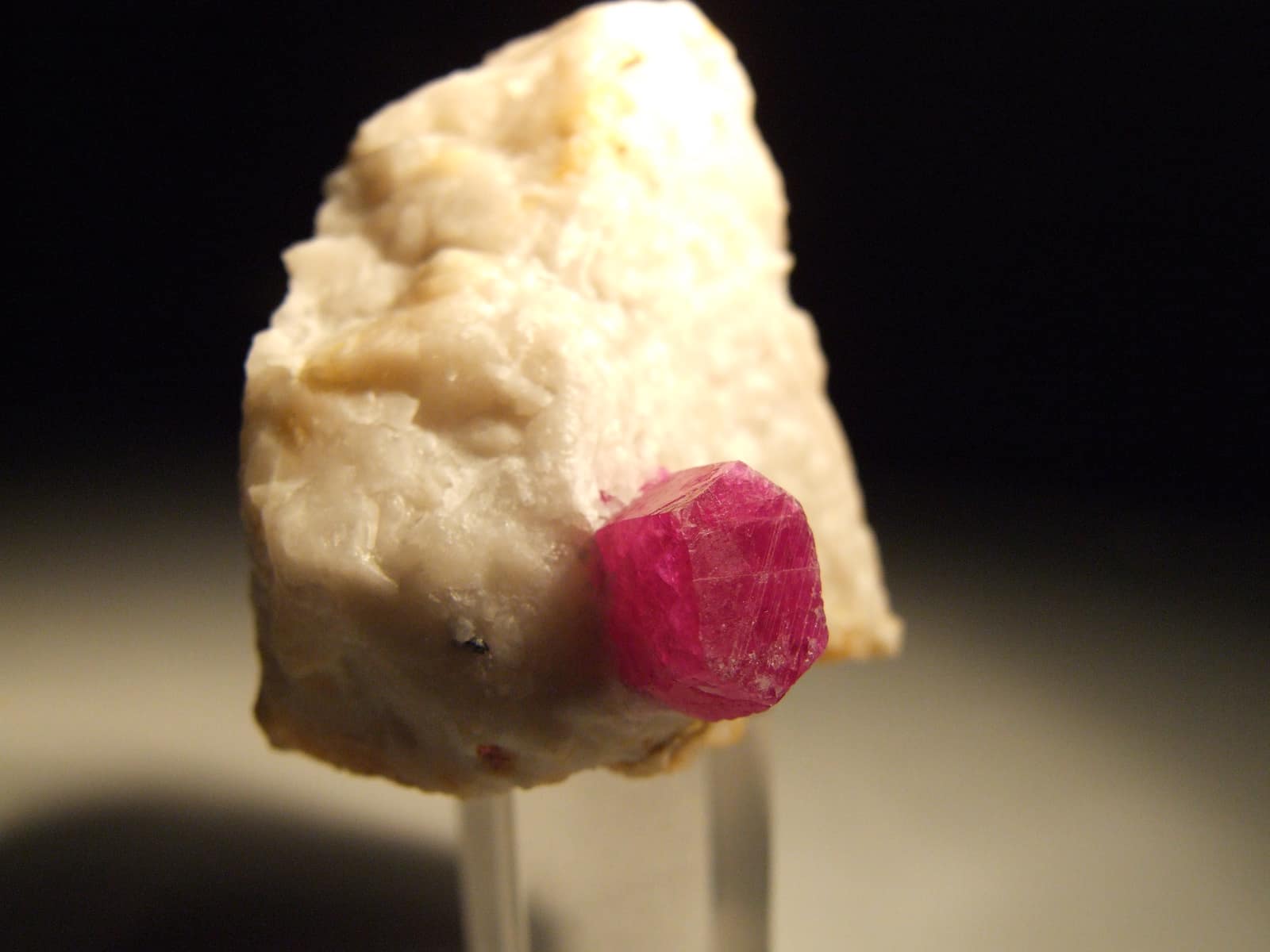
The Jegdalek deposit in Sorobi district, about 100 kilometres east of Kabul, gives ruby and pink sapphire in white marble cut by Oligocene granite. About 15 per cent of the corundum is true ruby and 75 per cent pink sapphire, stones over five carats are rare, and a blue colour zoning in some crystals is a signature of the locality. Mining is old, with mines held by local families since the amirs of the nineteenth century. Peshawar sells synthetic ruby set in natural rock as Jegdalek, so buy with care.
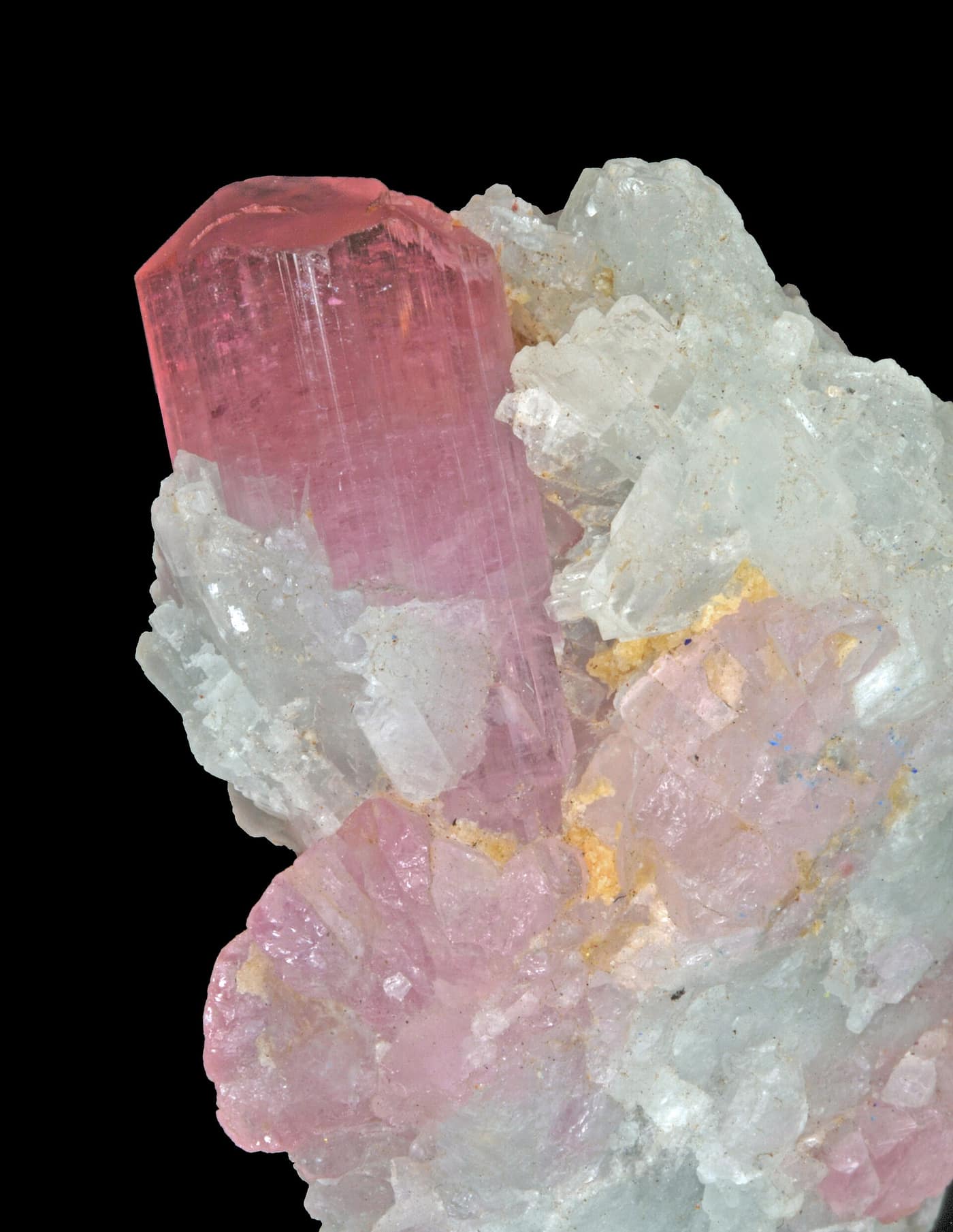
Our own province, and the heart of the pegmatite country. The Paprok mine in Kamdesh gives pink, green, blue and watermelon tourmaline; the Mawi and Kolum workings in Du Ab gave the world most of its fine kunzite, in crystals to a metre; Kantiwa, Korgal and the Parun valleys add more. Since December 2024 the provincial mines directorate has sold rough by open auction, in lots that have passed 120 million afghanis. Nuristan has no emerald, ruby or lapis of its own, whatever a label says.
The Pech valley fields of Dara-i-Pech and Gur Salak, over the provincial line from Nuristan, give green and blue-green tourmaline, kunzite, morganite and the aquamarine of Gur Salak, and are usually sold as Nuristan. In July 2026 Kunar's mines directorate sold more than 1,500 kilograms of tourmaline for about 119.3 million afghanis. Kunar is also Afghanistan's jade province: about 5.5 tonnes of nephrite from Khas Kunar were sold to a private company in November 2025.
The Alingar and Shamakat pegmatite fields of Laghman carry kunzite, tourmaline and beryl, and the old survey tables file several of Nuristan's mines under Laghman because they predate the province. In Nangarhar the Dara-i-Nur field produced 130 tonnes of beryl between 1950 and 1960, and small emerald workings are recorded at Budel. A regional trading centre for semi-precious stones opened in Nangarhar in 2024.
Diamonds, balas rubies and the cut-in-Thailand problem
Afghanistan has no diamond mines; its wealth is in coloured stones. The famous rubies of the medieval travellers, the balas rubies of Badakhshan, were red spinel from Kuh-i-Lal on the Tajik side of the Panj river, not Afghan ruby. Afghanite is a real mineral, a blue relative of lazurite first described from Sar-e Sang, and is sold as a collector's stone rather than a gem. And a stone sold as Afghan may have been cut in Thailand or Pakistan, which under European and American customs rules can make it Thai or Pakistani on the paperwork.
How they are sold
From the mine to Peshawar, and now to the saleroom
For fifty years the stones have left the same way. Miners sell rough to traders, who carry it to Kabul's dealers or over the Torkham crossing to Namak Mandi in Peshawar, a market of more than seven hundred shops where Afghan traders made most of the sales until the late 2000s. From Peshawar the buyers come from Thailand, Sri Lanka, China, Hong Kong, Japan and the West, and much of the rough is cut in Thailand, Sri Lanka or China before it is sold on. Afghanistan's recorded exports of precious stones were about 7 million US dollars in 2022, to the United States, Czechia, Thailand, France and China; the real trade is many times larger and unrecorded.
Since August 2023 a second route has run through the provinces. Panjshir sells emerald by licence and auction round, Nuristan and Kunar sell pegmatite rough by open bidding with about ten per cent to the treasury, and Kunar has sold nephrite by the tonne to a private company. The auction announcements give a date, a district and a price, which is more than most of the trade ever has, and they are the figures our stone pages use.
For a buyer abroad the law is simpler than the trade. The United Kingdom and the European Union have no ban on Afghan goods and charge no duty on precious stones; the United States allows commercial imports under its Afghanistan general licence with conditions worth reading. The buyer's guide sets out the rules, the duties, the laboratories and the frauds that have been documented.
Sourced at first hand, for collectors and for the trade
We buy at first hand: from the people who mine or find the stones in Nuristan, and from the first dealers in Panjshir, Badakhshan, Jegdalek and Kunar. Every stone is sold under the place it came from. For a collector that means a stone with a valley and a story that can be checked. For a jeweller, a cutter or a dealer it means parcels of rough or cut stone sourced to order, with treatment and origin stated in writing, photographs and video in daylight before any money moves, and laboratory reports where a laboratory can say something useful.
Emerald from the Panjshir valley; lapis lazuli from Sar-e Sang in Badakhshan; ruby and pink sapphire from Jegdalek in Kabul province; tourmaline, kunzite, aquamarine and morganite from the pegmatites of Nuristan, Kunar and Laghman; nephrite jade from Kunar; and garnet, topaz, quartz and collectors' minerals such as pollucite and afghanite. There are no diamonds.
Which stone is Afghanistan famous for?
Lapis lazuli. The Sar-e Sang mines in Badakhshan have supplied the world's finest lapis for more than six thousand years, from Sumer and Egypt to the ultramarine of Renaissance painting. Panjshir emerald is the most valuable Afghan stone today, and Nuristan's tourmaline and kunzite the most widely sold.
Does Afghanistan have diamonds?
No. Afghanistan has no diamond deposits or diamond mines. Its gem wealth is in coloured stones: lapis lazuli, emerald, ruby, tourmaline, kunzite, aquamarine and morganite.
What blue gemstone comes from Afghanistan?
Lapis lazuli above all. Afghanistan also produces aquamarine from Nuristan and Kunar, blue indicolite tourmaline from Paprok and the Pech valley, and the blue mineral afghanite, first described at Sar-e Sang.
Is Afghan jade valuable?
Afghan jade is nephrite from Khas Kunar in Kunar province, sold by the tonne as rough: about 5.5 tonnes went to a private company for 17.3 million afghanis in November 2025, which is a few thousand afghanis a kilogram. It is a carving and ornamental stone rather than a gem, and far below Burmese jadeite in value.
Where are Afghanistan's gemstones sold?
Mostly in Namak Mandi, the gem market of Peshawar in Pakistan, and in Kabul, from where they go to Thailand, Hong Kong, Dubai, India and the West. Since 2024 the provinces have also sold rough by licence and auction: Panjshir its emeralds, Nuristan and Kunar their tourmaline and kunzite.
Ready to plan a visit, source Nuristani products, or discuss an investment? Your message goes to Obaid, who is from Nuristan, and his team in Afghanistan and the UK. We reply to every message.