Kalasha religion
The gods, the festivals and the rules of the last people in the Hindu Kush who still follow the old religion, set beside the one Nuristan followed until 1896.
What the Kalash believe
About four thousand people in three valleys of Chitral, in northern Pakistan, follow a religion that has no founder, no scripture and no name of its own. Outsiders call it the Kalasha religion. It has a creator and a company of gods, altars under old trees, sacrifices of goats, a strict division of the world into pure and impure, and four festivals that turn the year. It is the last living religion of its kind in the Hindu Kush.
Until the winter of 1895 the valleys of Nuristan, just across the mountains, followed a religion of the same family. Ours ended with the conquest. Theirs went on, because the Kalash were on the British side of the border drawn two years earlier. So we have written this page with a particular interest, setting the Kalash gods beside the ones our great-grandparents worshipped. We have relied on the scholars who lived in the valleys, and they are listed at the foot.
- Followers
- About 4,000, in Bumburet, Rumbur and Birir
- Creator
- Dezau, also called Khodai
- Kind
- Many gods, of ancient Indo-Iranian stock; not Hinduism
- Scripture
- None; passed on in prayer, song and practice
- Who leads it
- The kazi, who knows the rites, and the dehar, a shaman
- Festivals
- Chilam Joshi, Uchal, Pul and Chawmos
- Closest relative
- The religion of Nuristan before 1896
- UNESCO
- Suri Jagek, the sun calendar, listed in 2018
Older than the names people give it
It is often called animism, or a kind of Hinduism. Neither is quite right.
Michael Witzel, the Harvard scholar of the Vedas, has studied the Kalash religion closely from the Indian side. He finds in it the marks of the old religion that the ancestors of Iranians and Indians shared, with echoes of the Rigveda, the earliest Indian hymns, and hardly anything of the Hinduism that grew up afterwards.
That is why it is wrong to call it Hinduism, although people often do. Augusto Cacopardo, who has spent decades in the valleys, puts it plainly: the religion of the Brahmins never reached these mountains, and what the Kalash have grew on its own from a very early base. Some of the names are shared with India, Indra among them, because both come down from the same source and not because one borrowed from the other. Richard Strand describes the old religion of Nuristan as a form of ancient Hinduism with local growth on it, which is the same observation made from the other side of the mountains.
It is also more than a worship of spirits. There are spirits of the mountains and the pastures, but there are also named gods with characters, stories and shrines, and above them a creator who is prayed to everywhere and has no shrine at all.
Dezau, and the gods beneath him
One creator, and a company of gods and spirits who each look after a part of life. The third column gives the god the old Nuristanis worshipped in the same place.
| God or spirit | What they look after | In old Nuristan |
|---|---|---|
| DezauKhodai, Paidagarau | The creator. He is prayed to in every valley and has no shrine of his own. | Imra, the creator, called Mara in Parun. Witzel links the two directly. |
| Sajigor | The god of Rumbur, whose altar there stands in a grove. Witzel sees in him a form of Indra. | Compared with the gods Wushum and Shomde of old Nuristan. |
| MahandeoMahandeu | The god of Bumburet's main altar, a god of war and the one who carries people's requests to the creator. His name is a later Hindu title laid over an older god. | Moni, also called Mandi, the creator's messenger. |
| BalumainBalimain | The visitor. He arrives on horseback from the direction of the Bashgal, in Nuristan, for the winter festival, and leaves when it ends. His name is read as most powerful Indra, a title borrowed from the Kati language. | Indr, the god of the vine in Waygal and the lower valleys. |
| Jestak | The goddess of the hearth, the family and its life. Each lineage keeps a house for her, the Jestak Han. | Disani, the great goddess of every Nuristani valley. |
| Dezalik | Dezau's sister, who protects women in childbirth. Her place is the bashali, and only women worship her there. | Nirmali, who protected the women's house in the Bashgal. |
| KushumaiKotshomai | The goddess people turn to when they want children. | Kshumai, goddess of the high pastures and the herds. |
| IngawIngao | A god of Bumburet who looks after the crops, with a shrine at Batrik. | No counterpart recorded. |
| Warin and Praba | The gods of Birir, the southern valley. | No counterpart recorded. |
| Jach | Female spirits of the soil and of the pastures. | No counterpart recorded. |
| Suchi and Varoti | The fairies of the high mountains, who help hunters, and their fierce male partners. | No counterpart recorded. |
The comparisons follow Michael Witzel's study of Kalash religion and the Encyclopaedia Iranica's account of old Nuristan. A god's standing differs from valley to valley, as it did in Nuristan, and the spellings vary from one book to the next. The Kalash have no god quite like Gish, the war god of the Bashgal.
The line that runs through everything
Every Kalash place, animal and act is either onjesta, pure, or pragata, impure, and a good part of daily life is the work of keeping the two apart. The altars, the goats, the high pastures and the winter goat stables are the most onjesta. The valley floor is less so, and the bashali, the house where women stay during their periods and for childbirth, is the most pragata of all. Men look after the goats and the altars, and women the fields. Juniper smoke makes a thing or a person pure again.
Anyone who has read about old Kafiristan will know this already. The same line ran through Nuristani life, with the same goats and pastures on the pure side and the same women's house outside the village. The division of work between men and women that came with it has outlasted the religion in our valleys.
The altars
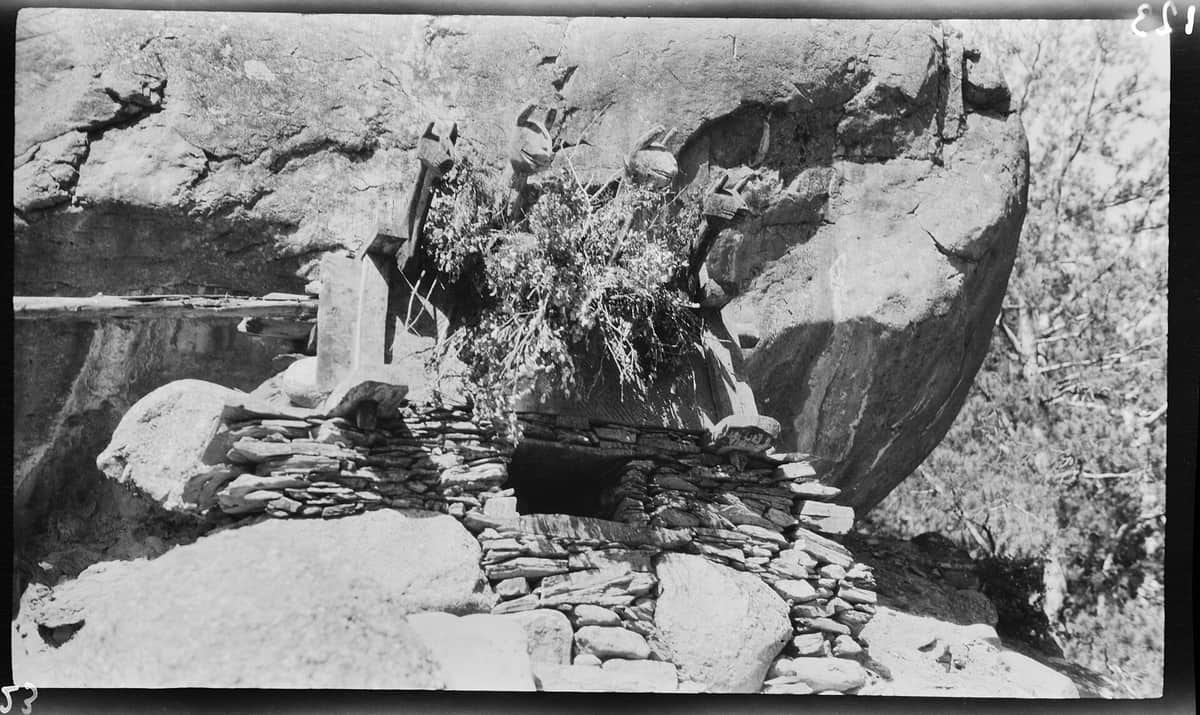
Kalash shrines are in the open air, under juniper, holly oak or cedar: a wooden board or a stone table with a hole where the offerings go, some of them carved with horses' heads. Sajigor's altar in Rumbur is the best known.
The Jestak Han
The house of Jestak, goddess of the family, the hearth and its life. Each lineage has its own.
The bashali
The women's house at the edge of the village, for menstruation and childbirth. Men may not enter. Inside, the women keep the shrine of Dezalik and conduct her worship themselves.
The dancing place
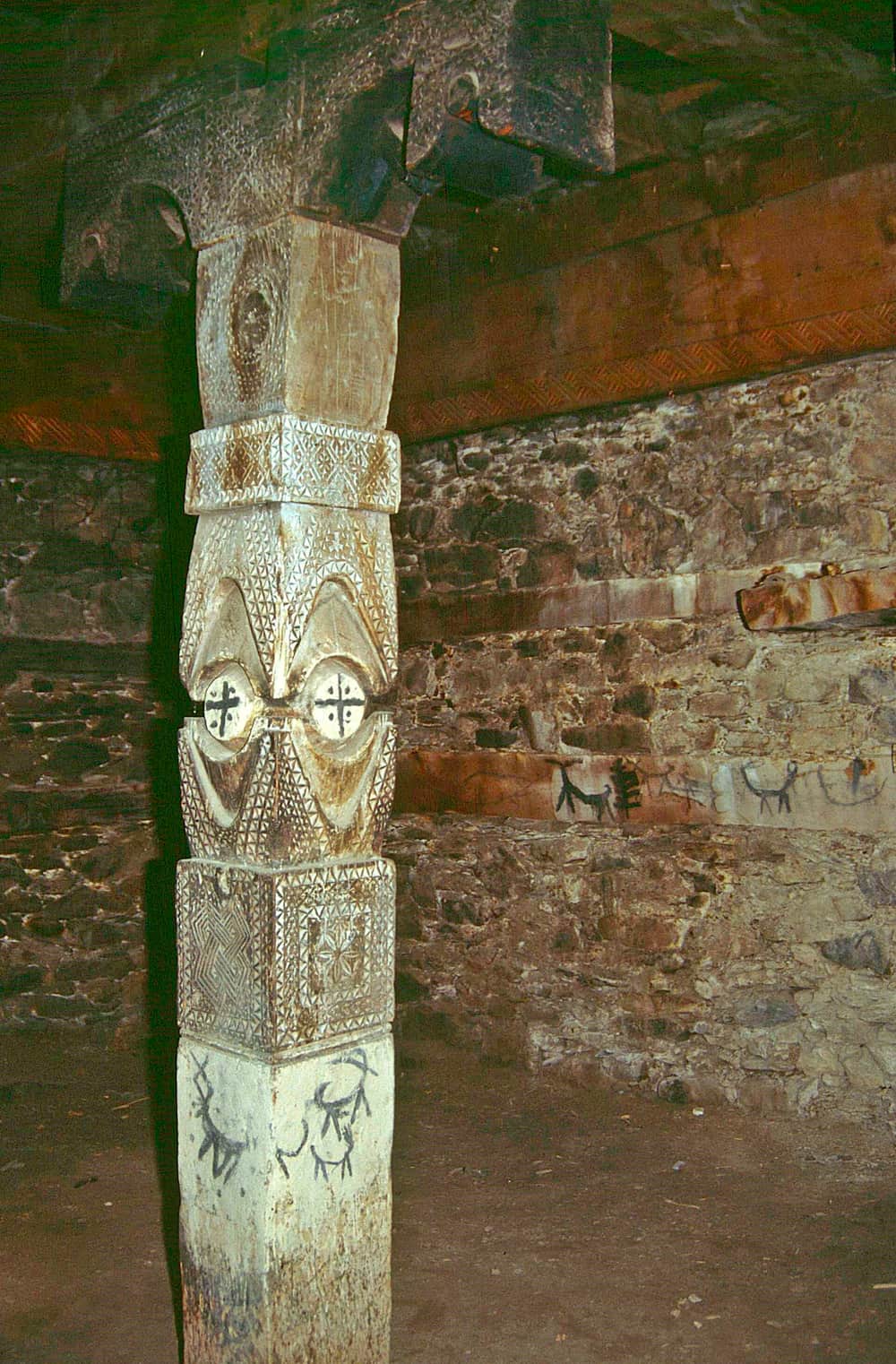
Each village has a place for the festival dances, an open ground or a hall with carved pillars, where the valley gathers and the songs are sung.
There is no priesthood any more. What remains are the kazis, elders who know the prayers and the order of the rites and lead the great ceremonies, and the dehar, a shaman who goes into trance and speaks for the gods. Goats are the usual sacrifice, and their blood is sprinkled at the altar. Wine is ritually pure and is drunk at the festivals.
The Kalash festivals
The year turns on the herds and the harvest. The dates move a little from year to year and valley to valley, because the elders fix them.
Mid-May, lately 13 to 16 May
Chilam Joshi
Also written Joshi, Zhoshi, Chilimjusht
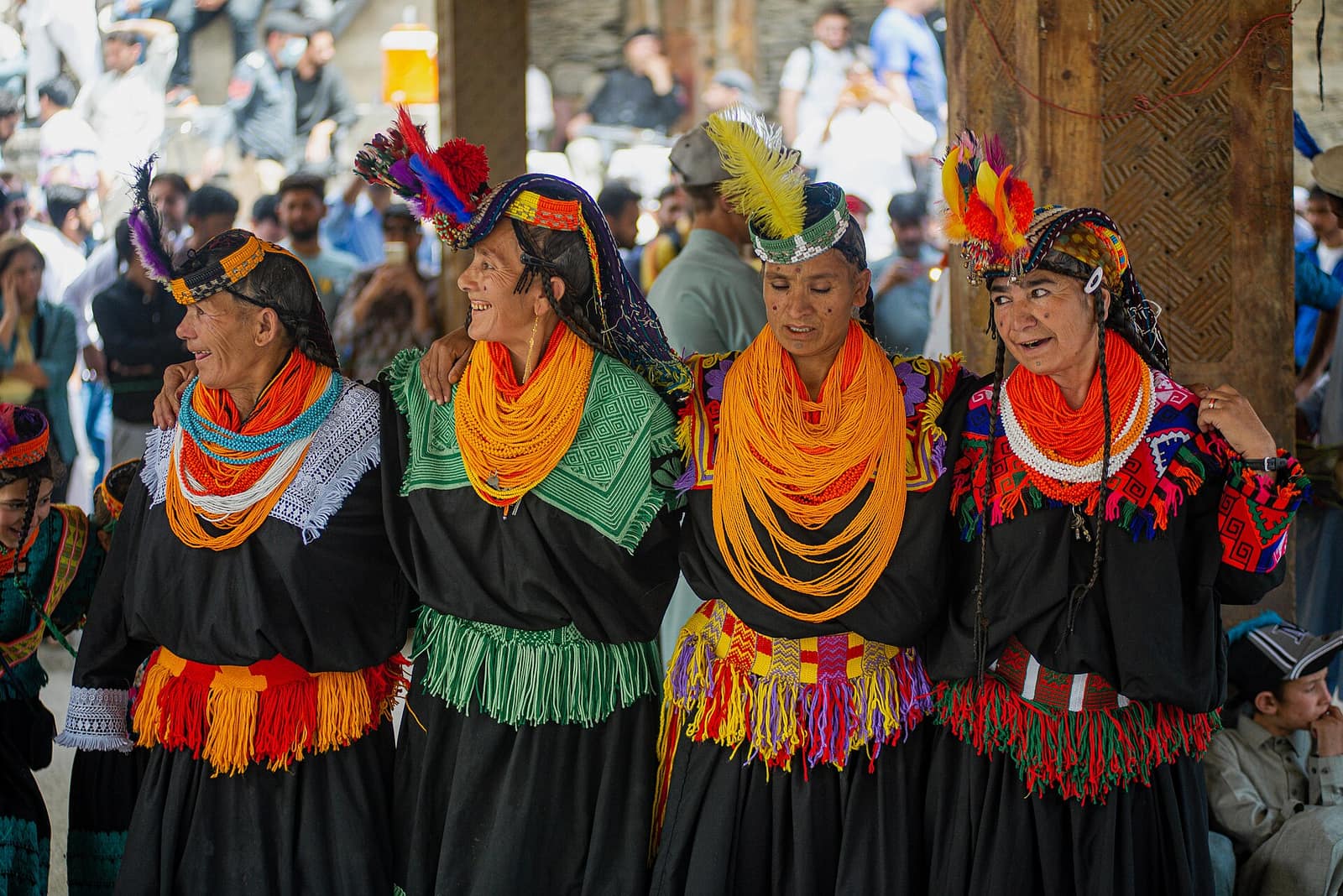
The spring festival, kept in all three valleys. It welcomes the new season and the herds going up to the high pastures, and it opens with the sharing of milk saved for days beforehand. This is the festival most visitors see.
Late August, three days
Uchal
Also written Uchau, Utchal
The summer festival of Bumburet and Rumbur. Thanks are given for the wheat, the barley and the summer's cheese and butter, with prayers at the altar and dancing through the night.
Autumn, in Birir only
Pul
Also written Prun, Poo'n
The festival of the grape and walnut harvest, kept only in Birir. It lifts a ban of about two months on picking the grapes and walnuts. Witzel places it at the full moon of September; recent reports put it in the second week of October.
About 7 to 22 December
Chawmos
Also written Chaumos, Chitirmas
The winter solstice festival and the greatest of the year, about two weeks long. The god Balumain is said to arrive on horseback. The valleys are purified with juniper, and no drums or flutes are played, only the voice.
The dates are fixed locally each year. Suri Jagek, the Kalash practice of fixing the calendar by where the sun rises and sets against the ridgeline, was inscribed by UNESCO in 2018 on its list of heritage in need of urgent safeguarding.
How the Kalash bury their dead
A Kalash funeral is a feast. The family feeds the valley, food is set beside the coffin, and for a person of standing a wooden effigy might be carved and set up in their memory.
Until recent times the coffin was not buried. It was left above ground in the graveyard, sometimes open. Pakistan's human rights commission records that the custom can no longer be kept, because the coffins were vandalised and the land around the graveyards was taken, and the Kalash now bury their dead.
The effigies are something Nuristan shared. In Kafiristan a wooden figure of a man or woman of standing, seated on a stool or riding a horse, was set up a year or so after the death, and rows of them once stood on our hillsides. A few survive in the National Museum in Kabul.
The same religion Nuristan had?
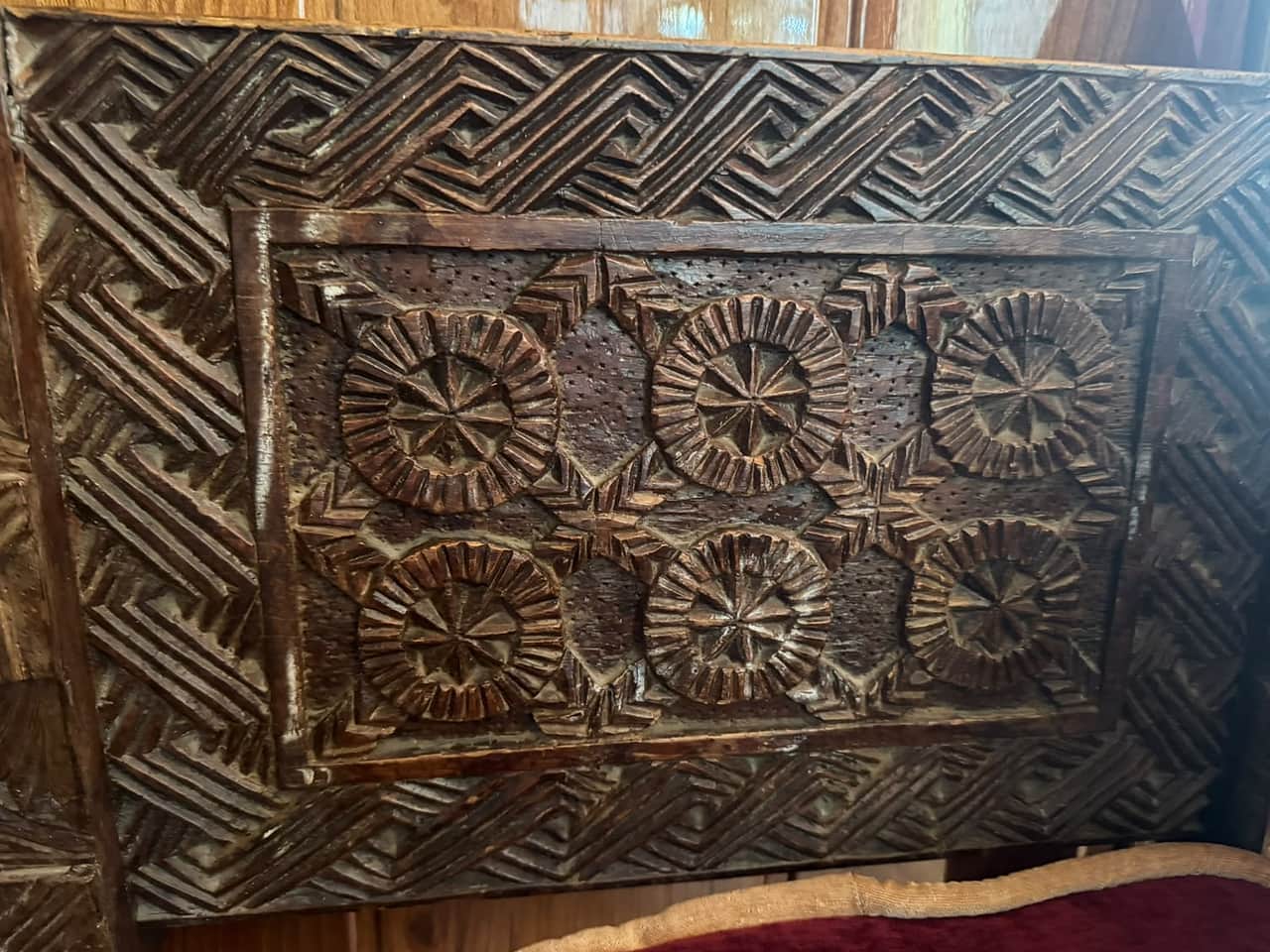
Two branches of one tree
Set the two side by side and the family likeness is plain. Both had one creator above the rest, Dezau here and Imra there. Both had a messenger god, a goddess of the house and a goddess of birth. Both drew the same line between the pure high pastures and the impure valley floor, sacrificed goats at open altars, burned juniper and drank wine at their feasts. Balumain, the god who visits the Kalash each winter, is said to come from the Bashgal, which is to say from Nuristan.
They were not the same religion. The names differ, the Kalash have no god quite like Gish, whom the fighting clans of the Bashgal loved best, and nothing in the Kalash valleys matched the great temple of Imra at Kushteki in Parun. A Kalash and a Kafir of 1890 would have recognised each other's worship without taking it for their own.
For Nuristanis, the Kalash religion is the nearest thing left to what our ancestors practised, and scholars have used it to fill the gaps in what was recorded here before the conquest. They are careful about it, and so are we: a living cousin is not the thing itself. Our own page sets out what is known from the Nuristan side.
A religion of a few thousand people
The religion is followed by about 4,000 people, more than a generation ago, when the number had fallen to about 2,500. Converting to Islam means leaving it for good, and by custom leaving the community. A local count puts conversions now at five to ten people a year.
The law has begun to notice it. In 2017 a court ordered that the Kalash religion be listed on Pakistan's census form, and identity cards can now record it. In July 2026 the provincial assembly passed a marriage law for the Kalash that sets a minimum age of eighteen, requires consent and registration, and leaves divorce and inheritance to Kalash custom.
The strain today comes less from force than from numbers and attention: schooling in other languages, land passing out of Kalash hands, and festivals that draw more spectators than worshippers. The altars, the bashali and the graveyards are not sights. Visitors who are asked to keep away from them should.
Asked about the Kalasha religion
What is the Kalash religion?
The traditional religion of the Kalash people of Chitral, Pakistan: a religion of many gods under one creator, Dezau, with open-air altars, goat sacrifice, strict rules of pure and impure, and four seasonal festivals. It has no scripture and no founder. Scholars trace it to the ancient religion shared by the ancestors of Iranians and Indians, and its closest relative was the religion of Nuristan before 1896.
Is the Kalash religion Hinduism?
No. It shares some very old names and ideas with the religion of the Rigveda, including the god Indra, but scholars such as Augusto Cacopardo and Michael Witzel describe it as a separate religion that developed on its own in the mountains. The later Hinduism of the Brahmins never reached the Kalash valleys.
Are the Kalash Muslim?
About 4,000 Kalash follow the old Kalash religion and are not Muslim. A further three thousand or so people who speak Kalasha are Muslims, from families that converted over the last few generations.
Who is the god of the Kalash?
The creator is Dezau, also called Khodai, who is prayed to everywhere and has no shrine. Beneath him are gods tied to particular valleys and needs, among them Sajigor in Rumbur, Mahandeo in Bumburet, Jestak the goddess of the family, Dezalik the goddess of birth, and Balumain, who visits at the winter festival.
What are the Kalash festivals and when are they?
There are four. Chilam Joshi, the spring festival, is in mid-May, lately from 13 to 16 May. Uchal is in late August. Pul, kept only in Birir, is in the autumn at the grape and walnut harvest. Chawmos, the winter solstice festival and the largest, runs from about 7 to 22 December. The exact dates are fixed locally each year.
How many people follow the Kalash religion?
About 4,000, all in the Bumburet, Rumbur and Birir valleys of Chitral. The number fell to about 2,500 in the 1980s and has since recovered.
Is the Kalash religion the same as the old religion of Nuristan?
They were close relatives, not the same. Both had a creator, a messenger god, goddesses of the household and of birth, goat sacrifice and the same division of pure and impure, and the Kalash god Balumain is said to come from the Bashgal valley of Nuristan. The names of the gods differ, and Nuristan's religion ended in 1896 while the Kalash kept theirs.
What is the bashali?
The women's house of a Kalash village, where women stay during menstruation and for childbirth. It is the most impure place in the Kalash scheme of pure and impure, men may not enter it, and inside it the women themselves worship Dezalik, the goddess of birth.
On this site
- The Kalash people: who they are and where they come from
- Nuristani religion: Islam today, the old gods before 1896
- Kafiristan: the history of Nuristan before 1896
- Chitral, and the Nuristanis who live there
- Who are the Nuristani people?
- Glossary: Imra, Gish, Disani and the other names
- Michael Witzel, Kalash Religion (the Kalash pantheon and its Vedic and Nuristani relatives)
- Augusto Cacopardo, A World In-between: The Pre-Islamic Cultures of the Hindu Kush (2016)
- Augusto Cacopardo, Are the Kalasha really of Greek origin? (Acta Orientalia, 2011), on why the religion is not Hinduism
- Wynne Maggi, Our Women Are Free: Gender and Ethnicity in the Hindukush (2001), on onjesta, pragata and the bashali
- Cultures of the Hindukush (1974), with Wazir Ali Shah's notes on the Kalash gods, festivals and funerals
- Encyclopaedia Iranica: Nuristan (the old Nuristani gods)
- Richard Strand: the Nuristanis and their old religion
- National Commission for Human Rights, Pakistan: Saga of Survival, a report on the Kalash
- Dawn: the Uchal festival
- Dawn: the Pul festival in Birir
- Dawn: the Kalash population count of 2019
- Chitral Today: the Kalash marriage bill passes (20 July 2026)
- UNESCO: Suri Jagek, inscribed 2018 on the List of Intangible Cultural Heritage in Need of Urgent Safeguarding
Photographs
- Kalash women dancing at Chilam Joshi, 2022: photograph by Jugni, CC BY-SA 3.0, via Wikimedia Commons
- The altar of Mahandeo, Rumbur, 1929: Georg Morgenstierne, National Library of Norway, public domain, via Wikimedia Commons
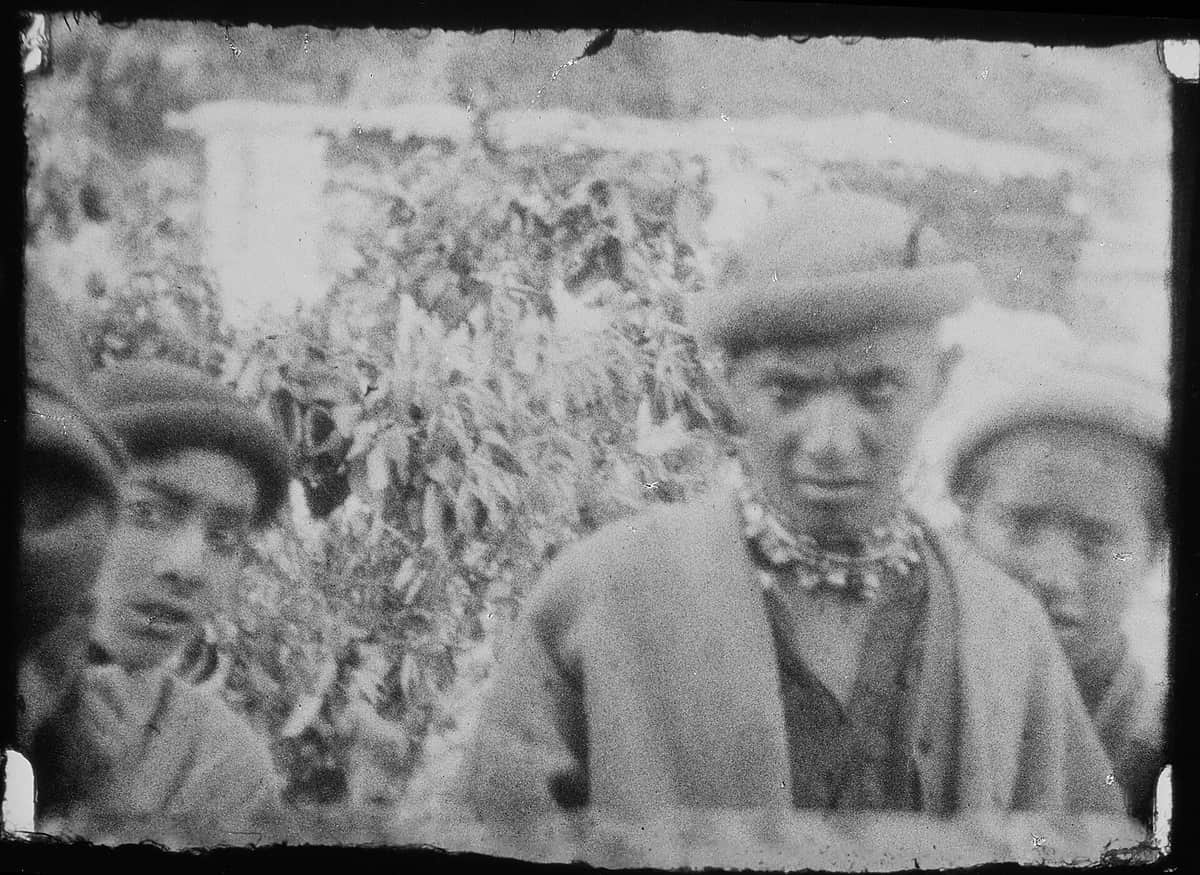
- Kalasha youths at the Shing-mou altar, Rumbur, 1929: Georg Morgenstierne, National Library of Norway, public domain, via Wikimedia Commons
- A carved pillar in the dance hall at Brun, Bumburet, 1990: photograph by Ziegler175, CC BY-SA 3.0, via Wikimedia Commons
The site's own photographs are of Nuristan; these are used under their licences until we have our own from Chitral.
Plan your Nuristan journey
Ready to plan a visit, source Nuristani products, or discuss an investment? Your message goes to Obaid, who is from Nuristan, and his team in Afghanistan and the UK. We reply to every message.