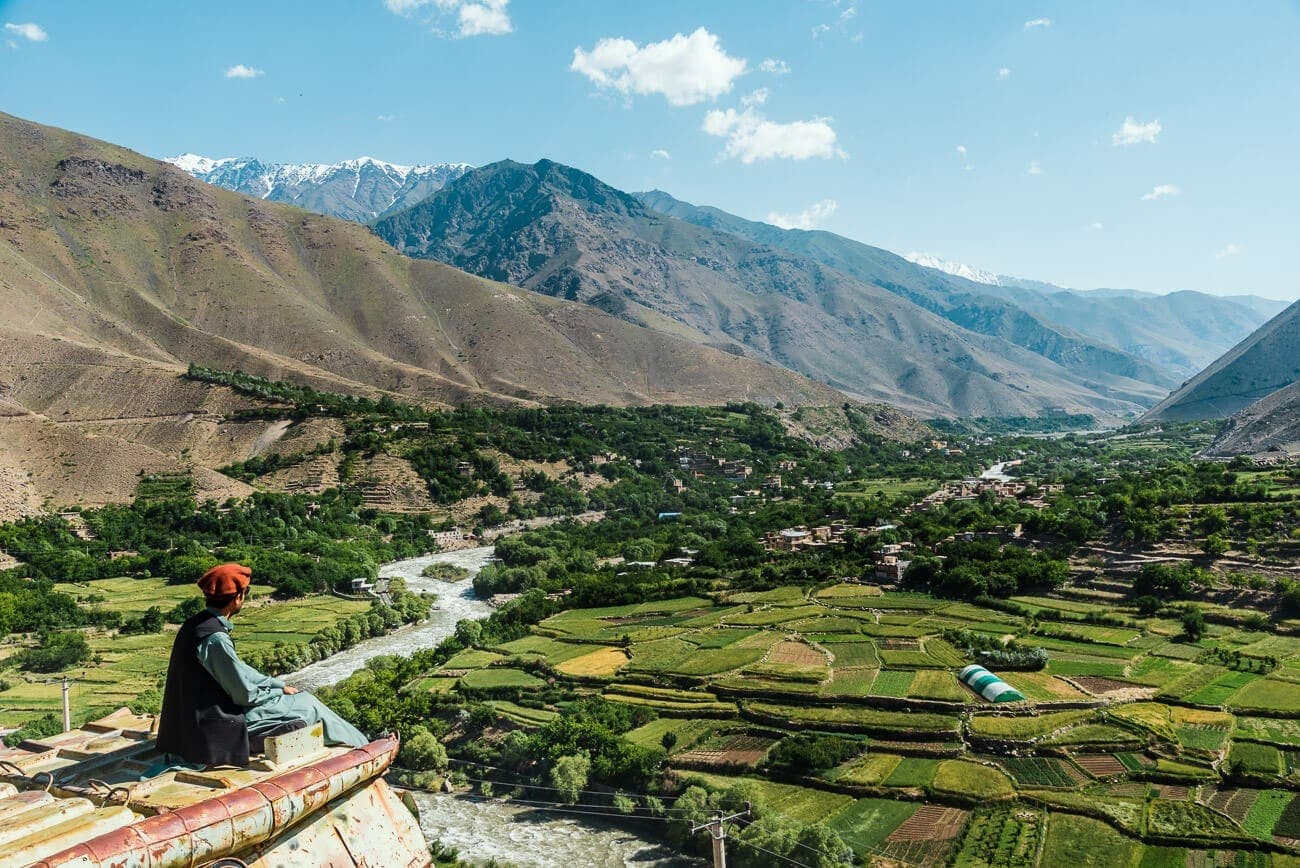
What people wear in Nuristan
Embroidered shirts, woven scarves and the pakol; the collared dress worked in bright thread; the goatskin robes of old Kafiristan. Nuristani dress, photographed in the valleys by people from there.
The real thing, from the valleys
Nuristani dress is the easiest thing about the province to recognise and the hardest to find described honestly. Search for it and you get antique dealers selling embroidered dresses from the wrong side of the border, and stock photographs of people who are not Nuristani. This page shows what people actually wear in the valleys, photographed by our own team, and tells the story of how it came to look this way.
Shirt, scarf and pakol
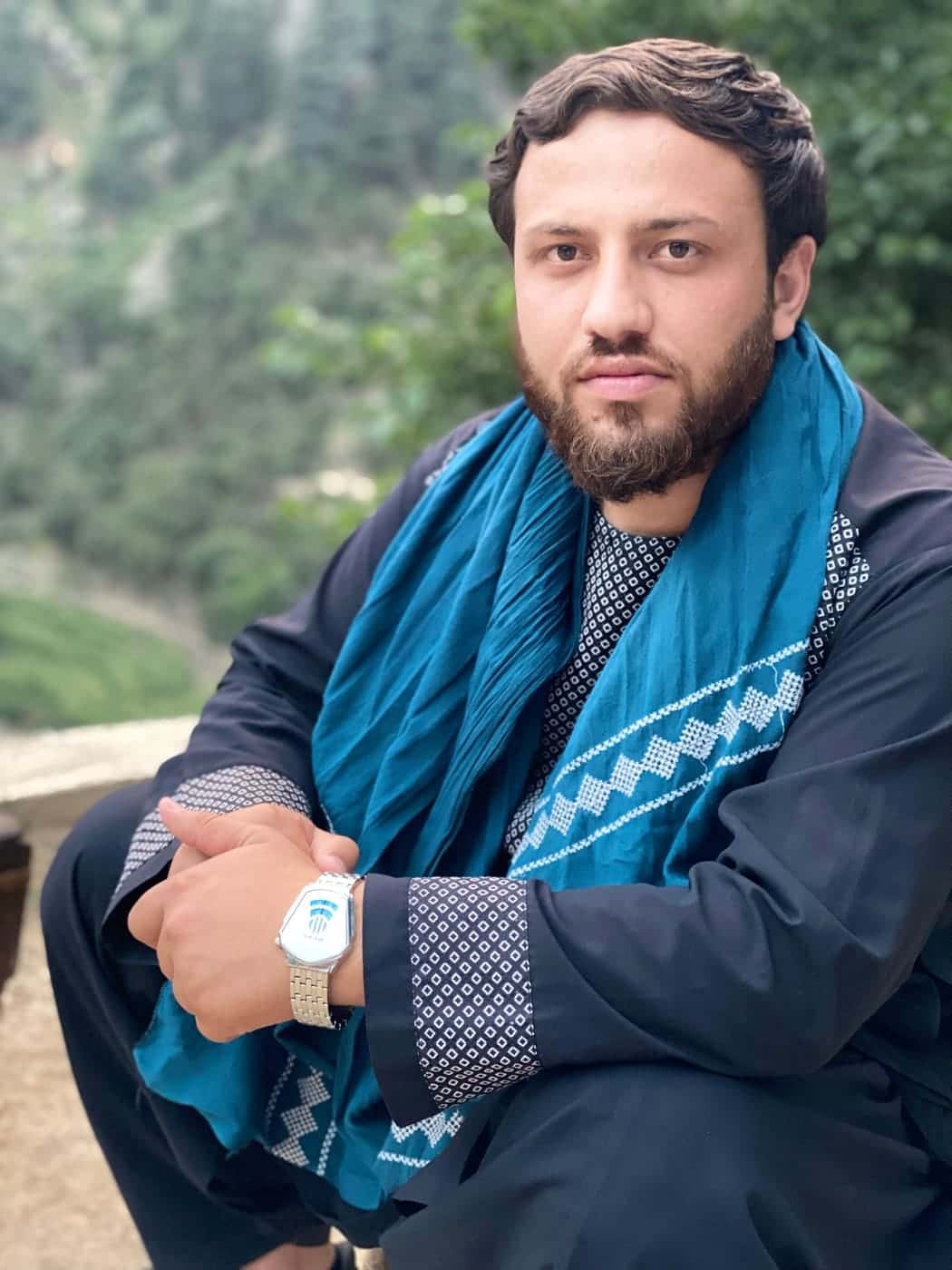
Embroidery on a dark ground
Day to day, Nuristani men dress much as men do across eastern Afghanistan: a long shirt over loose trousers, the kamiz and partug, in cream, grey, brown or black, with a waistcoat over it when the day is cool and a heavy wool shawl, the patu, over the shoulders when it is cold. Younger men mix in jackets and working vests, as anywhere. What marks a Nuristani out is the detail. The shirt is often black or dark blue, and the chest panel and the cuffs are worked with white or pale geometric embroidery in diamonds and chevrons, the same patterns the carvers cut into house columns.
Then there is the scarf. Men in the valleys wear a woven wool scarf in strong colours, teal, green, rust, with cross-stitched borders and knotted tassels, wound once around the neck and left to hang. It is warm, it is practical on a mountain path, and it is the most recognisable piece of Nuristani dress after the hat.
The hat is the pakol, the soft rolled-wool cap that came over the passes from Chitral after the conversion of the 1890s and has been Nuristani ever since. Nuristanis tend to roll it high and wear it pushed back. It has a page of its own.
The collared dress
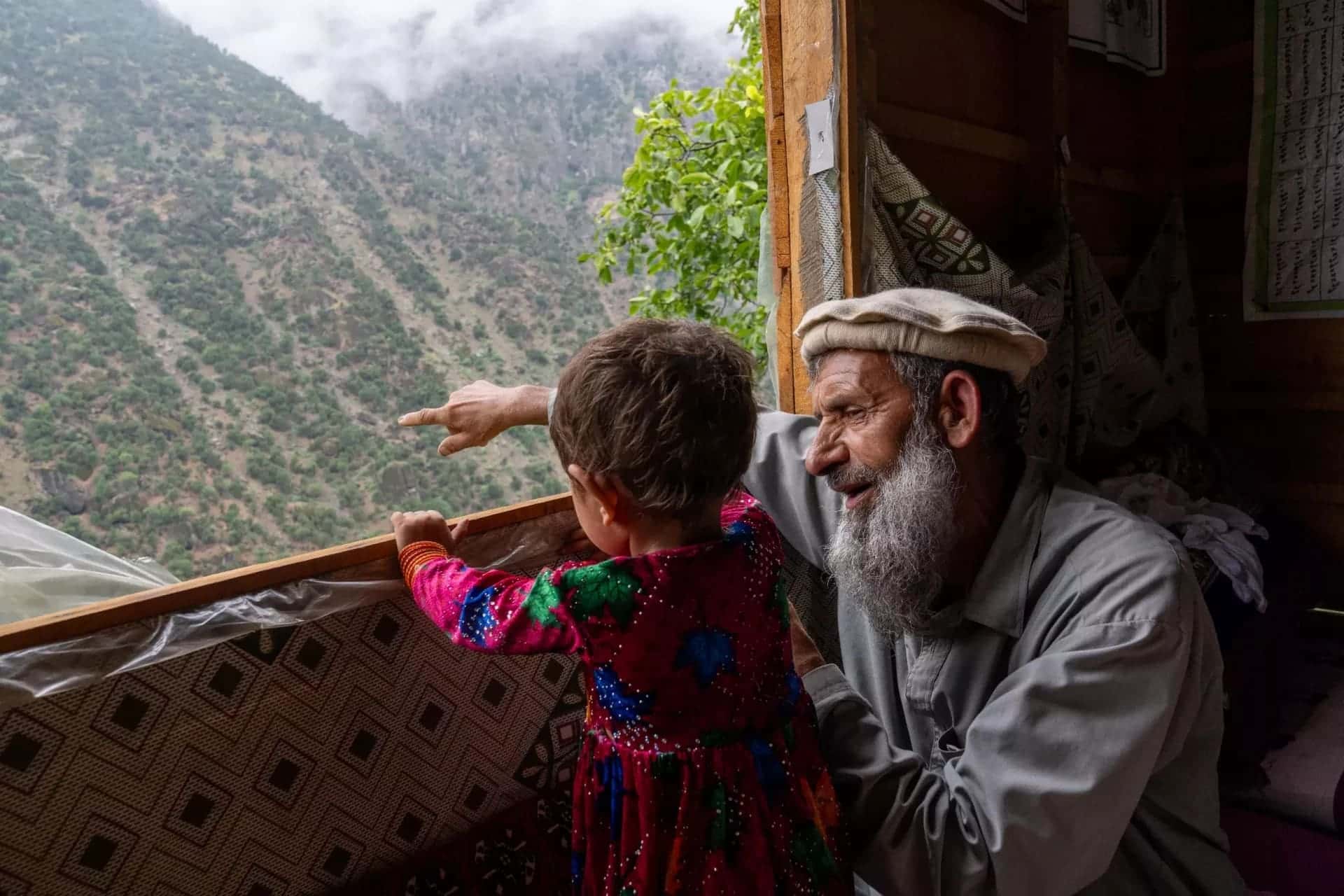
Bright thread, coins and sequins
Nuristani women's dress is brighter and more heavily worked than most in Afghanistan. The traditional outfit is a dress with a front neck opening and trousers beneath, cut from dark cotton or silk, with the neck opening framed in dense embroidery, historically in metal thread. The modern version, as the Textile Research Centre in Leiden describes it, is a waisted dress with a collar, which is unusual anywhere in Afghanistan, worn with trousers in a matching colour embroidered along the cuffs, and a large shawl or chador over the whole.
The embroidery is the point. The chest panel, the collar and the cuffs carry tight geometric patterns in bright thread on the dark ground, and for weddings and festivals the dress may be finished with coins, beads or sequins. Girls' dresses follow the same pattern in miniature. Our photograph of an elder and his granddaughter at their window shows a red dress worked in green and blue thread with a row of glinting sequins, and glass bangles on her wrist.
We do not publish photographs of women without their families' consent, and in the valleys that consent is rarely given. So this page shows men's and children's dress in pictures and describes women's dress in words. If that changes, the photographs will appear here.
The carver's eye on cloth
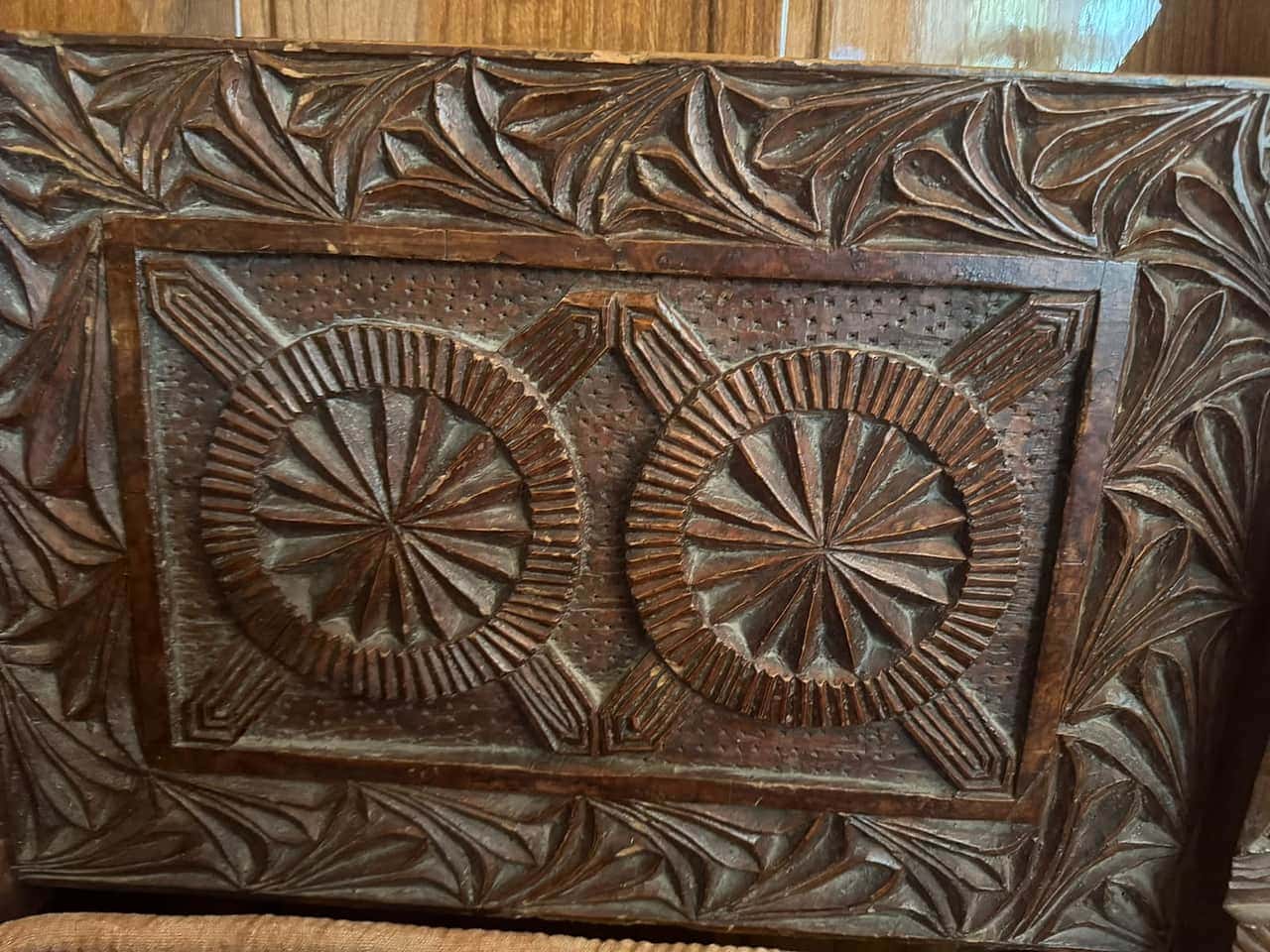
The same hand, in wood
The patterns on Nuristani clothing are the patterns of Nuristani woodcarving: diamonds and lozenges, chevrons, stepped lines, rows of small crosses. The eye that cut a house column worked a shirt front. Colour follows a rule as well: a dark ground with cream or white thread for men, a dark ground with bright thread for women, and in the scarf and the shawl the strong single colours the valleys have always favoured. The cloth was once entirely local, wool spun and woven at home and cotton traded up from the plains, and much of the wool still is.
The black-robed and the white-robed
The old dress of Kafiristan was another thing altogether, and it gave the tribes the names outsiders used for them. The men of the Bashgal, the Kata and the Kom, wore goatskins with the black fleece turned outward, which is why their Muslim neighbours called them the Siah-posh, the black-robed. The peoples of the west and south, in lighter woollen and cotton clothing, were the Safed-posh, the white-robed, or in some accounts the Lal-posh, the red-robed.
Robertson, who lived in Kamdesh in 1890 and 1891, described men in white woollen trousers to just below the knee, black leggings wound like puttees, a long tunic and a belt studded with silver, and the ornamented dress of the dancing feasts. Almost all of it went with the conversion. Goatskins and bare heads gave way to cotton and the pakol within a generation, and the photographs in Robertson's book are now the only record of the older dress.
Nuristani dress, photographed
Our own photographs. Every person here is from Nuristan and was photographed with their agreement.
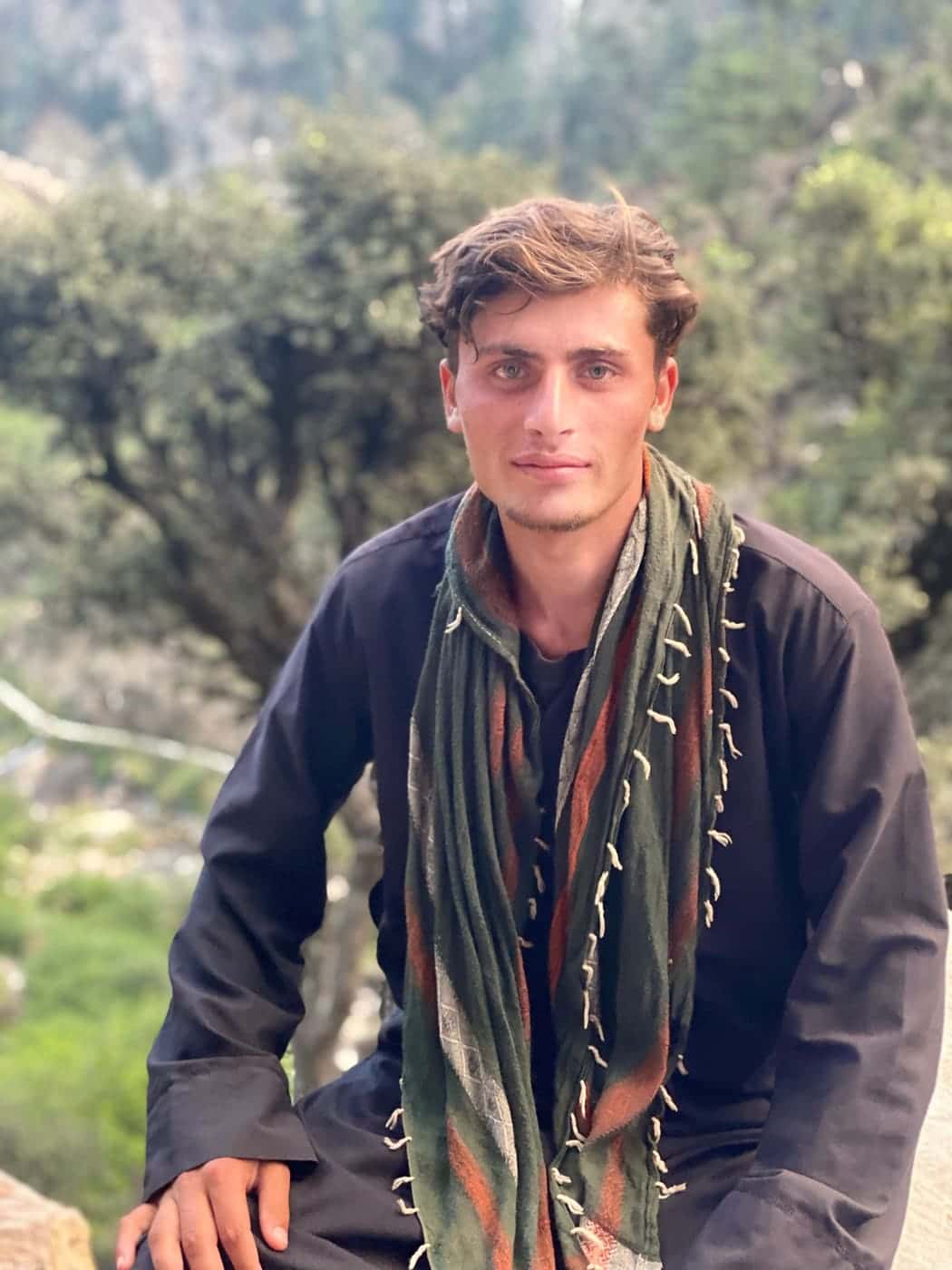
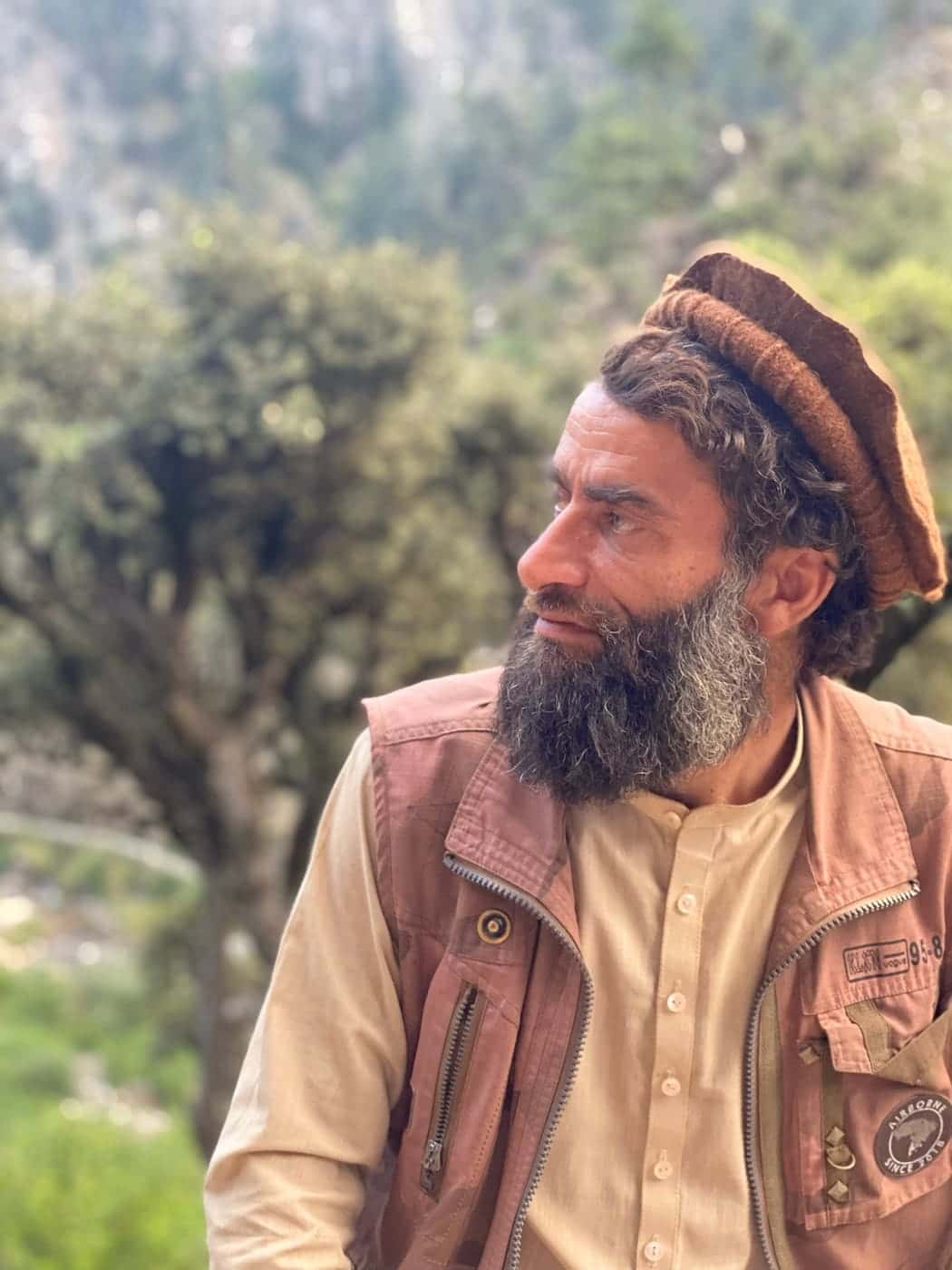
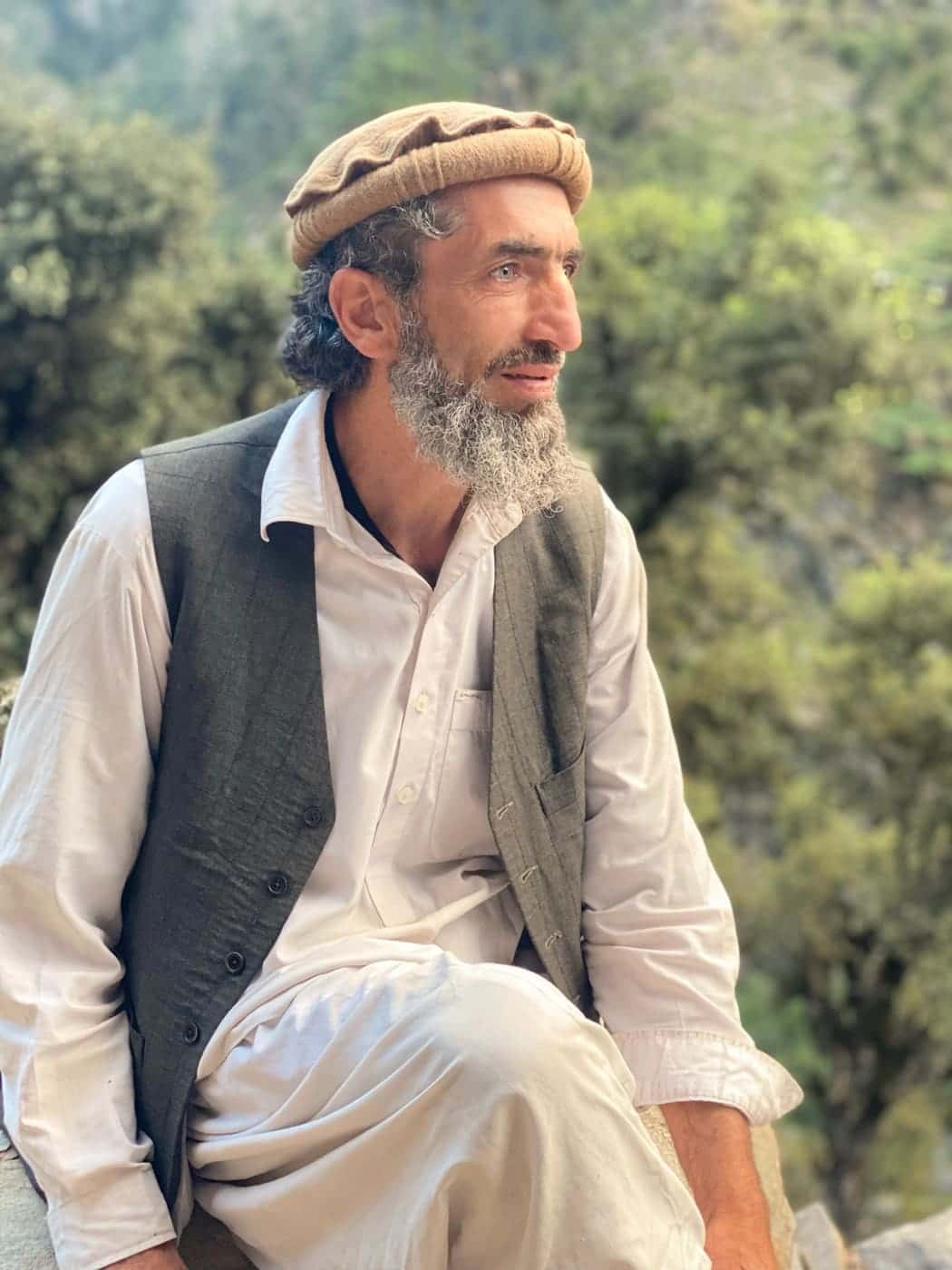
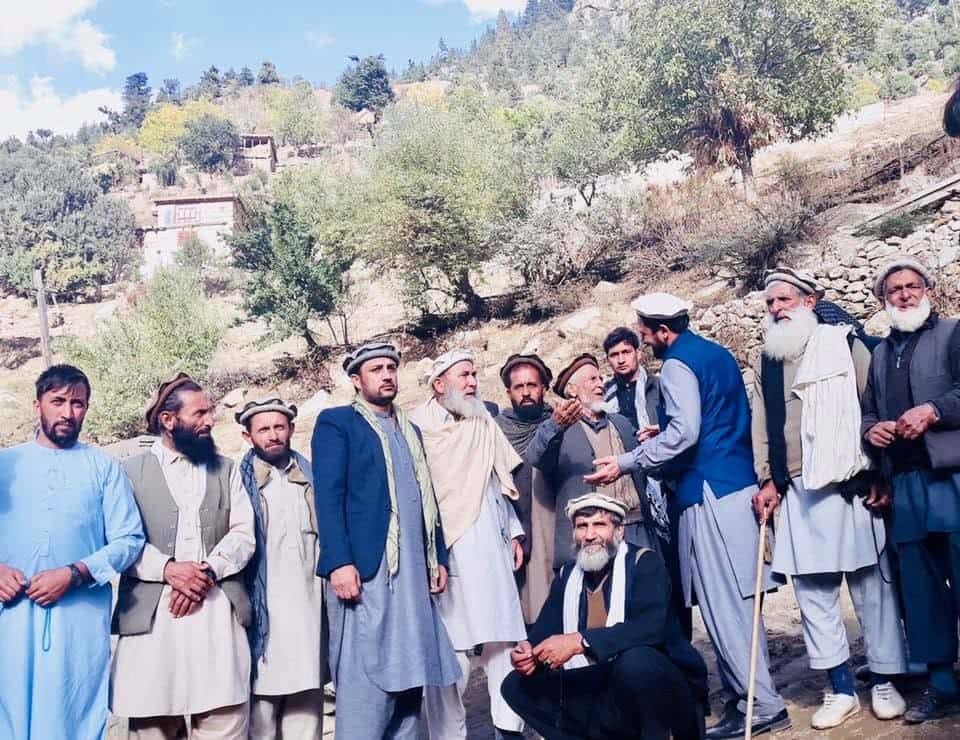
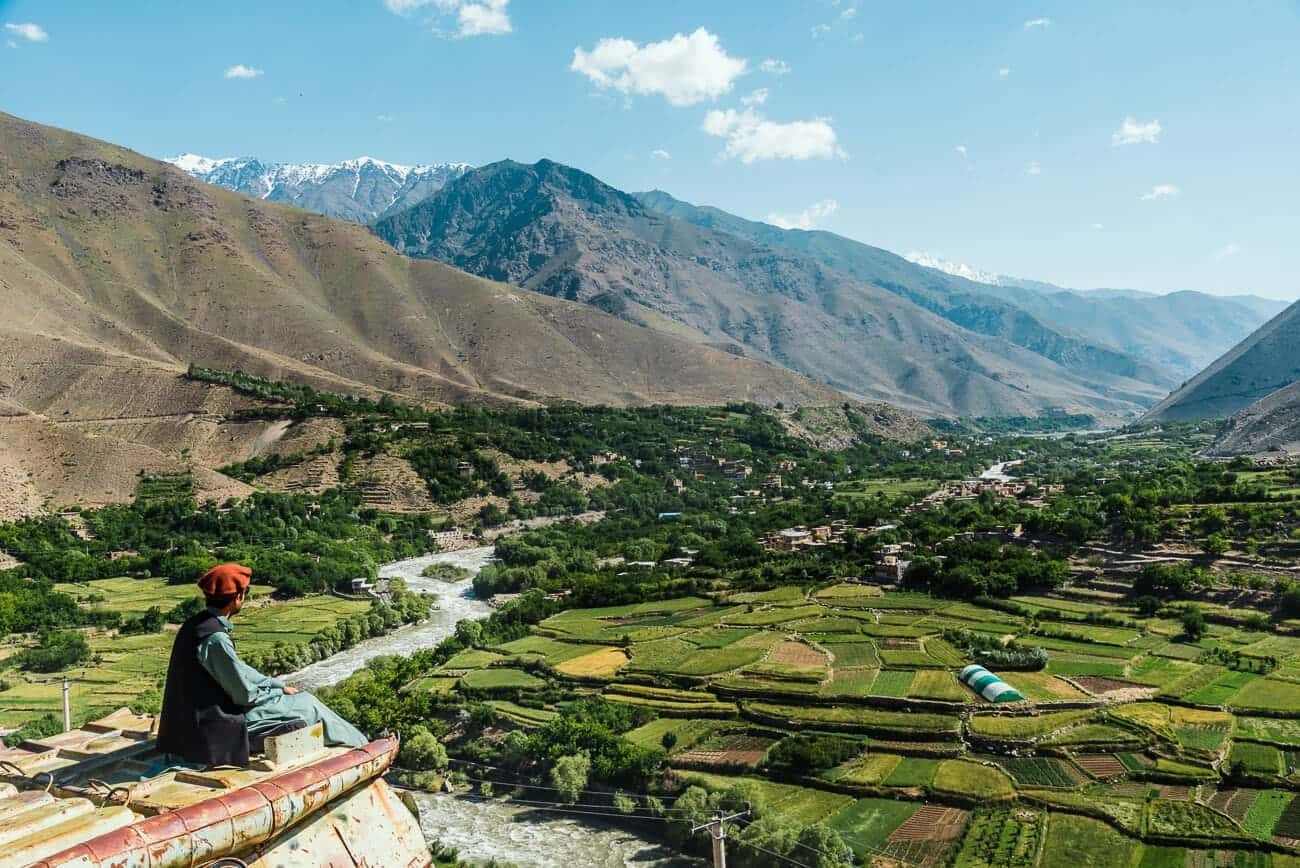
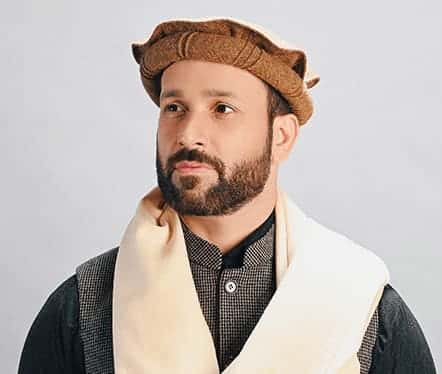
Real Nuristani dress, and what is sold as it
Search for Nuristani dress online and much of what you find is not from Nuristan. Many of the antique embroidered dresses sold as Nuristani, often tagged Nuristan, Kohistan and Swat together, are labelled jumlo, which is the wedding dress of Indus Kohistan in northern Pakistan, with Nuristan added to the title for the search. Genuine Nuristani embroidered shirts, scarves and pakols are made in the valleys and worn rather than collected. If you want one, buy from the makers. Our products page lists what the workshops produce, and we can put you in touch.
Asked about Nuristani dress
What is the traditional dress of Nuristan?
For men, a long shirt and loose trousers, often black or dark blue with white geometric embroidery at the chest and cuffs, a waistcoat, a woven wool scarf with tasselled ends, a heavy shawl in winter and the rolled-wool pakol. For women, a dark dress with trousers beneath, heavily embroidered at the neck, chest and cuffs, worn with a large shawl.
What do Nuristani men wear?
The kamiz and partug common to eastern Afghanistan, with Nuristani touches: embroidered chest panels and cuffs, a brightly coloured woven scarf with knotted tassels, and the pakol worn rolled high and pushed back.
What do Nuristani women wear?
A waisted dress with a collar, which is unusual in Afghanistan, over trousers of the same colour embroidered at the cuffs, with a large shawl. The dress is dark and the embroidery on the collar, chest and cuffs is bright and dense, with coins, beads or sequins for celebrations.
What is the Nuristani hat called?
The pakol, a soft flat-topped cap of rolled wool. It came to Nuristan from Chitral after the 1890s and became a symbol of Afghanistan in the 1980s.
What did the people of Kafiristan wear before 1896?
The men of the Bashgal wore goatskins with the black fleece outward, which earned them the name Siah-posh, the black-robed; the western and southern peoples in lighter cloth were the Safed-posh. Robertson also described white woollen knee-length trousers, black leggings, long tunics and silver-studded belts. Nearly all of it disappeared after the conversion.
Where can I buy Nuristani clothing?
From the makers in the valleys, through our products page. Be careful with antique dresses sold online as Nuristani; many are jumlo dresses from Indus Kohistan in Pakistan with Nuristan added to the listing.
Where this comes from
Plan your Nuristan journey
Ready to plan a visit, source Nuristani products, or discuss an investment? Your message goes to Obaid, who is from Nuristan, and his team in Afghanistan and the UK. We reply to every message.