Afghanistan's Lithium
Where the lithium lies, what the surveys actually counted, where the trillion-dollar headlines came from, and what the ban and the law say.
Large deposits on paper, and no mine
Afghanistan has large lithium deposits on paper and no lithium mine. The metal is held mostly in spodumene, a lithium mineral that grows in hard-rock veins in the mountains of the north-east, above all in Nuristan and Kunar, with a second large field in the centre of the country and smaller traces in salt lakes. Soviet and Afghan geologists mapped the veins in the 1970s, a Pentagon memo quoted in 2010 made Afghan lithium famous, and since 2021 the authorities have banned the trade in lithium ore.
This page sets out where the lithium lies, what each estimate counted and how far to trust it, where the trillion-dollar figures came from, and what the ban and the published law say. We are from Nuristan, where much of it lies, and we are not geologists or lawyers. Every figure carries its source, listed at the foot of the page, and where a number is weak we say so.
- The ore
- Spodumene, in granite pegmatite veins
- Where
- Nuristan and Kunar above all; Badakhshan, Laghman, Daykundi
- Largest estimate
- About 3.8 million tonnes of lithium oxide in 12 deposits (2025)
- Proven reserves
- None; the estimates are speculative
- USGS country table
- Afghanistan not listed, 2024 to 2026
- Salt lakes
- Ghazni basin drilled in 2014, no viable brine found
- Mining
- No lithium mine; trade banned since 2021
- In law
- A restricted mineral under the Minerals Law of 2018
A belt of veins from Nuristan to Badakhshan, and the salt lakes
All the published tonnage estimates for Afghanistan's lithium are for pegmatite, a very coarse granite that fills cracks around certain granites as they cool, and the mineral that carries the lithium is spodumene. The joint Soviet and Afghan exploration of the 1970s found the rare-metal pegmatites mostly in the east of the country, with a smaller group in the south-centre, and recorded spodumene in twelve pegmatite fields or districts, mostly in Nuristan, Badakhshan, Nangarhar, Laghman and Uruzgan. A 2025 review led by Afghan geologists treats them as one belt about 900 kilometres long and 100 to 250 kilometres wide, running from the Sistan depression in the south-west through Hazarajat, Kabul, Panjshir and Laghman to Kunar, Nuristan and Badakhshan, with 76 deposits and occurrences in 24 pegmatite fields.
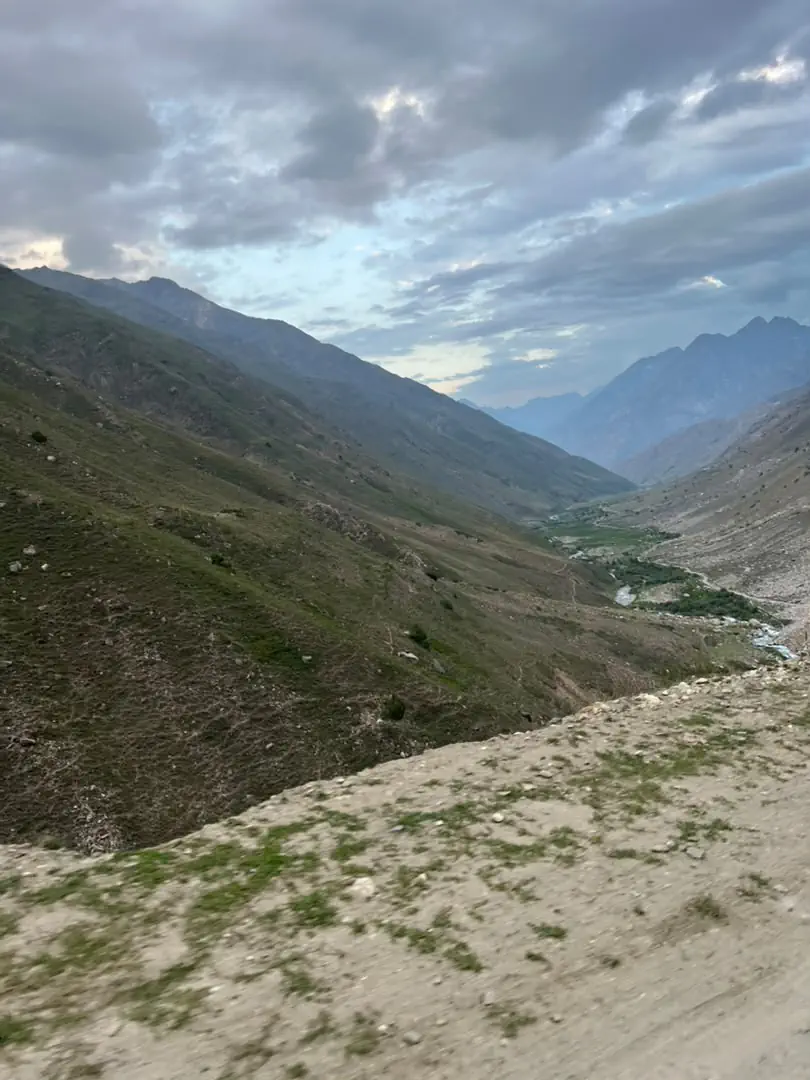
Most of the estimated lithium is in the north-east. The US Geological Survey's Nuristan rare-metal pegmatite area lies mainly in Nuristan and Kunar provinces, with small parts in Badakhshan and Laghman, and the Soviet geologists who surveyed it suggested it held the largest concentration of lithium-bearing pegmatites in the world. Their most promising lithium finds were in the Parun field of north-eastern Nuristan, in country where access is limited, in the USGS's words, by mountainous terrain and a poor road and trail network.
The second large field is Taghawlor, in the Daykundi area of central Afghanistan: a zone about 20 kilometres long with as many as 300 pegmatite dikes, the main type rich in spodumene, for which the Soviet surveys speculated a resource of about 1.46 million tonnes of lithium oxide.
Lithium also turns up in salt lakes. The British Geological Survey's sheet on Afghan rare metals reports 0.02 per cent lithium in the salts of Lake Sar-i-Namak in Takhar, with 350 milligrams a litre in its brine, and high lithium in the Namaksar lake of Ghuryan district in Herat. Ghazni was the great hope of 2010, and the US Geological Survey drilled a dry lake basin there in 2014; the result is set out below. Separately, in February 2025 the mines ministry ordered an assessment of lithium in the Godzareh area of Chahar Burjak district, in Nimroz province.
What the estimates counted, and how far to trust them
The hard-rock figures all go back to Soviet surveys of the 1970s, and none of them is a reserve.
A reserve, in the US Geological Survey's definitions, is the part of a resource that could be extracted at a profit at the time it is estimated, and it is worked out from measured and indicated resources: quantities computed from outcrops, trenches, workings or drill holes and from detailed sampling at reasonably close spacing. By that standard Afghanistan has lithium resources but no proven lithium reserves. The older reports call their figures speculative reserves, and the USGS says of the Nuristan estimates that they appear to rest on surface exposures and samples, with no sign of drilling, trenching or underground working.
The figures that circulate all go back to the Soviet surveys. The USGS republished them in 2011: six deposits in Nuristan's Parun field at 2,123,000 tonnes of lithium oxide to a depth of 100 metres, which it called mainly speculative, and the Taghawlor field at about 1.46 million tonnes. The 2025 review, a study of the existing literature, puts the national total at about 3.8 million tonnes of lithium oxide in twelve deposits, all but one of them in the north-east, to a depth of 100 metres, at an average grade of about 1.7 per cent. Its authors convert that to about 1.8 million tonnes of lithium metal, and they say the data behind it are lacking, sparse and scattered, and that some of the work was kept confidential.
The USGS's yearly summary of world lithium counts measured and indicated resources country by country, in tonnes of lithium metal. Afghanistan does not appear in it, in the 2024, 2025 or 2026 editions. For scale, the 2026 edition lists Argentina at 28 million tonnes, Bolivia at 23 million, Chile at 13 million, and Australia and China at 10 million each. The Afghan estimate of about 1.8 million tonnes, if it were proved, would sit beside Mexico's 1.7 million, though the two numbers are not the same kind of figure.
| Source | What it counts | Figure |
|---|---|---|
| Soviet surveys, 1970s, republished by the USGS in 2011 | Six deposits in the Parun field, Nuristan, to 100 metres, from surface samples | 2,123,000 tonnes of lithium oxide |
| Soviet surveys, 1970s, republished by the USGS in 2011 | The Taghawlor field, Daykundi area, central Afghanistan; speculative | About 1,464,000 tonnes of lithium oxide |
| Arian and others, Geopersia, January 2025 | Twelve of 76 deposits and occurrences, to 100 metres, at about 1.7 per cent | About 3,800,000 tonnes of lithium oxide (about 1.8 million tonnes of lithium) |
| USGS Mineral Commodity Summaries, 2024 to 2026 | Measured and indicated lithium resources, country by country | Afghanistan not listed |
The 2025 review turns 3.8 million tonnes of lithium oxide into about 1.8 million tonnes of lithium metal, a little under half by weight; on the same basis the 2011 Parun total is roughly one million tonnes of lithium. The Nuristan deposits one by one are listed on our page on mining in Nuristan.
Where the Saudi Arabia of lithium came from
The famous figures come from news reports of June 2010. This is what they said, and what has been found since.
In June 2010 the New York Times reported that the United States had found nearly a trillion dollars' worth of untapped minerals in Afghanistan, by the estimate of senior American government officials, and quoted an internal Pentagon memo saying the country could become “the Saudi Arabia of lithium”. The same report said Pentagon officials' initial analysis at one site in Ghazni province showed the potential for lithium deposits as large as Bolivia's, that American geologists were surveying dry salt lakes in western Afghanistan, and that the data behind the finds had been collected by Soviet mining experts in the 1980s. It also said it would take decades for Afghanistan to exploit its minerals fully.
The trillion dollars was a value for all of the country's minerals together, iron, copper, cobalt, gold and lithium among them, not for lithium. On 14 June the Associated Press reported the Afghan president's spokesman giving the same figure and telling reporters the findings had been made by the US Geological Survey under contract to the Afghan government; the president had said in May that the deposits might be worth as much as three trillion dollars. Since 2021 the trillion has been repeated as the value of the lithium alone, or of rare earths, which is not what the 2010 report said.
The Ghazni hope has since been tested. In 2014 the US Geological Survey drilled six boreholes, 406 metres of core in all, into the dry lake bed of the Dasht-e-Nawar basin in Ghazni and analysed the water held in the sediment. Lithium ran from under 50 to 186 micrograms a litre, about a thousandth of the concentrations in the South American brines that are mined, and the survey concluded that the results did not suggest a viable lithium brine resource there. The boreholes did not reach the floor of the basin.
The hard-rock veins are a different matter. The USGS wrote in 2011 that brines had replaced pegmatites as the world's main source of lithium, that demand could bring pegmatite mining back, and that the north-eastern pegmatites could be considered the world's recognised future principal source of lithium. That judgement rests on the Soviet surface surveys of the 1970s, and, as the British Geological Survey notes, no systematic modern exploration has been carried out since the Soviet withdrawal.
What is banned, since when, and what the law says
Checked on 12 October 2026. We will update this section if the ban is lifted or a contract is announced.
Two things stand in the way of anyone mining lithium in Afghanistan: the published law, and the ban the present authorities ordered in 2021. The Minerals Law of 2018, whose English translation the mines ministry still publishes, names lithium, with beryllium, rare earths and radioactive minerals, as a restricted mineral. Unless the Cabinet has approved a Restricted Minerals Program, the ministry may not tender a concession or grant a licence for a restricted mineral, no licence holder may work one, and none may be used or exported except under such a programme. We have found no such programme published.
The ban came after the change of power in August 2021. The mines ministry's spokesman told the Swiss Institute for Global Affairs in 2023 that the export of lithium had been banned shortly after the takeover, and that it would stay until a contract went to a company able to explore, extract and process the lithium. VOA reported in January 2023 that both the extraction and the sale of lithium had been banned since August 2021, and in the same month the authorities said they had seized about 1,000 tonnes of lithium-bearing rock in Jalalabad that had been dug in secret in Nuristan and Kunar.
Since then the ministry has said, in July 2023, that the lithium mines would be put out to tender, and in February 2025 it ordered the lithium assessment in Nimroz. On 12 October 2026 we could find no announcement that the ban has been lifted and no lithium contract. We will update this page when either changes.
Asked about Afghanistan's lithium
Where is lithium found in Afghanistan?
Mostly in spodumene-bearing pegmatite veins in the mountains of the north-east, chiefly in Nuristan and Kunar, with smaller parts in Badakhshan and Laghman, and in the Taghawlor field of the Daykundi area in central Afghanistan. Lithium has also been reported in the salt lakes of Takhar and Herat. In Ghazni, the province named in the 2010 headlines, the US Geological Survey drilled the Dasht-e-Nawar basin in 2014 and found no viable brine.
What are Afghanistan's lithium reserves?
Afghanistan has no proven lithium reserves. Its lithium figures are resource estimates from the Soviet surveys of the 1970s, which the US Geological Survey describes as speculative; the Nuristan ones rest on surface sampling, with no drilling. The largest, from a 2025 review led by Afghan geologists, is about 3.8 million tonnes of lithium oxide in twelve deposits, or about 1.8 million tonnes of lithium. The US Geological Survey's yearly country table of lithium resources and reserves does not include Afghanistan.
Does Afghanistan have the largest lithium deposits in the world?
Not on the numbers we have. Soviet geologists suggested that north-eastern Afghanistan held the largest concentration of lithium-bearing pegmatites in the world, which describes how many lithium-bearing veins there are, not how much lithium has been proved. The biggest Afghan estimate, about 1.8 million tonnes of lithium, is far below the 28 million tonnes the US Geological Survey lists for Argentina or the 23 million for Bolivia in 2026, and it has never been drilled.
Is Afghanistan's lithium worth a trillion dollars?
Not by any published estimate. The trillion-dollar figure, reported by the New York Times in June 2010, was senior American officials' estimate for all of Afghanistan's untapped minerals together, not for lithium. The same report quoted a Pentagon memo saying Afghanistan could become the Saudi Arabia of lithium. Some later articles attach the trillion to lithium alone.
Is lithium mining banned in Afghanistan?
Yes. The authorities banned the export of lithium shortly after they took power in August 2021, according to the mines ministry's spokesman, and VOA reported in 2023 that extraction and sale were banned too. The published Minerals Law of 2018 also lists lithium as a restricted mineral that cannot be licensed or exported without a programme approved by the Cabinet. We found no sign on 12 October 2026 that the ban had been lifted.
Are there any lithium mines in Afghanistan?
No commercial ones. A 2025 review led by Afghan geologists says Afghanistan has not yet mined lithium from pegmatites or brines, though residents of Kunar reported spodumene crystals more than a metre long being dug illegally and taken to neighbouring countries when lithium prices peaked in 2022. The places called lithium mines in the news are deposits mapped in the 1970s, most of them high in the mountains of Nuristan, reached by poor roads and trails.
Can foreigners invest in lithium in Afghanistan?
Not under the published law as it stands. The Minerals Law of 2018 makes lithium a restricted mineral: until the Cabinet approves a Restricted Minerals Program, no concession may be tendered and no licence granted for it, to anyone, Afghan or foreign. For other minerals, small-scale licences are only for Afghan citizens and for companies incorporated in Afghanistan with an Afghan majority owner, and large concessions go by public tender to bidders who hold an Afghan investment licence and open an office in Afghanistan before signing. The mines ministry says it is amending the law; we have found no new text published.
Do you buy or sell spodumene or lithium ore?
No. We do not buy, sell or broker spodumene or lithium ore, and we cannot arrange lithium deals. This page is information about Afghanistan's lithium, written by people from Nuristan.
On this site
- Mining in Nuristan: the pegmatite fields district by district
- Parun district, home of the Parun pegmatite field
- Nuristan National Park, declared over the same mountains
- Nuristan's neighbours: Kunar, Laghman, Panjshir, Badakhshan and Chitral
- How to get to Nuristan: the three river roads
- US Geological Survey: Nuristan rare-metal pegmatite area of interest, by Mark D. Cocker (Open-File Report 2011-1204, chapter 24A)
- US Geological Survey: Daykundi tin, tungsten and lithium area of interest, by Stephen G. Peters (Open-File Report 2011-1204, chapter 5A)
- US Geological Survey: data collected at Dasht-e-Nawar in support of lithium exploration, June to September 2014 (Open-File Report 2015-1059)
- Stillings and others: lithium brine exploration at Dasht-e-Nawar basin, Ghazni province, GSA Annual Meeting 2015
- US Geological Survey: Mineral Commodity Summaries 2024, lithium
- US Geological Survey: Mineral Commodity Summaries 2025, lithium
- US Geological Survey: Mineral Commodity Summaries 2026, lithium
- US Geological Survey: Mineral Commodity Summaries 2026, appendix C, resource and reserve definitions
- Arian, Alaminia, Nero, Haydari and Shirzad, A review on Afghanistan pegmatite belt: lithium reserves, challenges and prospects, Geopersia 15(1), January 2025
- British Geological Survey and Afghanistan Geological Survey: Minerals in Afghanistan, rare-metal deposits
- The New York Times, 13 June 2010, republished by NBC News: US identifies vast mineral riches in Afghanistan
- Associated Press, 14 June 2010, via the Christian Science Monitor: Afghan mineral deposits worth trillions
- Mining Technology, 16 September 2021: Afghanistan's elusive lithium
- VOA, 22 January 2023: lithium smuggling arrests and the ban on lithium
- Swiss Institute for Global Affairs, April 2023: Afghanistan's lithium riches, more mirage than windfall
- Amu TV, 24 July 2023: lithium mines to go to open tender
- Afghanistan International, 3 February 2025: lithium and uranium assessments in Nimroz and Helmand
- Ministry of Mines and Petroleum: the Minerals Law, unofficial English translation
- Ministry of Mines and Petroleum: laws and regulations, and the amendment of the Minerals Law
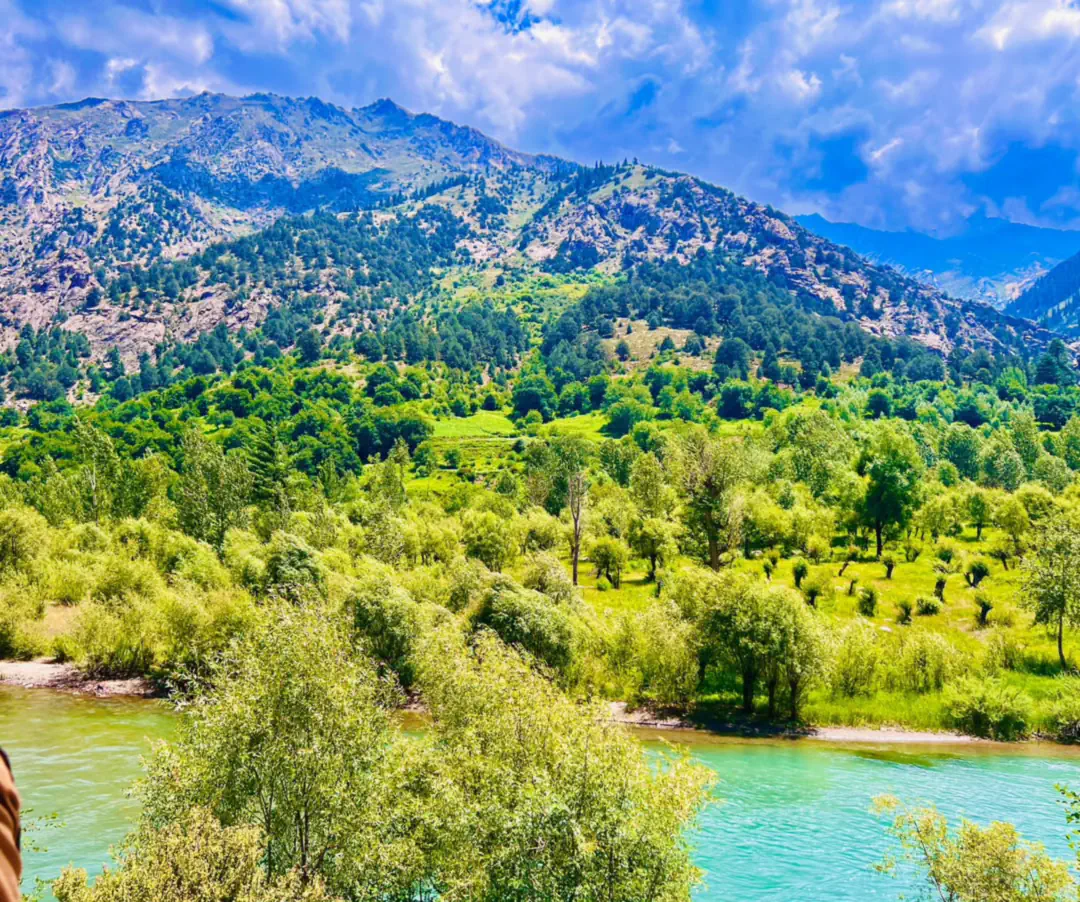
The photographs on this page are our own, taken in Parun.
Write to us
A question, a correction, or something you can add to this page: your message goes to Obaid, who is from Nuristan, and his team in Afghanistan and the UK. We reply to every message.