Skip to content
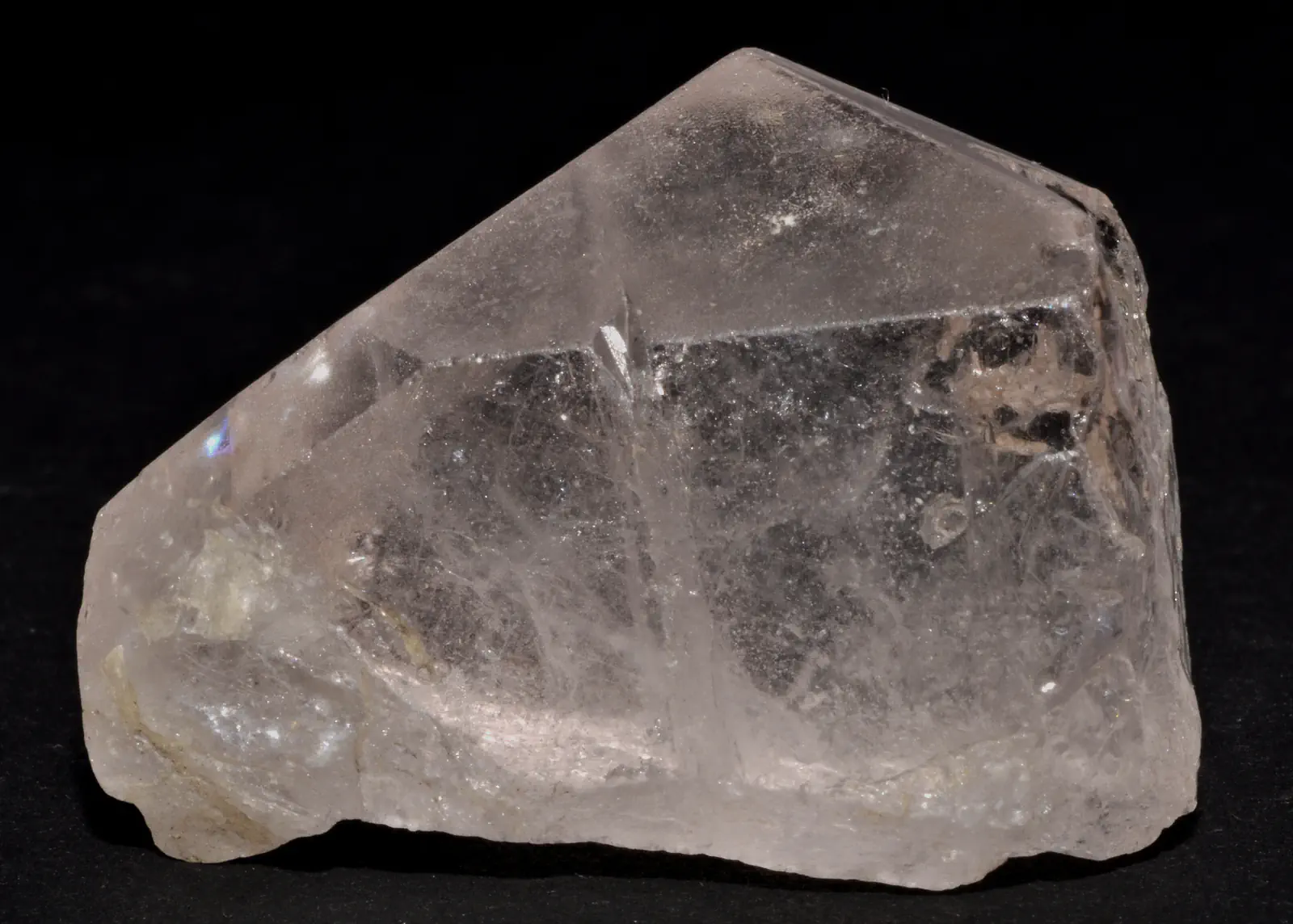
A pale pink morganite crystal head from the Kunar mine in Afghanistan, 3.3 centimetres across, its faces catching the light against black
The gemstones of Nuristan and Kunar

Afghan morganite

Pink and peach beryl from Mawi, the Pech valley and Paprok: where it is mined, which colours the trade pays for, how it is heated, and how to buy it.

From the pegmatites of the Hindu Kush

What Afghan morganite is, and why it matters

Afghan morganite is the pink to peach beryl of the same granite pegmatites that give Nuristan its kunzite and Kunar its aquamarine. It comes out of the Mawi and Kolum workings in Du Ab, the Pech valley fields of Kunar, the Paprok mine in Kamdesh and the Dewa mine in Parun, as flat hexagonal crystals that can be the size of a hand, and it is sold by the tonne at the Nuristan auctions with the kunzite and by the gram as crystals to collectors abroad. Its colour runs from pale pink through peach to salmon, and the trade heats most of it to take the orange out.

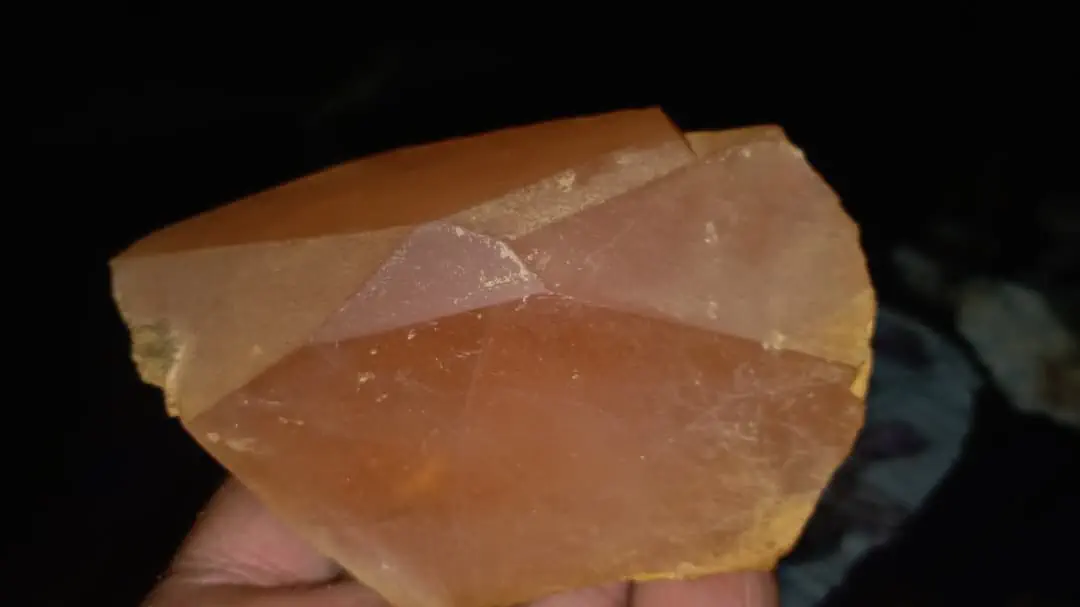
This page is written from Nuristan, where a peach morganite from the Sewketra valley in Waygal is photographed below in the hand it came to. It says where the stone is mined, which colours the trade pays for and which it heats, what it sells for with the source of every figure, the caesium-rich pink beryl from the Pech valley that turned out to be a new mineral, what a laboratory can tell you, and what to ask a seller. The province's stones as a whole are on the Nuristan gemstones page, and the law for buyers is on its own page.

Mineral
Beryl, the pink variety, coloured by manganese, in granite pegmatite
Colours
Pale pink, peach and salmon; rarely a strong pink
Best-known fields
Mawi and Kolum in Du Ab; the Pech valley in Kunar
Also from
Paprok in Kamdesh, the Dewa mine in Parun, Laghman, and the Sewketra valley in Waygal
Crystals
Flat hexagonal crystals to 9 centimetres and more; specimens over a kilogram
Named
In 1910, after the financier J. P. Morgan, for stones from Madagascar
Hardness
7.5 to 8; sound for rings, unlike the kunzite it grows with
Sold through
Peshawar, Kabul, specimen dealers, and the Mawi auctions since 2025
The mineral

Beryl, pink with manganese, in flat hexagonal crystals

Morganite is beryl, the mineral that is emerald when chromium colours it green, aquamarine when iron colours it blue, and morganite when manganese colours it pink. It was named in 1910 for the New York financier J. P. Morgan, a collector of gems, when Tiffany and Company brought the first pink beryl from Madagascar to market. It grows as flat, tabular hexagonal crystals rather than the long prisms of aquamarine, in the open pockets of granite pegmatite veins, and in Afghanistan it sits in the same pockets as kunzite, tourmaline, bladed white cleavelandite and smoky quartz.

The colour is never dark. Morganite's tone tops out at a medium pink, most crystals are pale, and a yellow cast from iron turns the pink to the peach and salmon shades that most Afghan stones show. The strong pinks the trade calls magenta are rare, and the price follows them. The refractive index runs about 1.572 to 1.600 and the specific gravity 2.71 to 2.90, with a distinct pleochroism from pale pink to a deeper bluish pink that the cutter has to orient. In 2003 the Swiss laboratory SSEF described pink beryl from the Pech valley and the Dewa mine in Parun with so much caesium, up to 15 per cent caesium oxide, that its density reached 3.10 and its refractive index 1.615. The Afghan stone was recognised the same year as the new mineral pezzottaite, and a pink stone from Afghanistan that is unusually heavy for its size may be that, not morganite.

The mines

Where Afghan morganite comes from

Five areas, four of them in Nuristan. The trade says Kunar or Nuristan for most of it, and older tables file the western mines under Laghman, so the label on a parcel is a rough guide at best.

Du Ab and Mandol, western Nuristan

Mawi and Kolum

Pink to brownish pink and peach

The great kunzite field also gives morganite. Gary Bowersox saw a few crystals from pink to brownish pink to peach that miners said came from Mawi when he reported to GIA in 1985, and the British Geological Survey's brochure records a rarer pale pink to deep rose beryl mined in small quantities at Mawi. The French mineralogists who described these pegmatites in 1978 listed it too. Since 2025 morganite has been sold with the kunzite and beryl in the Mawi lots at the state auctions in Du Ab, by the tonne.

Dara-i-Pech, Kunar, with Wama in Nuristan

The Pech valley

Pale pink to vivid pink, and peach

The Darra-i-Pech field over the provincial line is the best-known source of Afghan morganite specimens. The mineral databases record flawless crystals of morganite, elbaite and kunzite from it, dealers offer tabular pink crystals of 4 to 9 centimetres on white cleavelandite, and a specimen of over a kilogram was on sale in 2026. It is also the home of the caesium-rich pink beryl described in 2003, now called pezzottaite. A stone labelled Dara-i-Pech can come from anywhere along the valley, from Chapa Dara and Wata Pur to Wama in Nuristan, and the trade sells much of it as Nuristan.

Kamdesh district, eastern Nuristan

Paprok

Pastel pink

The tourmaline mine of Kamdesh gives morganite as well: a 4.8 centimetre pastel pink crystal on cleavelandite and a 2 centimetre pink crystal in bladed muscovite from Paprok have passed through the specimen trade, and 124 kilograms of beryl from Kamdesh were sold at auction in August 2025, colour unstated.

Parun and Waygal districts, central Nuristan

Parun and the Waygal valley

Pink; peach from Sewketra

The Dewa mine in the Parun field was one of the two Afghan sources of the caesium-rich pink beryl analysed in 2003. In Waygal, the peach crystal photographed below came out of the Sewketra valley, a side valley of the district and our director's home ground, where aquamarine and tourmaline come from the same rock.

The Alingar valley and Alishing, Laghman

Laghman

Vivid pink

Specimen dealers list vivid pink tabular morganite crystals to 4.7 centimetres on cleavelandite under Laghman, and the old survey tables file several of Nuristan's western mines under the province they belonged to before Nuristan was made in the late 1980s. A stone sold as Laghman morganite may be from either side of the line.

A rough morganite crystal from the Sewketra valley in Waygal, Nuristan, peach to orange-brown with flat faces, held in a hand against a dark background
A rough morganite from the Sewketra valley in Waygal, peach to orange-brown, in the hand it came to. Our own photograph.
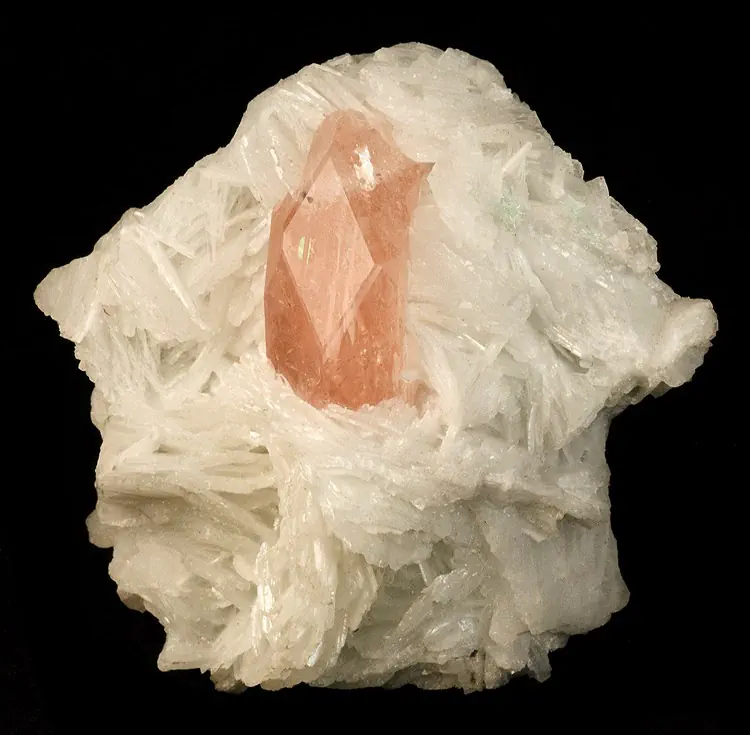
A sharp hexagonal pink morganite crystal, 4 centimetres across, standing in white bladed cleavelandite from the Pech valley pegmatite field in Kunar, Afghanistan
A sharp hexagonal pink morganite of 4 centimetres on cleavelandite from the Pech valley, the best-known source of Afghan specimens.
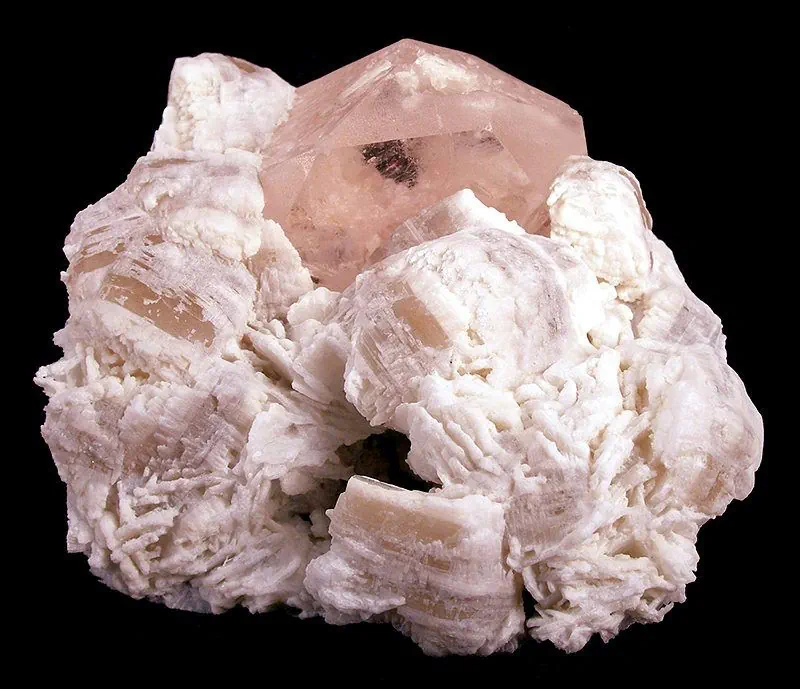
A peach morganite crystal of textbook hexagonal form, 3.5 centimetres across, set in bladed white cleavelandite, from Kunar province, Afghanistan
A peach morganite of textbook form, 3.5 centimetres across, on bladed cleavelandite from Kunar.
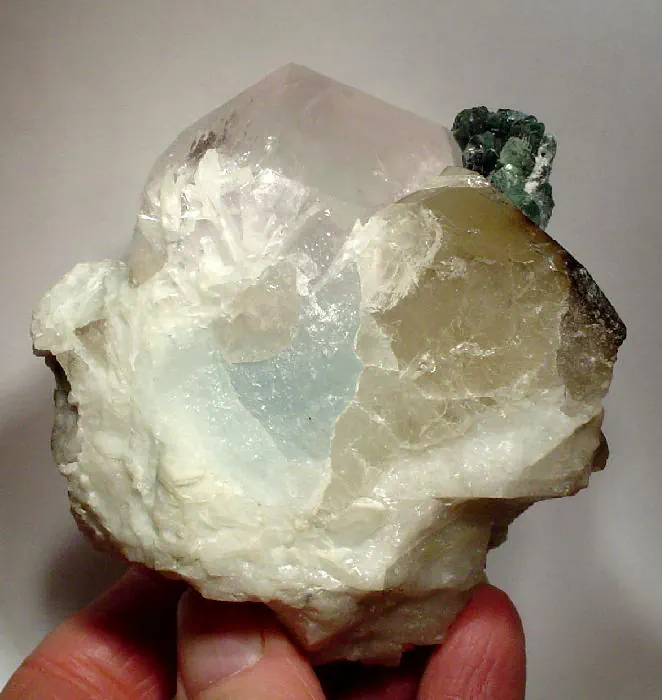
A pocket piece from Kunar province, Afghanistan: a pale morganite crystal with a blue aquamarine core beside green indicolite tourmaline and colourless spodumene on white albite
A Kunar pocket in one piece: morganite grown around an aquamarine core, with indicolite and spodumene.
Colours

Pink, peach, and the caesium beryl that is something else

Pink

Magenta, the trade's word for the strongest

The most valuable morganite is a saturated pure pink, which the trade calls magenta, and it is rare: morganite's tone never passes a medium, and the strong pinks come mostly from large crystals, because the colour only shows at scale. Madagascar's old stones set the standard and Brazil supplies most of the fine pink today. Afghan pink of this strength exists, from the Pech valley and Laghman, but it is the exception.

Peach and salmon

The usual Afghan colour; sold as padparadscha colour by some

Most Afghan morganite is peach to salmon, pink with a yellow cast from iron. The trade heats most of it to a purer pink, so an honestly peach stone is often an unheated one. Some dealers borrow the sapphire word padparadscha for an orange-pink morganite; it is a colour name only, and the stone is beryl.

Pale pink

Pastel

The common grade, and the one in most of the rough: a pastel that the cutter deepens by cutting the stone a little deep, and that the trade prices in tens of dollars a carat.

Caesium pink

Pezzottaite, raspberry beryl

A deep raspberry pink beryl from the Pech valley and the Dewa mine, with up to 15 per cent caesium oxide, was described from Afghanistan in 2003 and recognised the same year as the new mineral pezzottaite. It is heavier than morganite, a density of 2.9 to 3.1 against 2.7 to 2.9, and a laboratory separates the two. A dealer selling it as morganite is underselling it; one selling pale morganite as pezzottaite is doing the reverse.

Pink and blue together

Morganite with an aquamarine core

Kunar pockets give crystals that grew pink around a blue core, or morganite around a green tourmaline, and these go to collectors rather than cutters. One is photographed below.

Quality

What makes one Afghan morganite worth more than another

Colour decides the price and size decides the colour. Because morganite is pale, a small stone rarely shows much pink, so the price per carat rises with weight up to about twenty carats, where it levels off and then falls, and a large stone cut from one crystal is worth more a carat than a small one from the same pocket. The trade wants pink over peach, and both over a pastel with a brown or grey cast. Clarity is expected: morganite is nearly always eye-clean, and a stone with visible inclusions drops a tier or goes to the carver. Cut matters because of the pleochroism, pale pink one way and bluish pink another, and because cutters deepen a pale stone to concentrate its colour.

Afghan material has size and clarity on its side: the Pech valley crystals are described as flawless by the mineral databases, specimen crystals of 4 to 9 centimetres are common, and pieces over a kilogram exist. Its weakness is the same as its aquamarine's, colour. Most of it is peach to pale pink, and the strong pinks that set the top prices come mostly from Brazil and the old Madagascar workings.

Prices

What Afghan morganite sells for

Every figure here is a price asked, paid or published at the date stated, with its source. There is no official price list for coloured stones.

Prices of morganite and of Afghan beryl rough, with sources
StonePriceSource
Faceted morganite, vivid pink or magenta, 10 to 20 carats, retail, October 2026250 to 500 US dollars a carat; 90 to 150 under a caratWashington Diamond price guide
Faceted morganite, fine medium peachy pink, 10 to 20 carats, retail, October 2026120 to 250 US dollars a caratWashington Diamond price guide
Faceted morganite, pale commercial pink, retail, October 202630 to 50 US dollars a carat under a carat; 60 to 100 at 10 to 20 caratsWashington Diamond price guide
Morganite of all grades, January 202670 to 600 US dollars a caratRock Chasing price guide
Pink and peach morganite of about 5 carats, UK retail, October 2026About 100 pounds a carat for a pink 4.99 carat stone to about 330 for a peach 5 carat stoneGemPundit listings
Afghan peach-pink morganite, 302 carats, VS clarity, unheated, dealer asking price70 US dollars a caratAlif Gems, undated listing, retrieved October 2026
Peach-pink morganite crystal on cleavelandite from Dara-i-Pech, 1,047 grams, dealer asking price1,800 US dollars, reduced from 2,400Minerals Paradise, retrieved October 2026
About two tonnes of Mawi rough, kunzite with beryl, quartz and morganite, state auction, September 2026122.5 million afghanis, roughly 61,000 a kilogram, quality unstatedAtlasPress
8,785 kilograms of Mawi rough, beryl, kunzite and morganite, state auction, November 2025111.557 million afghanis, roughly 12,700 a kilogram, quality unstatedAtlasPress
About 9,000 kilograms of Mawi rough, beryl, kunzite, morganite and quartz, state auction, September 202595.1 million afghanis, roughly 10,500 a kilogram, quality unstatedBakhtar News Agency

There is no official price list for coloured stones, and the guides above are retail ranges for stones of every origin. Morganite is affordable because supply keeps up with demand: Brazil cuts large clean stones by the thousand, and the stone's name is less known than its colour. The Mawi auction figures are for tonnes of mixed rough in which morganite is one line among the kunzite, beryl and quartz, so they say nothing about a cut stone, and the specimen prices are what collectors pay for a whole crystal, by the piece and not the carat.

One check worth making on any Afghan stone sold as morganite at a morganite price: weigh it against its size. A pink beryl from the Pech valley that comes out heavy may be pezzottaite, the caesium mineral, which collectors pay far more for.

Treatments

Heated as a rule, and what can be detected

Heating is routine. GIA puts it plainly: morganite might be heat treated to modify the colour, the effect is often to alter the orange-pink colour to a more pure pink, and the treatment is routine. The heat drives out the yellow that iron gives, the pink that manganese gives stays, the change is permanent, and no laboratory can detect it, so a pure pink morganite is taken to be heated unless the seller can show otherwise. A peach stone is more likely to be as it came out of the ground, and some buyers pay for that.

Irradiation is used now and then to deepen pink, and the colour it adds fades in light; the trade does not accept it. Unlike the kunzite it grows beside, natural morganite does not fade, which is one reason it is the better stone for a ring. Fracture filling and coating are not documented for Afghan morganite. Synthetic morganite is grown but uncommon; the stones sold in its place are pink glass, synthetic spinel and pink topaz, and a report rules them out.

Origin and reports

What a laboratory can and cannot tell you

A laboratory report on a morganite will say natural beryl, morganite, give the weight and measurements, and say whether any fracture filling was found. It will not say Afghanistan, and it will not see heating. GIA offers geographic origin opinions for emerald, ruby, sapphire, alexandrite, Paraiba-type tourmaline, peridot, red spinel, demantoid and opal, and the other major laboratories follow a similar list. A report will, though, separate morganite from pezzottaite by density and refractive index, which for a pink Afghan beryl is worth knowing.

Origin rests on the chain of hands. A dealer who can name the valley and the year is giving you more than any certificate can. Stones from Kunar are sold as Nuristan and the reverse, Pakistani morganite from the same mountains passes through the same border markets, and under European and American customs rules a rough Afghan stone cut in Thailand or Pakistan can be labelled with the country where it was cut.

Buying

How to buy Afghan morganite well

Buy the colour, not the name. Judge the pink in daylight, ask whether the stone is heated and get the answer in writing, and for anything over a few hundred dollars ask for an identification report, which costs from about 75 US dollars at GIA. For a crystal, look for the flat hexagonal form and natural faces, and check that it sits in its matrix as it grew, because specimens reassembled with resin and crystals glued to rock they never grew on have been documented in the regional trade. For rough, see it in daylight with the weights, and remember that pale rough cuts pale stones.

Our guide to buying gemstones from Afghanistan covers the law for buyers in the United Kingdom, the European Union and the United States, the import duties, the laboratories and their fees, and the fakes that have been documented. If you want morganite from Afghanistan, write to us and tell us what you are looking for: cut stones, rough by the gram or the lot, or crystals and specimens. We source at first hand from the people who mine or find the stones, in Nuristan and in Kunar, and we will say honestly what we can and cannot do.

Questions

Asked about Afghan morganite

What is Afghan morganite?

The pink to peach beryl of eastern Afghanistan's granite pegmatites: dug with the kunzite at Mawi and Kolum in Nuristan's Du Ab, in the Pech valley fields of Kunar, at Paprok in Kamdesh and at the Dewa mine in Parun. It grows as flat hexagonal crystals, often large, and most of it is peach to pale pink.

How much is morganite worth per carat?

In 2026 retail guides put vivid pink morganite at about 250 to 500 US dollars a carat for stones of ten to twenty carats, fine peachy pink at 120 to 250, and pale commercial stones at 30 to 100 depending on size. Afghan peach-pink rough was offered unheated at 70 dollars a carat. There is no official price list, and every figure on this page carries its source and date.

Is morganite expensive?

No, by the standards of coloured stones. Its price is held down by supply, because Brazil cuts large clean stones in quantity, and by its pale colour. A fine pink of a few carats costs a few hundred dollars a carat where a sapphire of the same pink costs thousands, which is why it has become an engagement-ring stone.

Is peach or pink morganite better?

Pink fetches more. The trade's most valued morganite is a saturated pure pink, called magenta, and peach and salmon shades sit below it. But most pink morganite has been heated to remove the orange, while a peach stone is more often unheated, and some buyers prefer it for that.

What is the rarest colour of morganite?

A strong, saturated pure pink. Morganite is never dark, and the strongest pinks come from large crystals from Madagascar and Brazil. In Afghanistan the rarity is the deep raspberry caesium beryl of the Pech valley, which turned out to be a different mineral, pezzottaite.

Is morganite heat treated?

Routinely. Heating turns orange-pink and peach stones to a purer pink, the change is permanent and no laboratory can detect it, so a pure pink stone is assumed to be heated unless the seller can show otherwise. Ask for the treatment in writing.

Does morganite fade like kunzite?

No. Kunzite, the pink spodumene from the same Nuristan pockets, fades in strong light; natural morganite does not. Only the rare irradiated morganite fades, and the trade does not accept that treatment.

What is the difference between morganite and pezzottaite?

Both are pink minerals of the beryl group and both come from Afghanistan's Pech valley. Pezzottaite is rich in caesium, a deeper raspberry pink, heavier, with a density of 2.9 to 3.1 against morganite's 2.7 to 2.9, and far rarer. It was recognised in 2003, partly from Afghan stones first described as caesium-rich morganite.

Can a laboratory tell that a morganite is from Afghanistan?

No. Laboratories give origin opinions for emerald, ruby, sapphire and a few other stones, not for morganite. A report confirms natural beryl, the weight, any fracture filling, and whether the stone is morganite or pezzottaite. Origin rests on the seller's records.

Where is morganite found in Afghanistan?

At the Mawi and Kolum workings in Du Ab and Mandol, in the Pech valley fields of Kunar, at Paprok in Kamdesh, at the Dewa mine in Parun, in the Sewketra valley in Waygal and in the pegmatites of Laghman. The Mawi lots sold at the Nuristan auctions since 2025 are the main route to market.

Read on

On this site

  1. GIA: What is morganite
  2. GIA: Is morganite enhanced?
  3. International Gem Society: Morganite value, price and jewelry information
  4. International Gem Society: Is morganite expensive?
  5. H. A. Hänni and M. S. Krzemnicki, Journal of Gemmology, volume 28, number 7 (2003): Caesium-rich morganite from Afghanistan and Madagascar
  6. Laurs and others, Gems and Gemology, Winter 2003: Pezzottaite from Ambatovita, Madagascar, a new gem mineral (with the Afghan stone)
  7. Gary Bowersox, A Status Report on Gemstones from Afghanistan, Gems and Gemology, Winter 1985 (morganite from Mawi)
  8. British Geological Survey and Afghanistan Geological Survey: Minerals in Afghanistan, Gemstones
  9. Lucyna Natkaniec-Nowak, Journal of Gemmology, volume 31 (2008): beryls from Ghursalak, Konar province, including morganite
  10. Mindat: morganite localities in Afghanistan
  11. Mindat: the Dara-e-Pech pegmatite field, Kunar
  12. Washington Diamond, 9 October 2026: 12 carat morganite ring cost, with price tiers per carat
  13. Rock Chasing, 18 January 2026: How much morganite is worth
  14. GemPundit: morganite listings (retrieved October 2026)
  15. Alif Gems: 302 carat unheated morganite from Afghanistan (dealer listing, retrieved October 2026)
  16. Minerals Paradise: peach pink morganite with cleavelandite from Dara-i-Pech, 1,047 grams (dealer listing, retrieved October 2026)
  17. AtlasPress, 3 September 2026: Nuristan gemstones sold for more than 122 million afghanis
  18. AtlasPress, 29 November 2025: over 8,700 kilograms of gemstones sold in Nuristan auction
  19. Bakhtar News Agency, 17 September 2025: precious stones worth 95 million afghanis auctioned in Nuristan
Get in touch

Plan your Nuristan journey

Ready to plan a visit, source Nuristani products, or discuss an investment? Your message goes to Obaid, who is from Nuristan, and his team in Afghanistan and the UK. We reply to every message.