Kipling's story and John Huston's film are fiction, but the country in them was real. Kafiristan is today's Nuristan. What Kipling took from books, who the supposed real king was, what the story invents about the people, and what happened to the real Kafiristan eight years after it was written.
Rudyard Kipling's story The Man Who Would Be King, and the film John Huston made of it in 1975 with Sean Connery and Michael Caine, are set in a country called Kafiristan, where two English adventurers make themselves kings. People often ask whether any of it happened. The adventure did not. The country did. Kafiristan was real, and it is where we come from: it is the old name of Nuristan.
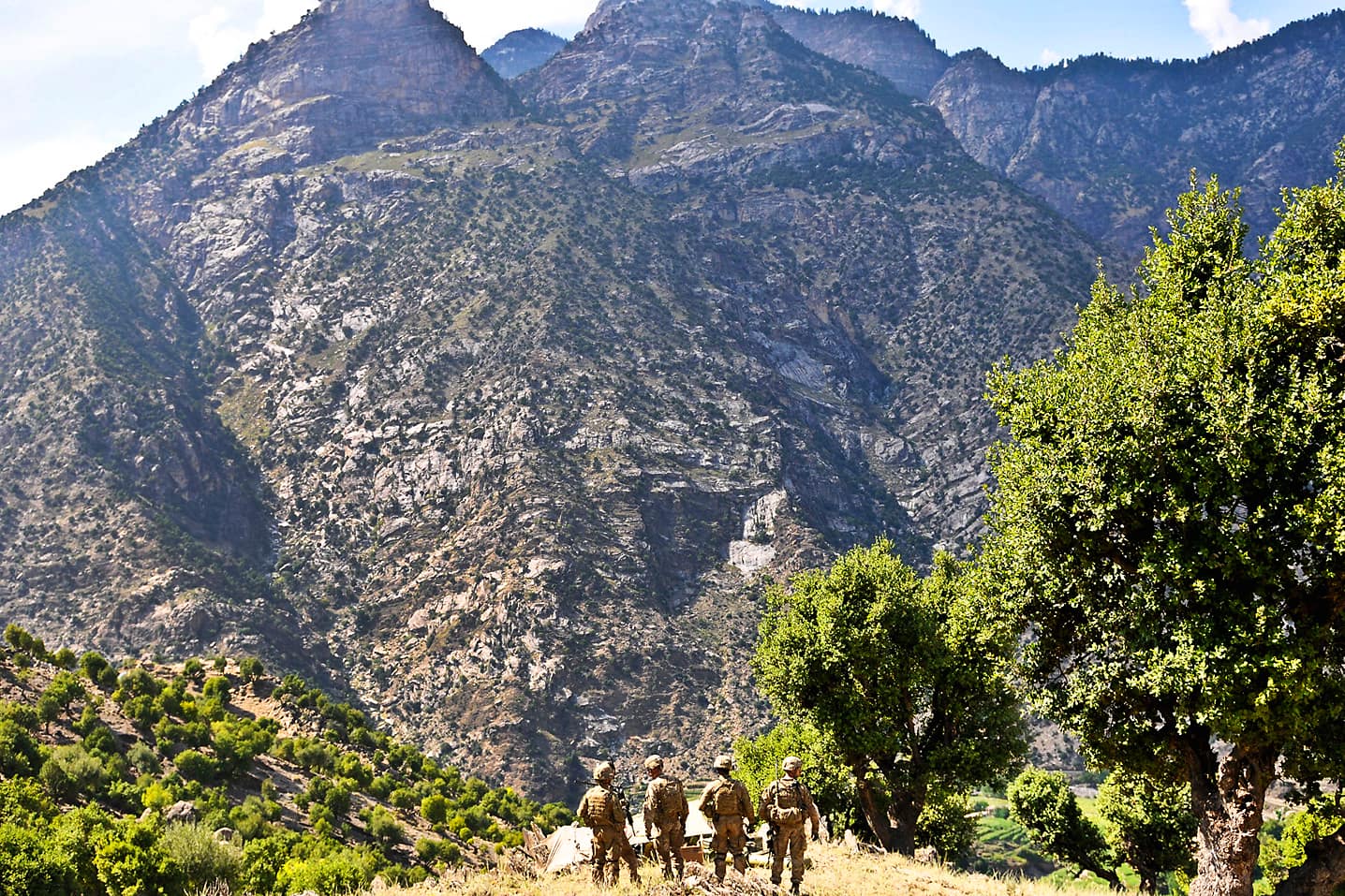
This page separates the two. It sets out what the story says, where Kipling got his Kafiristan, who the supposed real king was, what the story invents about the people, and what became of the real place, which was conquered eight years after the story appeared. The photograph above is a village in Waygal, in the country Kipling was writing about.
The short answer
- The story is fiction, first published in India in 1888, when Kipling was 22.
- Kafiristan was a real region of the Hindu Kush. Since 1896 it has been called Nuristan.
- Kipling never went there. He took his details from an encyclopaedia and a handful of travellers.
- No European ever ruled it. The Kafirs had no kings at all.
- The film was shot in Morocco, and its holy city, Sikandergul, is invented.
What the story says
A newspaperman in India meets two drifters, former soldiers named Daniel Dravot and Peachey Carnehan. They have decided that India is too small for them and that they will go to Kafiristan and be kings. They sign a contract with each other to give up drink and women until it is done, and they set off disguised as a mad priest and his servant, with twenty rifles hidden in the baggage of two camels.
Some years later Carnehan comes back alone, crippled and half out of his mind, and tells the newspaperman what happened. They drilled the men of one village and used them to take the next, valley after valley. The priests accepted Dravot as a god, the son of Alexander, and he was crowned. Then he broke the contract and demanded a wife. The girl, terrified of marrying a god, bit him. He bled, the priests saw that he was a man, and the country rose. Dravot was made to walk out onto a rope bridge and the ropes were cut. Carnehan was crucified between two pine trees, lived through it, and was let go with Dravot's head, still wearing its crown, in a bag. He dies a few days after telling the story.
Where Kipling got his Kafiristan
Kipling never set foot in Afghanistan. The nearest he came was the mouth of the Khyber Pass. His Kafiristan came out of books, and the story says which ones: the heroes look the country up in a volume of the Encyclopaedia Britannica and in the travels of Wood, Bellew and Raverty.
The Britannica article, written by Henry Yule for the ninth edition, supplied most of the local colour. It gave Kipling a chief god named Imbra, a people called the Bashgalis, a pass called the Khawak, bridges of rope, a liking for wine, the habit of sitting on stools where their neighbours sat on the ground, fair complexions, and the Kafirs' own supposed belief that they were related to Europeans. Kipling turned the Bashgalis into a village called Bashkai and made up the rest of his place names.
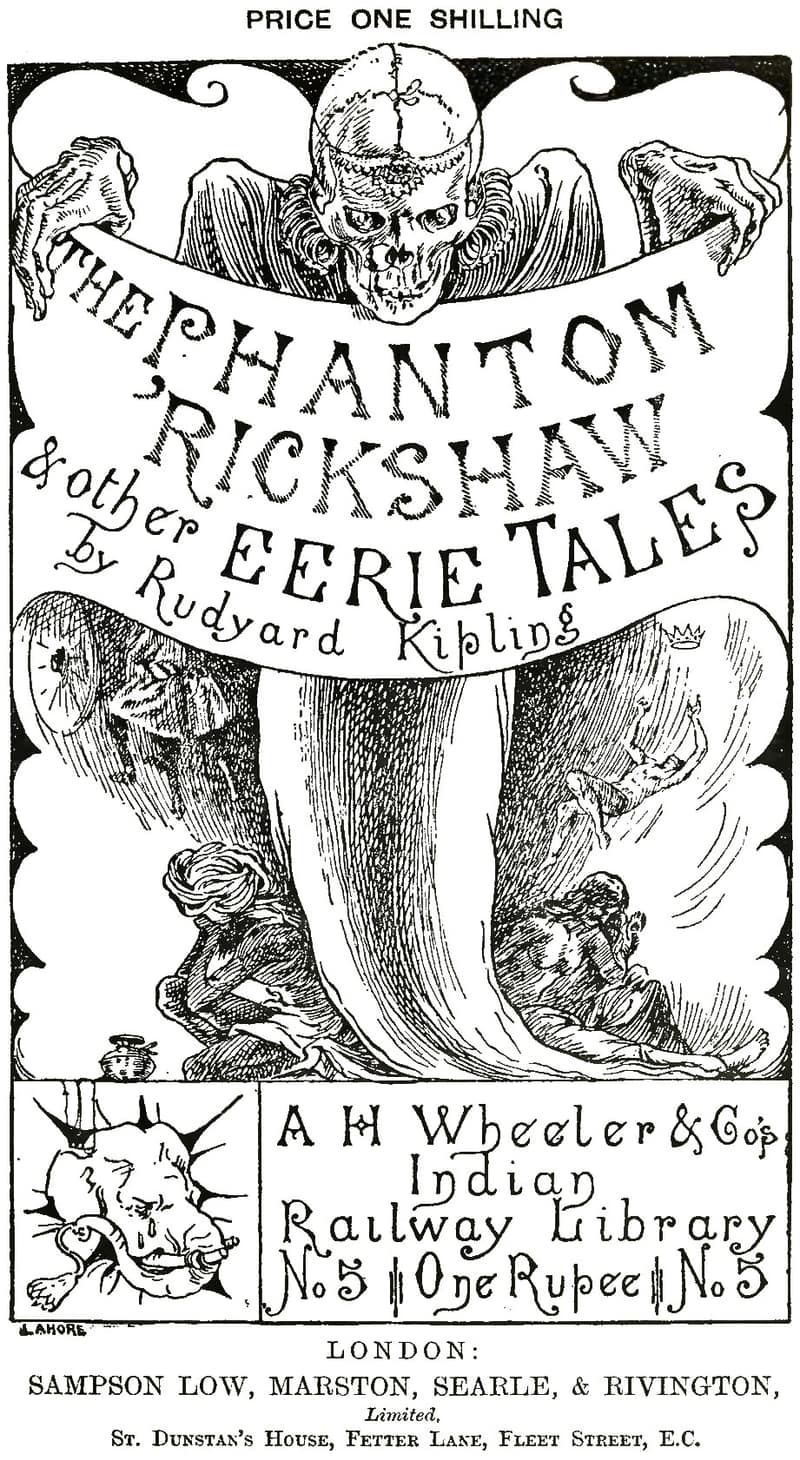
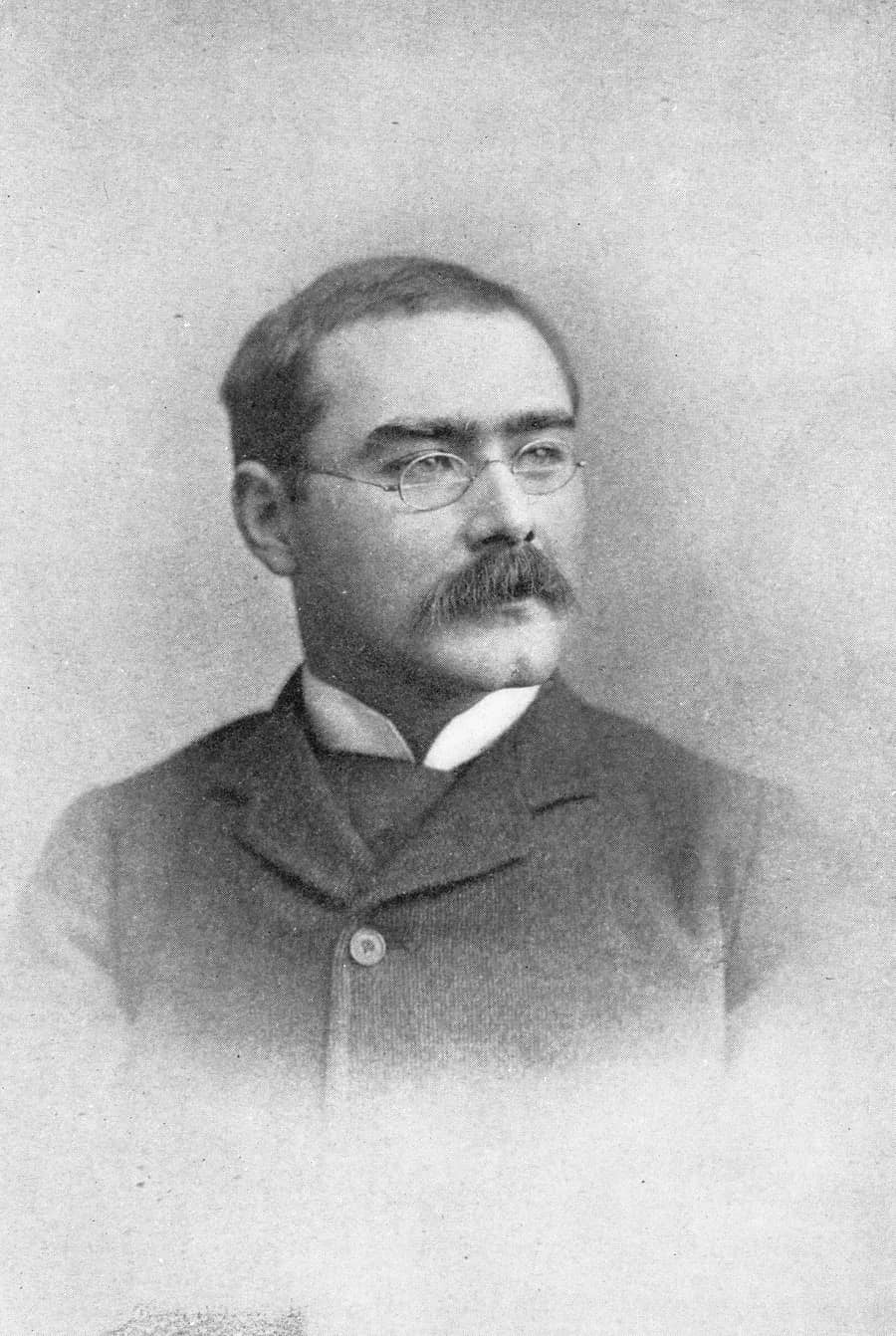
Was there a real man who would be king?
The name most often put forward is Josiah Harlan, a Quaker from Pennsylvania who served the East India Company as a surgeon, then the exiled Afghan king Shah Shuja, then the Sikh ruler Ranjit Singh, then the Amir Dost Mohammad. In 1838 or 1839 he led an Afghan force over the Hindu Kush, and a Hazara chief signed over to him the title of Prince of Ghor. Harlan really did hold a paper making him a prince in Afghanistan.
But Ghor is in the centre of Afghanistan, among the Hazaras, a long way from Kafiristan, and Harlan never went near it. Nothing shows that Kipling had him in mind. The story itself points elsewhere: Dravot takes as his model Rajah Brooke, the Englishman who made himself ruler of Sarawak in Borneo in 1841. Another candidate, the soldier of fortune Alexander Gardner, claimed to have been in Kafiristan in the 1820s, but his memoirs were not printed until ten years after the story.
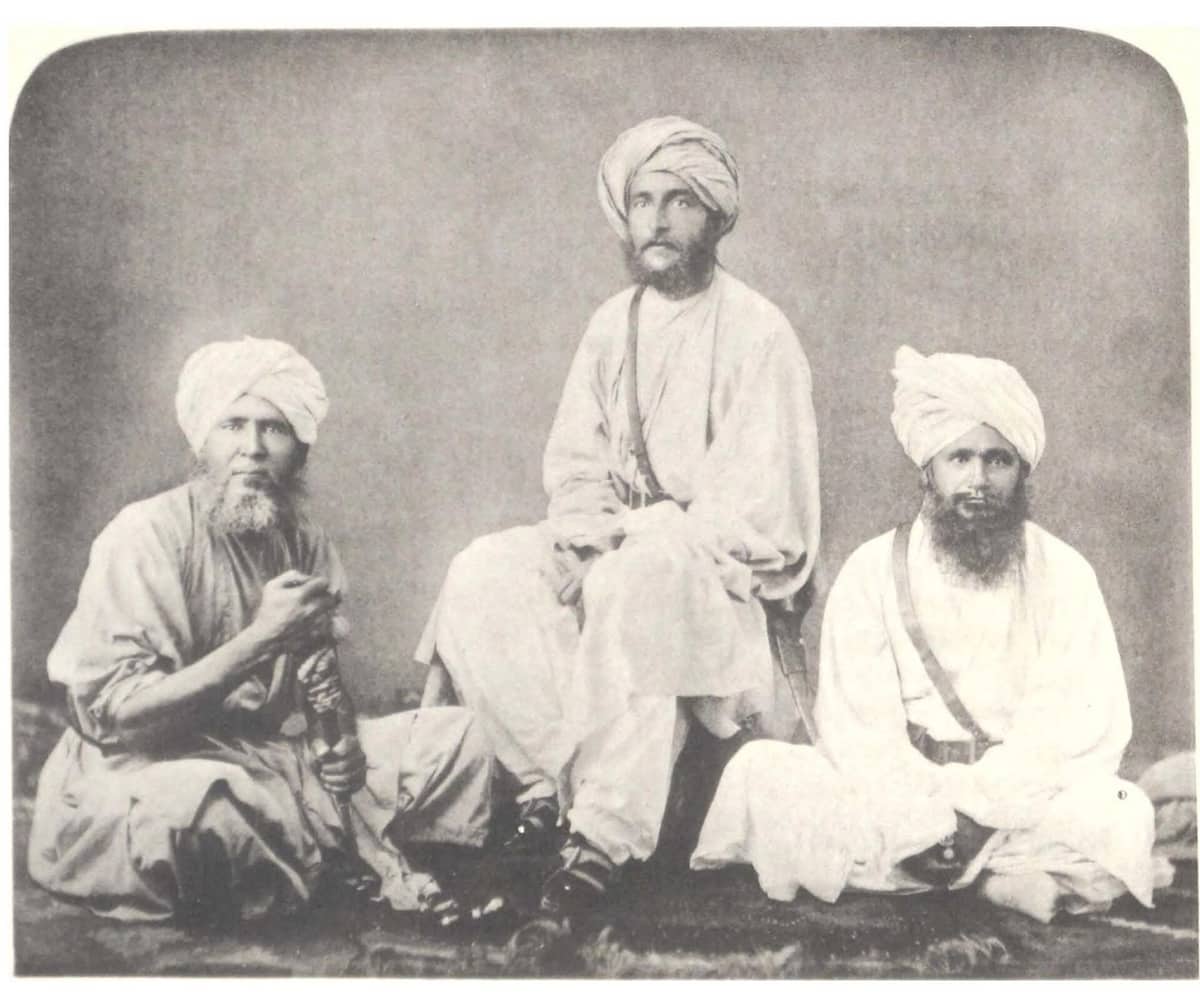
The one European who can be shown to have tried to reach Kafiristan before 1888 was William Watts McNair of the Indian Survey. In 1883 he dressed as a Muslim physician and went in by way of Chitral with two companions. He read a paper about it to the Royal Geographical Society that December, and it uses the same spelling, Imbra, that Kipling does. George Scott Robertson, who came later and stayed longer, thought McNair had only reached the Kalash valleys of Chitral and never crossed into Kafiristan proper.
What was real in 1888
Kafiristan itself was entirely real. It was a block of high valleys in the eastern Hindu Kush, between Kabul and Chitral, whose people had kept their own religion while everyone around them had been Muslim for centuries. Kafir means unbeliever, and Kafiristan is what their neighbours called the place. When Yule wrote his article he could say that no European had ever been inside it. A British mission under William Lockhart spent a few days in the upper Bashgal valley in 1885 and 1886, and that was all.
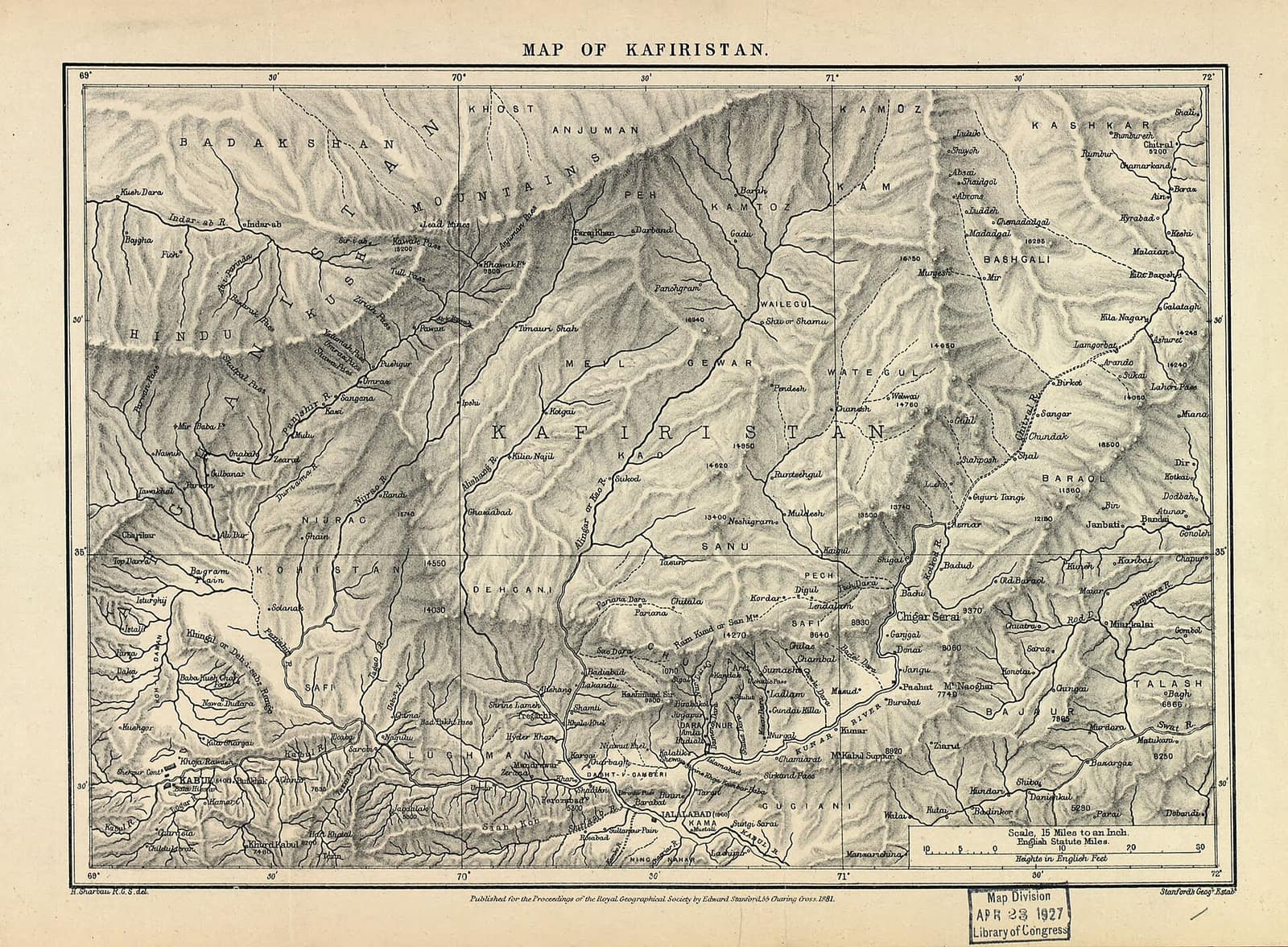
Some of what Kipling borrowed was accurate. The creator god was Imra, and Imbra is how English writers of the 1880s spelled the name. The Bashgal is the great eastern valley, the home of the Kati and the Kom. The Kafirs did make wine, they did sit on carved chairs and stools, and men of rank earned their place by giving feasts. The map below was printed for the Royal Geographical Society in 1881, seven years before the story, when no surveyor had yet been inside.
What Kipling invented
The kings, to begin with. Robertson, the British doctor who lived at Kamdesh in 1890 and 1891 and wrote the only full account of the country, found no kings anywhere. Each tribe ran its own affairs through its elders and a few elected officials, and no man could give orders to another valley, let alone to all of them.
The Freemasonry is Kipling's too. In the story the priests know a Masonic handshake and a Mason's mark is found carved under the stone of Imbra, which is what convinces them that Dravot is a god. Nothing of the kind appears in any account of the real country. Kipling was himself a Freemason, initiated in Lahore not long before he wrote it.
So is the picture of the people as fair-haired Englishmen in disguise. Robertson, who lived among them, described the Kafirs as Eastern in colouring, about as dark as the average Punjabi, with red-haired or very fair people fewer than one in a hundred. The count of thirty-two idols is not in any of Kipling's sources. And the religion was not a matter of one great idol: there were many gods, and the most popular in the Bashgal was Gish, the god of war.
The descent from Alexander is a different case, because Kipling did not invent it. The story that the Kafirs descend from Alexander's Greeks was already old when he wrote. Yule thought it came from a misreading of an older passage about the rulers of Swat. Robertson did not accept it as descent, but allowed that Greek colonists might have left some mark. It is still told in Nuristan and it has never been settled, and we leave it open here as we do elsewhere on this site.
What happened to the real Kafiristan
The story was published in 1888. In 1893 the border between Afghanistan and British India was drawn along the crest east of Kafiristan, and in the winter of 1895 to 1896 the Amir of Afghanistan, Abdur Rahman Khan, sent his army into the valleys. By the Amir's own account the country fell in forty days. The shrines were burned, the people were converted to Islam, and Kafiristan, the land of the unbelievers, was renamed Nuristan, the land of light.
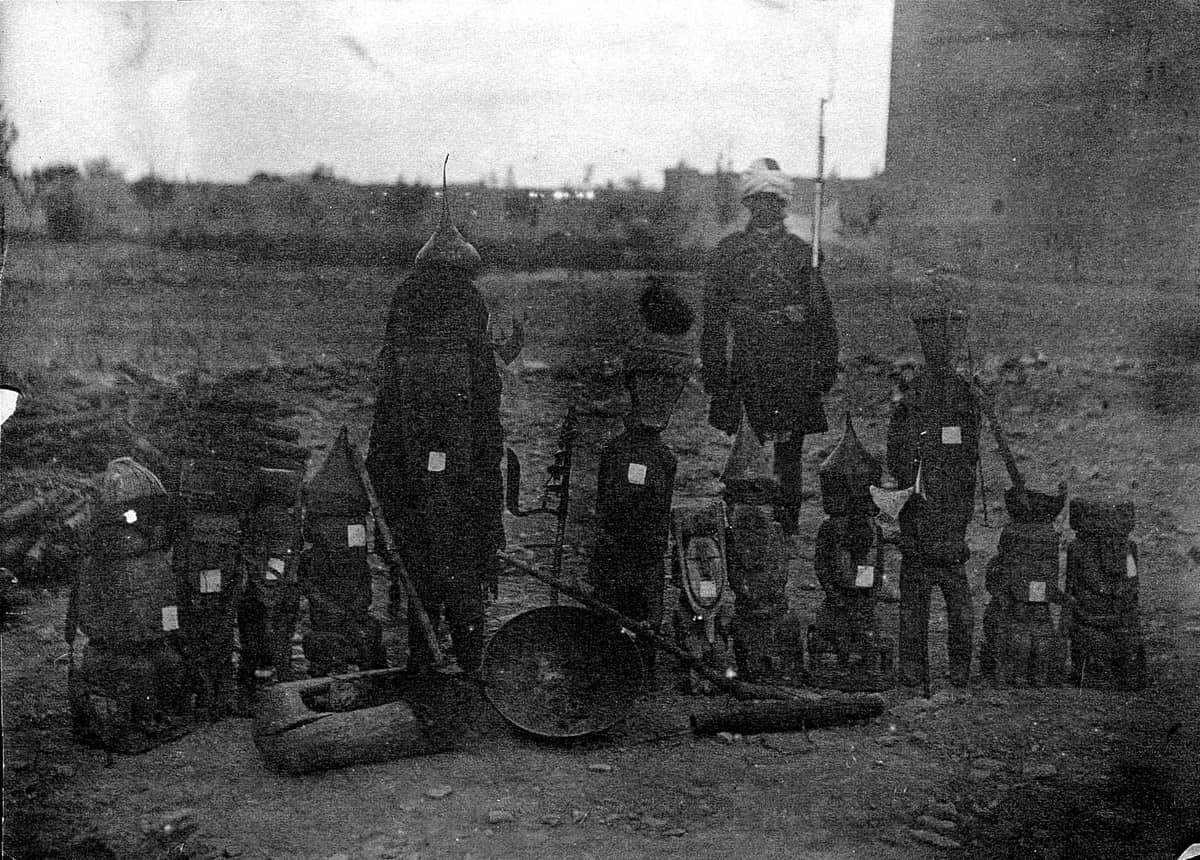
The wooden figures of the gods and ancestors that survived the fires were carried down to Kabul. A British doctor at the Amir's court, Lillias Hamilton, photographed some of them standing in a row with a soldier beside them. Robertson's book, the one real description of Kafiristan, came out in 1896, just as the country it described ceased to exist.
The 1975 film
John Huston wanted to film the story for twenty years. He announced it in the 1950s with Humphrey Bogart and Clark Gable in mind, and both died before it could be made. When it was finally shot, in 1975, Sean Connery played Dravot and Michael Caine played Carnehan, with Christopher Plummer as Kipling himself and Saeed Jaffrey as Billy Fish. It was nominated for four Academy Awards.
None of it was filmed in Afghanistan. The mountains are the Atlas of Morocco, around Marrakesh and Ouarzazate, with the Todra gorge standing in for the Khyber Pass and some snow scenes shot at Chamonix in the French Alps. The Kafirs are five hundred Moroccan villagers, and when Billy Fish speaks to them they answer in Arabic. The high priest was played by Karroom Ben Bouih, a local night watchman said to be about a hundred years old, in the only film he ever made.
The film changes the story in several places. The narrator becomes Kipling. Billy Fish, who in the story is a Kafir chief, becomes a former Gurkha soldier who acts as their interpreter. The bride is given a name, Roxanne, after Alexander's wife. And the film adds a holy city, Sikandergul, with the treasure of Alexander in its vaults. There was no such city in Kafiristan, which was a country of villages.
The real country today
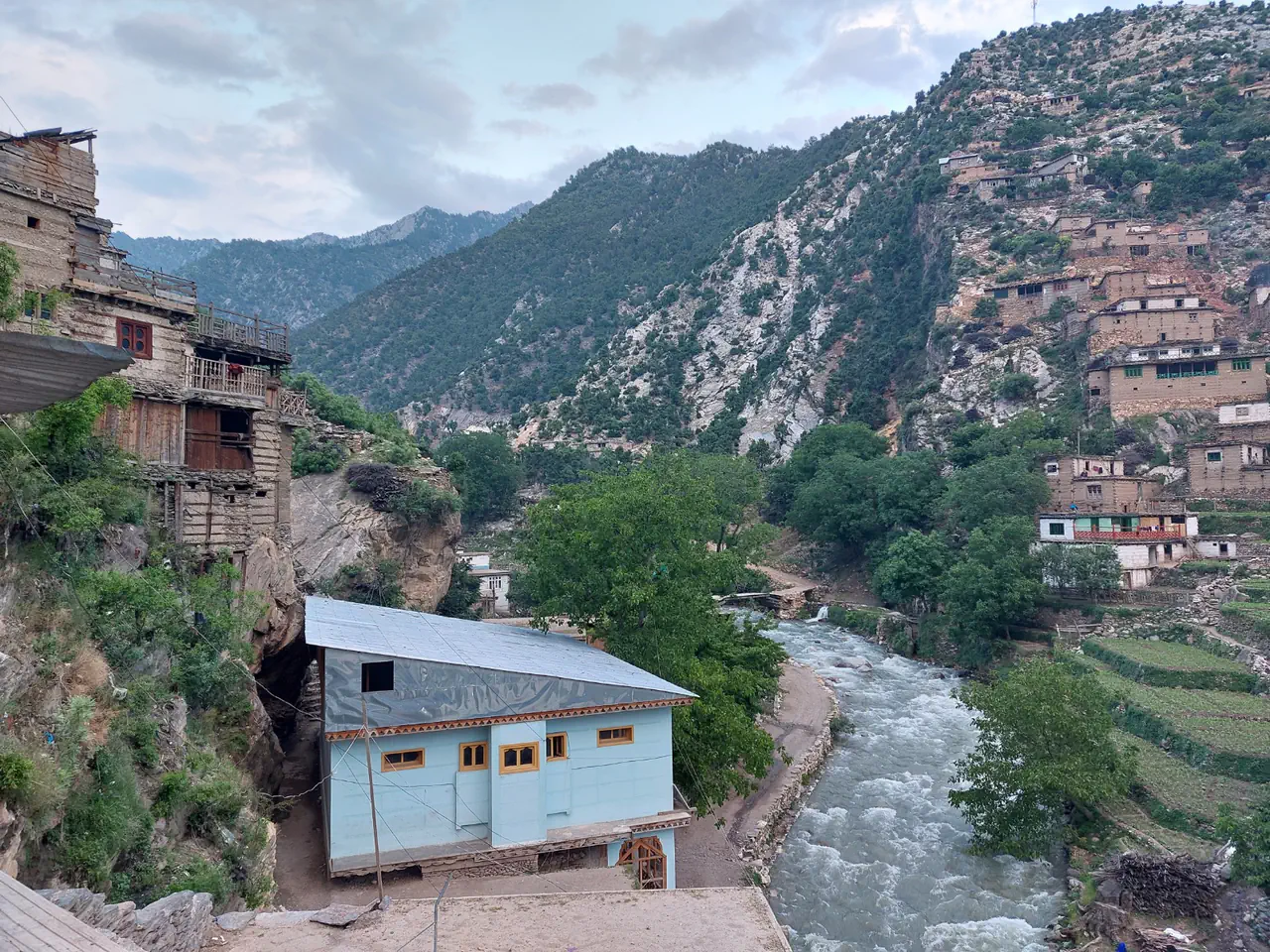
Kafiristan is now Nuristan, a province of Afghanistan with its capital at Parun. Its people have been Muslims for five generations. They still speak the Nuristani languages, which form a branch of their own beside the Iranian and Indian languages, still build their villages up the mountainside in tiers of timber and stone, and still carve the chairs that Kipling read about. Across the border in Chitral, the Kalash, who were on the British side of the line in 1893, still follow a religion related to the one the Amir's army ended.
If the film or the story brought you here, the rest of this site is about the place they borrowed. The history of Kafiristan, the old gods, the Kalash and the valleys as they are now each have a page of their own.
Questions people ask
Is The Man Who Would Be King based on a true story?
No. It is a work of fiction that Rudyard Kipling published in 1888, set in a real place. No European ever ruled Kafiristan. Kipling built the setting from an encyclopaedia article and travellers' reports, and writers have proposed several real adventurers as models for his heroes, without proof.
Is Kafiristan a real place?
Yes. Kafiristan was the name outsiders gave to a mountain region of the eastern Hindu Kush whose people had never converted to Islam. It was conquered by the Amir of Afghanistan in the winter of 1895 to 1896 and renamed Nuristan, which is a province of Afghanistan today.
Where is Kafiristan today?
In eastern Afghanistan, south of the main ridge of the Hindu Kush and against the border with Pakistan. It is now Nuristan province, with its capital at Parun. The Kalash valleys of Chitral, in Pakistan, were its eastern edge and escaped the conquest.
Who was the real man who would be king?
The man most often named is Josiah Harlan, an American adventurer who was given the title Prince of Ghor by a Hazara chief in 1838 or 1839. Ghor is in central Afghanistan, and Harlan never ruled Kafiristan. The link to Kipling is a guess. The story itself names Rajah Brooke of Sarawak as the heroes' example.
Where was The Man Who Would Be King filmed?
Mostly in Morocco, around Marrakesh and Ouarzazate in the Atlas mountains, with some scenes in the French Alps at Chamonix and at Pinewood Studios in England. Nothing was filmed in Afghanistan, and the people of Kafiristan were played by Moroccan villagers.
Is Sikandergul a real place?
No. The holy city of Sikandergul was invented for the 1975 film and does not appear in Kipling's story. It was filmed at Tahanaout in Morocco. The real Kafiristan had no cities, no kings and no treasure of Alexander.
What is The Man Who Would Be King about?
Two former British soldiers in India, Daniel Dravot and Peachey Carnehan, set out to make themselves kings of Kafiristan. With twenty rifles they conquer valley after valley, and Dravot is taken for a god, until he tries to marry and is found to be a man.
Read on
- Kafiristan: the history of Nuristan before 1896
- Nuristani religion: Imra, Gish and the old gods
- The Kalash people, who kept the old religion
- Who are the Nuristani people?
- Kamdesh, where Robertson lived in 1890 and 1891
- The history of Nuristan, from Kafiristan to today
- Nuristan's ten districts, with the map
Questions people ask
Is The Man Who Would Be King based on a true story?
No. It is a work of fiction that Rudyard Kipling published in 1888, set in a real place. No European ever ruled Kafiristan. Kipling built the setting from an encyclopaedia article and travellers' reports, and writers have proposed several real adventurers as models for his heroes, without proof.
Is Kafiristan a real place?
Yes. Kafiristan was the name outsiders gave to a mountain region of the eastern Hindu Kush whose people had never converted to Islam. It was conquered by the Amir of Afghanistan in the winter of 1895 to 1896 and renamed Nuristan, which is a province of Afghanistan today.
Where is Kafiristan today?
In eastern Afghanistan, south of the main ridge of the Hindu Kush and against the border with Pakistan. It is now Nuristan province, with its capital at Parun. The Kalash valleys of Chitral, in Pakistan, were its eastern edge and escaped the conquest.
Who was the real man who would be king?
The man most often named is Josiah Harlan, an American adventurer who was given the title Prince of Ghor by a Hazara chief in 1838 or 1839. Ghor is in central Afghanistan, and Harlan never ruled Kafiristan. The link to Kipling is a guess. The story itself names Rajah Brooke of Sarawak as the heroes' example.
Where was The Man Who Would Be King filmed?
Mostly in Morocco, around Marrakesh and Ouarzazate in the Atlas mountains, with some scenes in the French Alps at Chamonix and at Pinewood Studios in England. Nothing was filmed in Afghanistan, and the people of Kafiristan were played by Moroccan villagers.
Is Sikandergul a real place?
No. The holy city of Sikandergul was invented for the 1975 film and does not appear in Kipling's story. It was filmed at Tahanaout in Morocco. The real Kafiristan had no cities, no kings and no treasure of Alexander.
What is The Man Who Would Be King about?
Two former British soldiers in India, Daniel Dravot and Peachey Carnehan, set out to make themselves kings of Kafiristan. With twenty rifles they conquer valley after valley, and Dravot is taken for a god, until he tries to marry and is found to be a man.
Sources
- Rudyard Kipling, The Man Who Would Be King (1888), full text at Project Gutenberg
- The Kipling Society: reader's guide and notes to The Man Who Would Be King
- Henry Yule, Kafiristan, Encyclopaedia Britannica, ninth edition (1882)
- George Scott Robertson, The Kafirs of the Hindu-Kush (1896), full text at the Internet Archive
- W. W. McNair, A Visit to Kafiristan, read to the Royal Geographical Society on 10 December 1883
- The New York Review of Books on Josiah Harlan, the Prince of Ghor (2004)
- Encyclopaedia Iranica: Nuristan (the conquest of 1895 to 1896 and the god Imra)
- AFI Catalog: The Man Who Would Be King (1975), cast, locations and production history
- Academy of Motion Picture Arts and Sciences: the 1976 ceremony (the film's four nominations)
- Language Log: the languages spoken in the film
- Cover of The Phantom Rickshaw (1890 reissue), A. H. Wheeler and Co., public domain, via Wikimedia Commons
- Rudyard Kipling in 1895: Elliott and Fry, public domain, via Wikimedia Commons
- William Watts McNair and companions: public domain, via Wikimedia Commons
- Map of Kafiristan, 1881: H. Sharbau for the Royal Geographical Society, Library of Congress, public domain
- Wooden figures from Kafiristan in Kabul: Lillias Hamilton, Wellcome Collection, CC BY 4.0