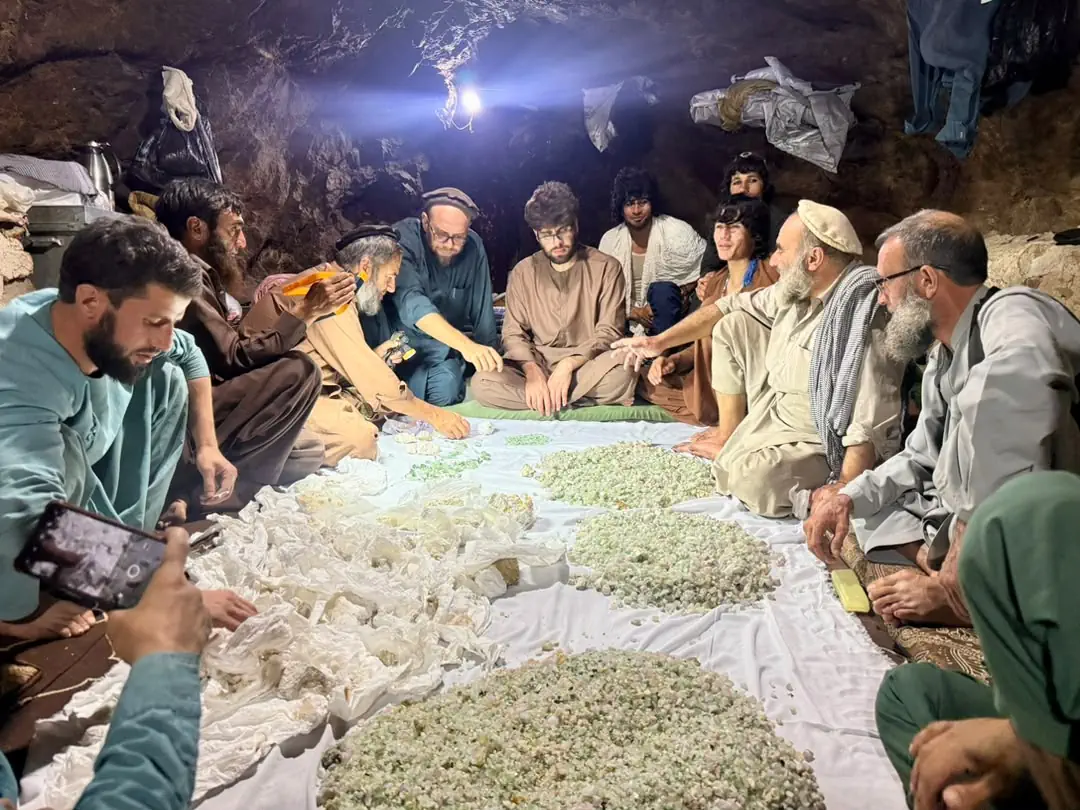
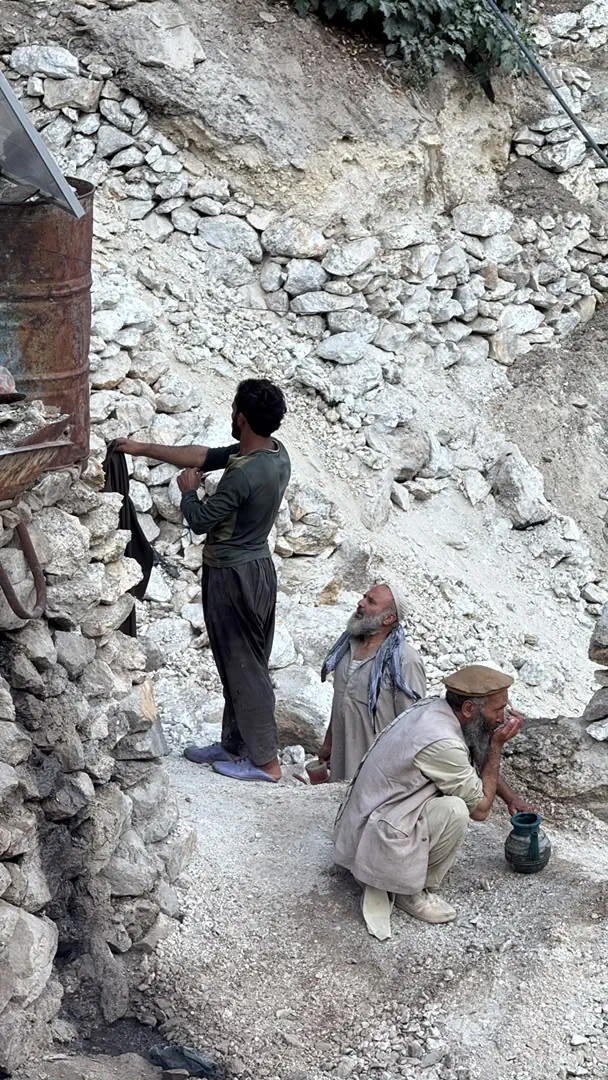
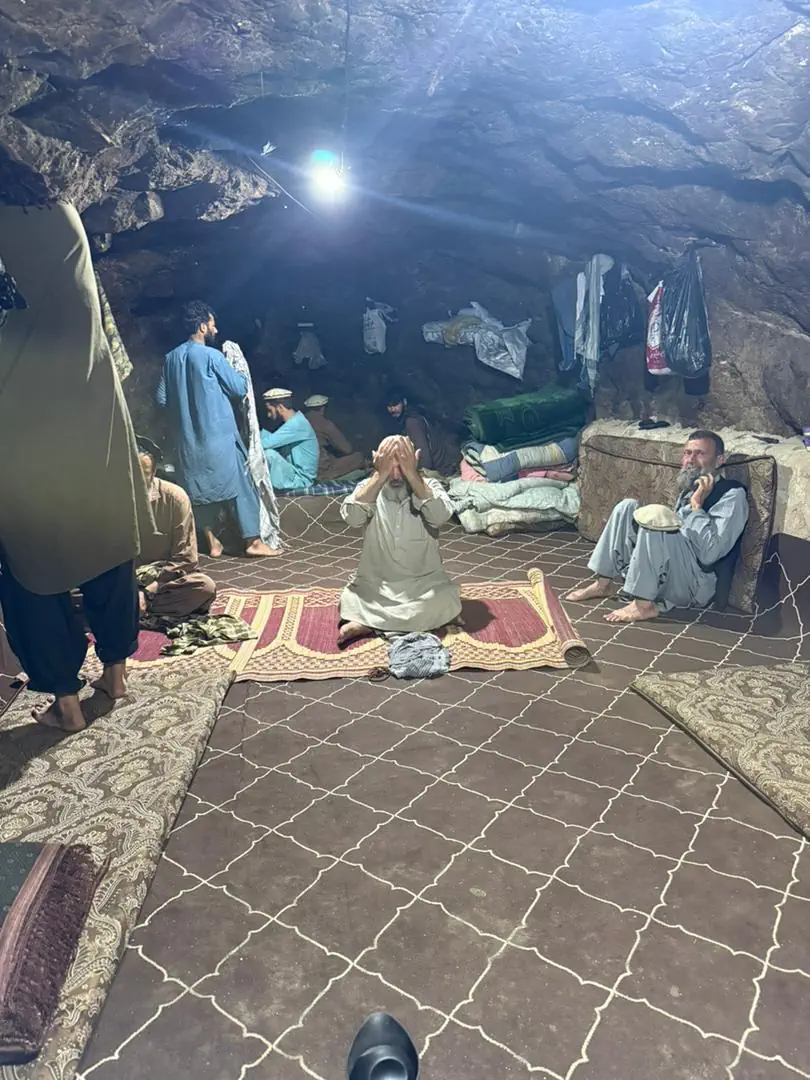
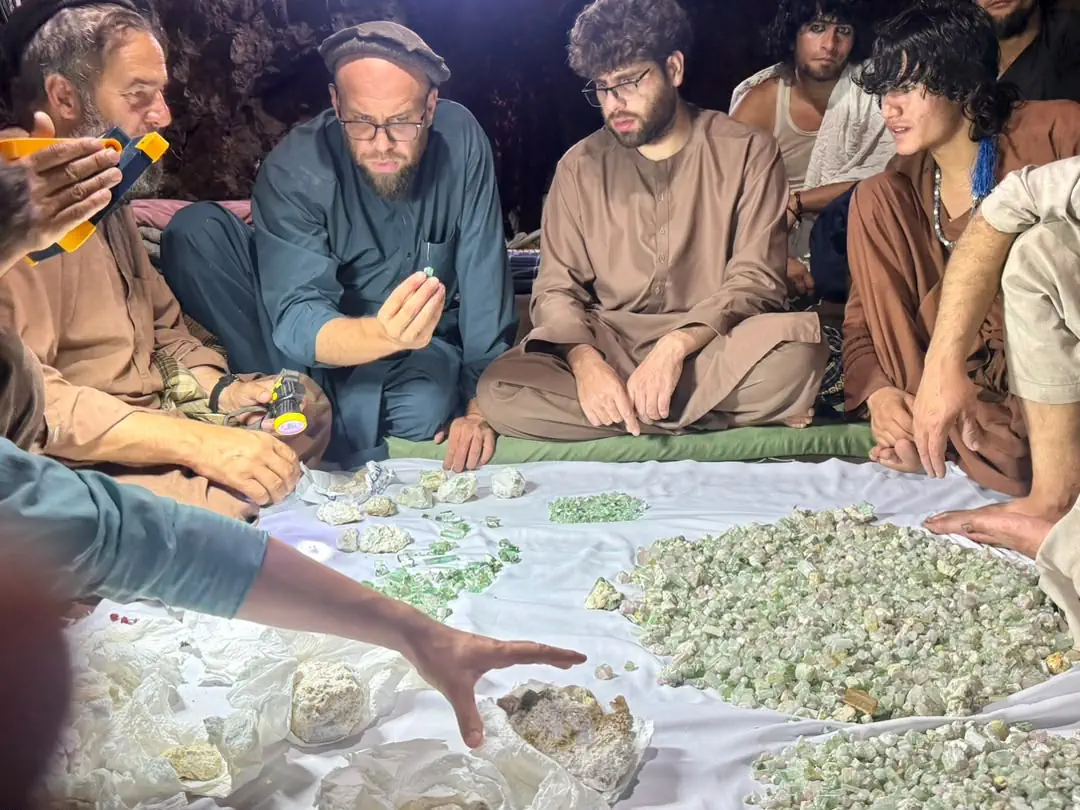
The mine is worked by hand, as it was in 1973. The adits follow the vein into the mountain, and the men who dig them live inside it: a chamber cut from the rock, carpets on the floor, bedding against the wall, one lamp run from a solar panel at the mouth. Outside, the camp sits on the slope of broken pegmatite tipped out of the workings, white feldspar and quartz with the black of tourmaline through it.
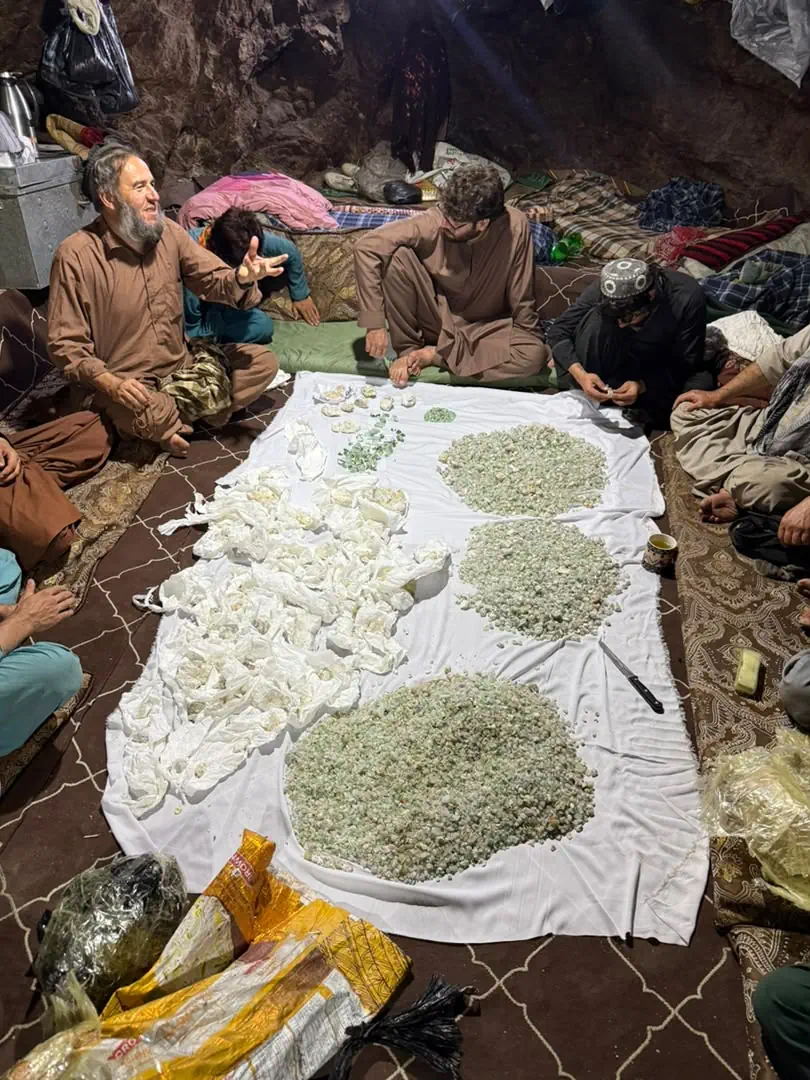
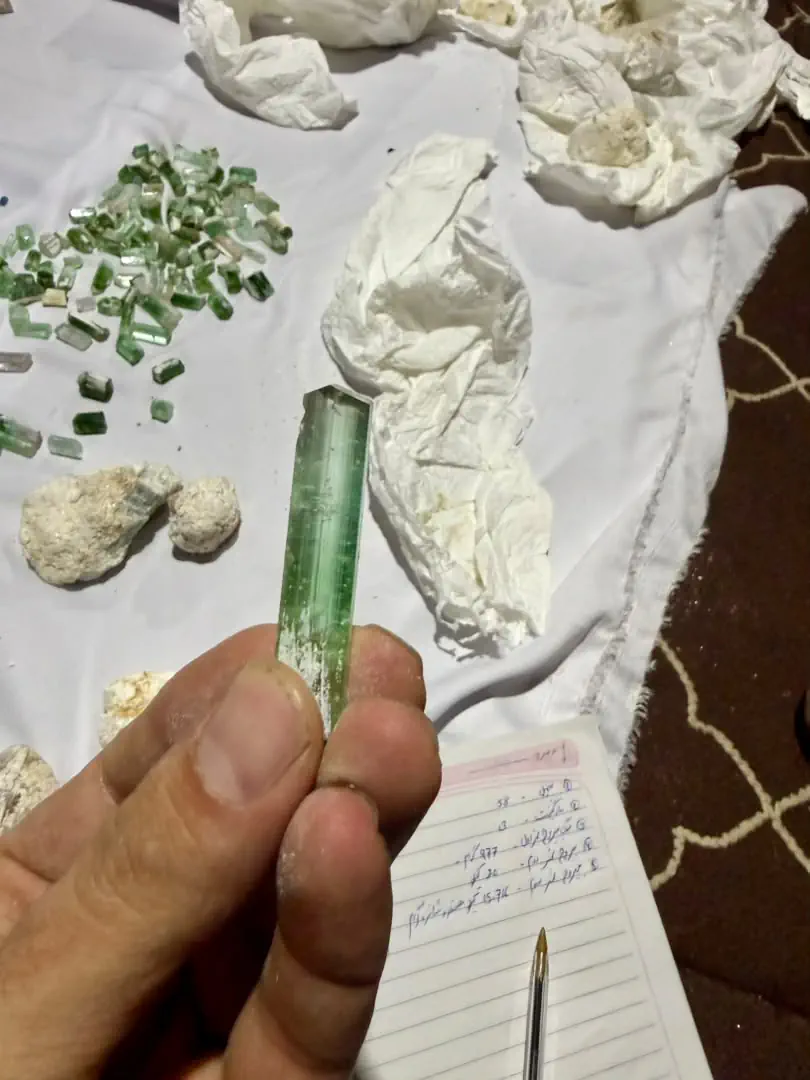
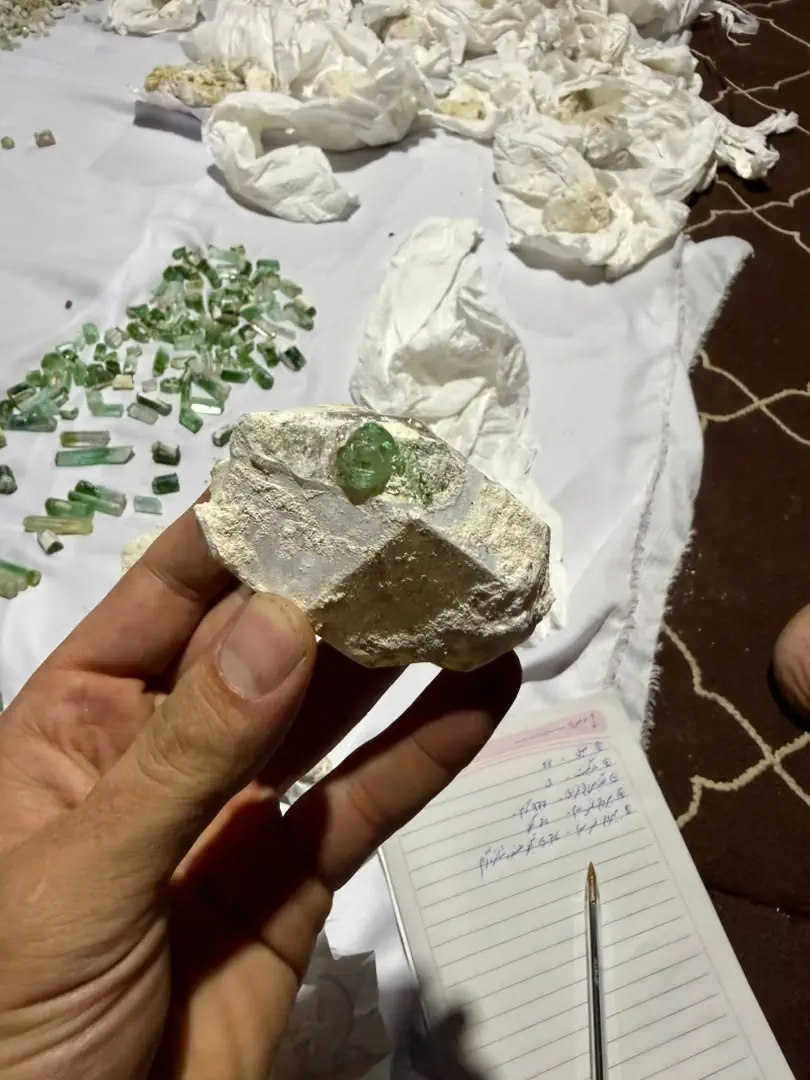
When a pocket is cleared the rough is carried out and laid on a white cloth on the floor of the chamber. It is sorted by grade into heaps, the best crystals set apart in a patch of their own, the specimen pieces still on their rock wrapped in tissue. The buyers sit round the cloth, hold each crystal to a torch for colour and cracks, and the weights go into a notebook. The price is agreed there, and the lot goes down the valley.
The working photographed here is run by partners of ours, people we know, and it is financed the way mining in Nuristan is financed: a group of men puts up the money and the labour for a season's digging, and each takes a share of what the pockets give. Obaid Nuristani, our founder, is one of those shareholders. In 2026 the working is bringing out tourmaline, kunzite and the other spodumenes, beryl as aquamarine and morganite, and quartz, and Nuristani sells that rough to buyers at home and abroad.
The mountain itself belongs to someone. In Du Ab, as across Nuristan, the mountains are owned by local families and villages, and a party from outside the district, as we are, must buy or rent the ground, or work it on terms: dig at its own cost and, if a pocket is found, give the owner of the mountain a share, with the rest divided among those who put up the money. In our own valley, Waygal, our family holds mountains of its own, and a working there owes no owner's share.