Raisins (kishmish)
Green raisins dried in the shade, black raisins and large golden raisins dried in the sun. Sold by colour, size and variety, seedless or with seeds.
Raisins, dried figs, almonds, walnuts, apricots and mulberries, dried in the sun the old way, sourced to order near the source and documented from Kabul to your warehouse.
Dried fruit and nuts are Afghanistan's oldest export. Grapes are dried into green and black raisins, figs are threaded on string in Kandahar, almonds and walnuts come down from the orchards in autumn, and apricots and white mulberries are laid out on flat roofs in the sun. The trade calls it Afghan dry fruit, and India, the Gulf and Central Asia buy most of it.
We supply Afghan dry fruit wholesale as the exporter in Afghanistan. This page is for food importers, wholesalers, grocers and packers who want raisins, figs, almonds, walnuts, dried apricots or dried mulberries bought near the source, sourced to order through our team in Kabul, with the lot described before you buy and the export documents in order. The walnuts are from our own valleys in Nuristan.
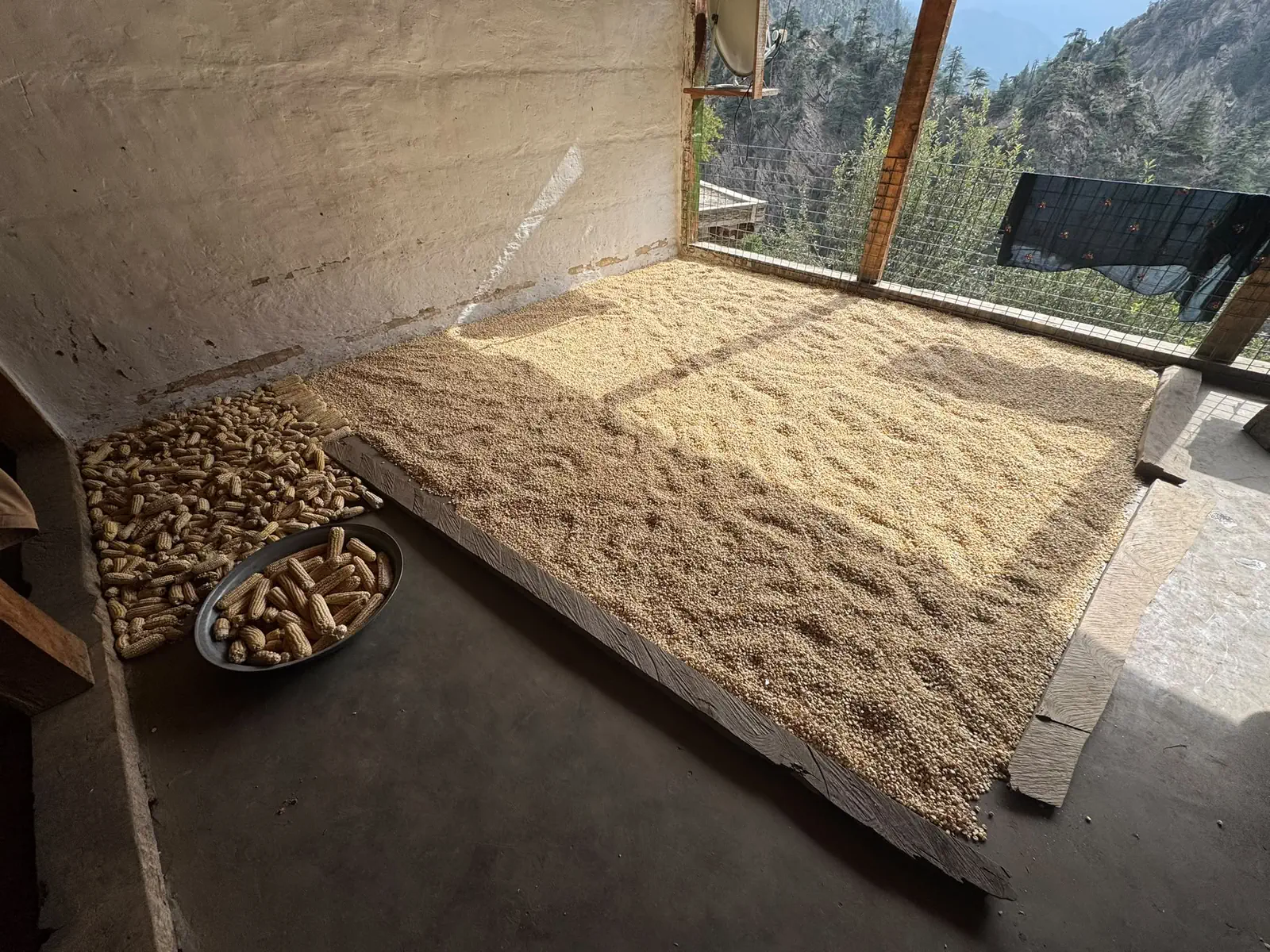
Afghanistan dries fruit the old way, in the sun and the wind. Green raisins are the best known: bunches of grapes are hung in the shade of a mud-brick drying house, a kishmish khana, with slits in the walls for the air, so the grapes dry slowly and keep their colour. Black and golden raisins are dried in the open sun. Figs, apricots and mulberries are dried whole on roofs and mats, and nuts are simply cured in their shells.
The trade is large. Afghanistan's Ministry of Industry and Commerce put the country's dried fruit exports at about 674 million US dollars in the most recent full year it has reported, with dried figs the largest line at about 314 million and raisins second at about 185 million. Kandahar alone had sent out more than 100,000 tonnes of dried fruit by July 2026, mainly raisins, almonds and figs, and Ghazni exported about 13,000 tonnes of almonds, raisins and apricots in a year.
India is one of the largest buyers, and Afghan produce also goes to the Gulf, Russia, China and Central Asia. Britain and Europe are served mostly by a few importers and by Afghan and South Asian grocers. A buyer who wants a named variety from a named province, with the crop year in writing, usually has to ask for it.
Green raisins dried in the shade, black raisins and large golden raisins dried in the sun. Sold by colour, size and variety, seedless or with seeds.
Small, pale, very sweet figs, most of them from Kandahar, sold loose or threaded on string. Afghanistan's largest dried fruit export by value.
In shell or as kernels. Afghan almonds include thin, paper-shelled kinds that crack in the hand, and they are sold by variety and by size.
In shell or as kernels, from the mountain valleys of the east. Ours come from Nuristan, where walnut trees stand beside every village.
Sun-dried whole, with or without the stone. Tell us whether you want them sulphured or unsulphured; the unsulphured are darker and chewier than the bright orange kind.
White mulberries dried whole until they are pale gold and taste of honey. Eaten with walnuts in the valleys, and sold abroad as a natural sweet.
Every lot we offer states the product, the variety where there is one, the province, the crop year, the size and the moisture. Afghan dry fruit is graded by hand, so the share of broken, undersized or discoloured pieces matters, and we state it. Nuts carry oil and turn rancid with age and warmth, so we quote new-crop nuts and say so in writing.
If you buy to a written standard, send it. Tell us the product, the variety, the size, the tests you need and the packing you want, and we source the lot to that standard, send photographs with a ruler and a scale, and a sample by courier if you want one.
Published benchmarks with their dates, given as ranges because the price is never one figure. We quote per lot.
| Item | Price or figure | Source |
|---|---|---|
| Afghan raisins, sampled export prices, August 2026 | About 2 to 7 US dollars a kilogram, by variety and grade | Tridge, read 16 November 2026 |
| Afghan dried figs, sampled export sales and exporters' asking prices, 2026 | About 5 to 18 US dollars a kilogram | Tridge; Kandahar supplier listings |
| Afghanistan's dried fruit exports, most recent full year reported | About 674 million US dollars; figs about 314 million, raisins about 185 million | Ministry of Industry and Commerce, via TOLOnews |
| Kandahar's dried fruit exports, to July 2026 | A little over 101,000 tonnes | DID Press |
Dry fruit is priced by the kilogram, by variety, grade and crop, and there is never one price. A green raisin of the best colour costs several times a plain black one, and a fig on the string is not priced like a broken fig for paste. We quote per kilogram for the variety and grade you want once we know the quantity and the season, with our terms written on the quote.
Afghan dried fruit and nuts enter the United Kingdom and the European Union under ordinary food law. Afghanistan is not on the lists of countries whose produce faces increased official controls at the border, in Great Britain's version of the regulation revised to January 2026 or in the European Union's of July 2025; the listed risks for nuts and dried fruit are pistachios from Iran and Turkey, figs from Turkey and hazelnuts from the Caucasus. Afghanistan has duty-free access to Britain under the Developing Countries Trading Scheme and to the Union under Everything But Arms.
The general limits for aflatoxins in figs and nuts, and for pesticide residues, apply to Afghan goods as to any others, so most importers ask for a laboratory report, and we arrange one at your request. The other papers are a commercial invoice and packing list, a certificate of origin from the Afghanistan Chamber of Commerce and Investment, and a phytosanitary certificate where your country asks for one. We supply as the exporter in Afghanistan; the buyer, or an importer of your choosing, is the importer of record, registered as a food business in your country.
Weight decides the route. A trial lot or a few cartons can fly from Kabul. A pallet or a container goes by road and sea, and the routes out of Afghanistan change with the borders: the road through Pakistan has been closed for months at a time in 2025 and 2026. We agree the route, the time and the cost with you before we quote, and we do not promise a date we cannot keep.
Tell us the products, the varieties if you know them, the quantity and the timing, and the country you import into.
We source the lot from the new crop and send photographs with a ruler and a scale, plus a sample by courier if you want one.
A written quote per kilogram, with our terms, the documents included, and the route, shipping and insurance set out.
A laboratory report at your request, at cost.
Payment in whatever way suits you, always made before shipment.
Export documents, the agreed transport, and your importer clears the goods. An acceptance window is agreed before shipment.
We do not call Afghan dry fruit organic unless a recognised control body has certified the lot, and none has certified ours. We do not sell last year's nuts as new crop, and we make no health claims. Except for the walnuts of Nuristan, we are not the growers: we buy from them and from the traders nearest to them, and we say which province a lot came from.
Raisins, dried figs, almonds, walnuts, pistachios, pine nuts, dried apricots and dried mulberries. By value the largest are dried figs and raisins. We supply raisins, figs, almonds, walnuts, apricots and mulberries to order, and pine nuts on their own page.
Green raisins dried in the shade, the small sweet figs of Kandahar, paper-shelled almonds, pine nuts from the eastern forests, and dried white mulberries.
It depends on the product, the variety and the grade. As a guide, sampled export prices for Afghan raisins ran from about 2 to 7 US dollars a kilogram in 2026, and Afghan dried figs from about 5 to 18 dollars a kilogram. We quote per lot.
Yes. Afghanistan is not on the lists of countries whose produce faces increased border controls in Britain or the European Union, and its dried fruit and nuts carry no import duty under either preference scheme. The usual limits for aflatoxins and pesticide residues apply, so ask for a laboratory report.
We supply as the exporter in Afghanistan to importers and wholesalers in the UK, with our own base in Britain to deal with. The buyer, or an importer of your choosing, clears the goods on arrival.
Trial lots and light goods go by air from Kabul. Bulk goes by road and sea. We agree the route, the time and the cost before we quote.
From Nuristan, in eastern Afghanistan, where we are from. Walnut trees grow beside the villages in every valley, and the nuts are gathered in autumn.
None fixed. A first order can be a small trial lot sent by air, and larger lots are agreed per order.
Related: wholesale from Afghanistan, pine nuts wholesale, saffron wholesale, dried morels wholesale, the forests of Nuristan, wholesale gemstones.
Tell us the product, the quantity and the country you import into. Your message goes to Obaid and his team in Afghanistan and the UK, and we reply to every message with what we can supply.