Afghan saffron, most of it from Herat, has been ranked first by an international taste panel year after year and sells for about 1,200 to 1,800 US dollars a kilogram at source. This is what that ranking means, how Afghan saffron compares with Iranian, Kashmiri and Spanish, and how to know what you are buying.
Afghan saffron is among the best in the world by the two tests that matter: taste panels and the laboratory. The International Taste Institute in Brussels has ranked saffron from Herat first among the saffrons it tasted nine or ten years running, and well-made Afghan saffron meets the top category of the international laboratory standard. Whether it is the single best is a matter of judgement, and Iran, Kashmir and Spain each have a fair claim of their own.
We are Afghans, from Nuristan in the east, and we supply Afghan saffron to trade buyers, so we have a side. This guide tries to be straight about it: what the awards are, what the laboratory measures, how the origins differ, what saffron costs in 2026, and how to tell real saffron from fake.
Where Afghan saffron comes from
Almost all of it comes from Herat province, in the west of Afghanistan, on the border with the saffron country of eastern Iran and in much the same dry climate. Farmers there took up saffron at scale in the early 2000s. It needs little water, it is light enough to fly to market, and it pays a family far more per field than wheat.
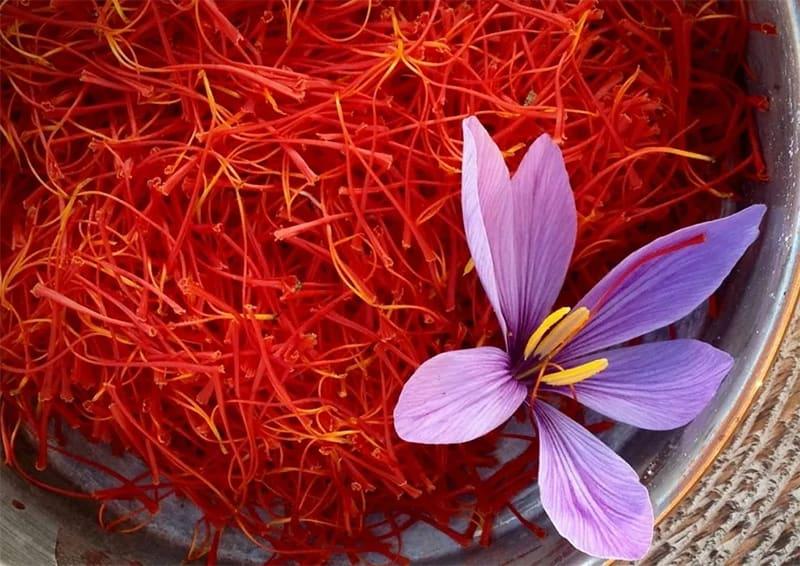
The crocus flowers for a few weeks in autumn. The flowers are picked by hand at dawn, mostly by women, and the three red stigmas in each are drawn out and dried the same day. About 150,000 flowers make a kilogram. The 2025 harvest was expected to be about 40 tonnes.
Is Afghan saffron the best in the world?
The claim comes from the International Taste Institute in Brussels, which puts foods in front of panels of chefs and sommeliers. Afghan news reports say it has placed Herat saffron first nine or ten years in a row, the reports differ on the count, and most recently in January 2026.
That is a real distinction, and it is also one panel tasting the samples producers sent in. It does not mean every tin of Afghan saffron beats every tin from Iran. What it shows is that the best Afghan saffron stands with the best anywhere. For a buyer, the proof for a particular lot is its laboratory report.
What the laboratory measures
The standard is ISO 3632. A laboratory dissolves a sample and reads three things: crocin, which gives the colour; picrocrocin, which gives the bitter flavour; and safranal, which gives the aroma. Saffron is then placed in a category. Category I, the highest, has required a colouring strength of at least 200 and a flavour reading of at least 70.
Afghan saffron and Iranian saffron
They are close relatives. Iran grows by far the most saffron in the world, by most estimates 85 to 90 per cent of it, and Herat lies just across the border from Iran's saffron provinces. The plant, the climate, the grades and even the trade words, negin, sargol and pushal, are shared.
The differences are of scale and handling. Iran's crop is vast and its quality runs from superb to ordinary. Afghanistan's is small, recent and mostly picked and dried by family growers and women's cooperatives in small batches, which suits careful work. Top lots from either country test in the same category. Afghan saffron is also simpler for many buyers to import, because it is not caught by the sanctions that complicate payments to Iran.
Afghan saffron and Kashmiri saffron
Kashmiri saffron, from the fields of Pampore, is famous for its deep colour and has protected status in India. The crop is small and has been shrinking, so genuine Kashmiri saffron is scarce and dear, and India imports saffron to meet its own demand. Afghan saffron sold to India recently changed hands at about 1,250 to 1,400 US dollars a kilogram. If you want Kashmiri saffron for its name and its place in Indian cooking, buy it from a seller who can prove the origin. If you want strength of colour for the money, Afghan saffron gives it.
Afghan saffron and Spanish saffron
Spain's own saffron, above all from La Mancha, is toasted as it dries, which gives it a mellower, slightly smoky character that Spanish cooking is built around. Spain grows little of it today. It is, however, one of the world's great saffron traders, and it imports saffron in quantity and packs it for sale. Saffron grown in La Mancha carries a protected name; saffron merely packed in Spain does not. Afghan saffron is usually redder and stronger in colour, because the yellow style is cut away.
The grades: super negin, negin, sargol, pushal
- Super negin: the longest, thickest all-red threads, with no yellow. The dearest grade.
- Negin: all-red threads, a little shorter and less even. The usual choice for good kitchens.
- Sargol: the red tips only, shorter and with some broken pieces. Strong colour at a lower price.
- Pushal: the red thread with a little of the yellow style left on. Cheapest by weight.
These names describe how the thread is cut. They are the trade's words, not a laboratory measure, so a tin labelled super negin should still come with a report.
Afghan saffron price per kg and per gram in 2026
- In the Herat market: about 1,200 to 1,800 US dollars a kilogram across 2024 and 2025, or 80,000 to 120,000 afghanis, rising after the short 2025 harvest (Khate Nakhost, December 2025).
- Sampled export prices for Afghan saffron, October 2026: about 1,250 to 1,400 US dollars a kilogram (Tridge, read 16 November 2026).
- World wholesale price, 2024: about 1,150 to 1,950 US dollars a kilogram (Tridge).
- Per gram, those trade prices come to about 1.15 to 1.95 US dollars. In a shop, in jars of one to five grams, saffron costs several times that.
Why saffron is so expensive
Because nothing about it can be done by machine. Each flower is picked by hand and gives three threads. About 150,000 flowers go into a kilogram, picking them takes some forty hours, and separating the threads takes longer. The flowering lasts only a few weeks, and a dry year cuts the crop, as it did in Afghanistan in 2025.
How to tell real saffron from fake
- Look at the shape. A real thread is a tiny trumpet, wider and frayed at one end. Dyed corn silk or safflower is flat and even.
- Put a few threads in cold water. Real saffron colours the water slowly, a clear golden yellow, and the threads stay red. Fake saffron bleeds red at once and the threads turn pale.
- Smell it. Real saffron smells sweet, like honey and hay, and tastes bitter. If it tastes sweet, something has been added.
- Rub a wet thread between your fingers. It should hold together and stain your fingers yellow, not fall apart.
- Buy threads, not powder. Powder is where turmeric, paprika and dye are hidden.
- Ask for the laboratory report, and be wary of any saffron that is cheap.
Questions people ask
Is Afghan saffron good?
Yes. Saffron from Herat has been ranked first by the International Taste Institute in Brussels nine or ten years running, by Afghan press reports, and well-made Afghan saffron meets the top category of the ISO 3632 laboratory standard.
Is Afghan saffron the best in the world?
One international taste panel has placed it first year after year, which shows the best Afghan saffron stands with the best anywhere. Whether it is the single best is a judgement. For any lot, the laboratory report is the proof.
Is Afghan saffron better than Iranian saffron?
They are closely related and the top lots of each test in the same category. Iran's crop is far larger and more varied in quality. Afghanistan's is small and mostly handled in small batches by family growers. Afghan saffron is also easier for many buyers to import.
What is the price of Afghan saffron per kg?
About 1,200 to 1,800 US dollars a kilogram in the Herat market across 2024 and 2025, and about 1,250 to 1,400 dollars a kilogram in sampled export sales in October 2026. Shop prices by the gram are several times higher.
What is super negin saffron?
The top cut of saffron: the longest, thickest threads, entirely red, with the yellow style removed. Negin is slightly shorter, sargol is the red tips, and pushal keeps a little of the yellow style.
How can you tell if saffron is real?
Put a few threads in cold water. Real saffron turns the water golden yellow slowly and the threads stay red. Fake saffron bleeds red at once. Real threads are trumpet-shaped, smell sweet and taste bitter.
Where is Afghan saffron grown?
Almost all of it in Herat province, in western Afghanistan. It does not grow in the mountain valleys of the east.
Sources
- AtlasPress, 6 January 2026: Herat saffron named world's best again by the International Taste Institute
- TOLOnews: Afghan saffron recognised as world's best for the ninth time
- Kokcha News: Herat saffron wins the award for the tenth consecutive year
- Khate Nakhost, 14 December 2025: Afghanistan exports over 30 million dollars of saffron in nine months (harvest forecast, Herat prices)
- Tridge: dried saffron, Afghanistan, sampled export prices (read 16 November 2026)
- Tridge: dried saffron, global wholesale price ranges by year
- Wikipedia: Saffron, flowers and labour per kilogram, chemistry, ISO 3632, adulteration (read 16 November 2026)
- ISO 3632-1:2011, Spices, Saffron, Part 1: Specification (superseded by the 2025 edition)
- Saffronice: Iranian saffron exports and the global supply chain in 2026 (Iran's share of world production)