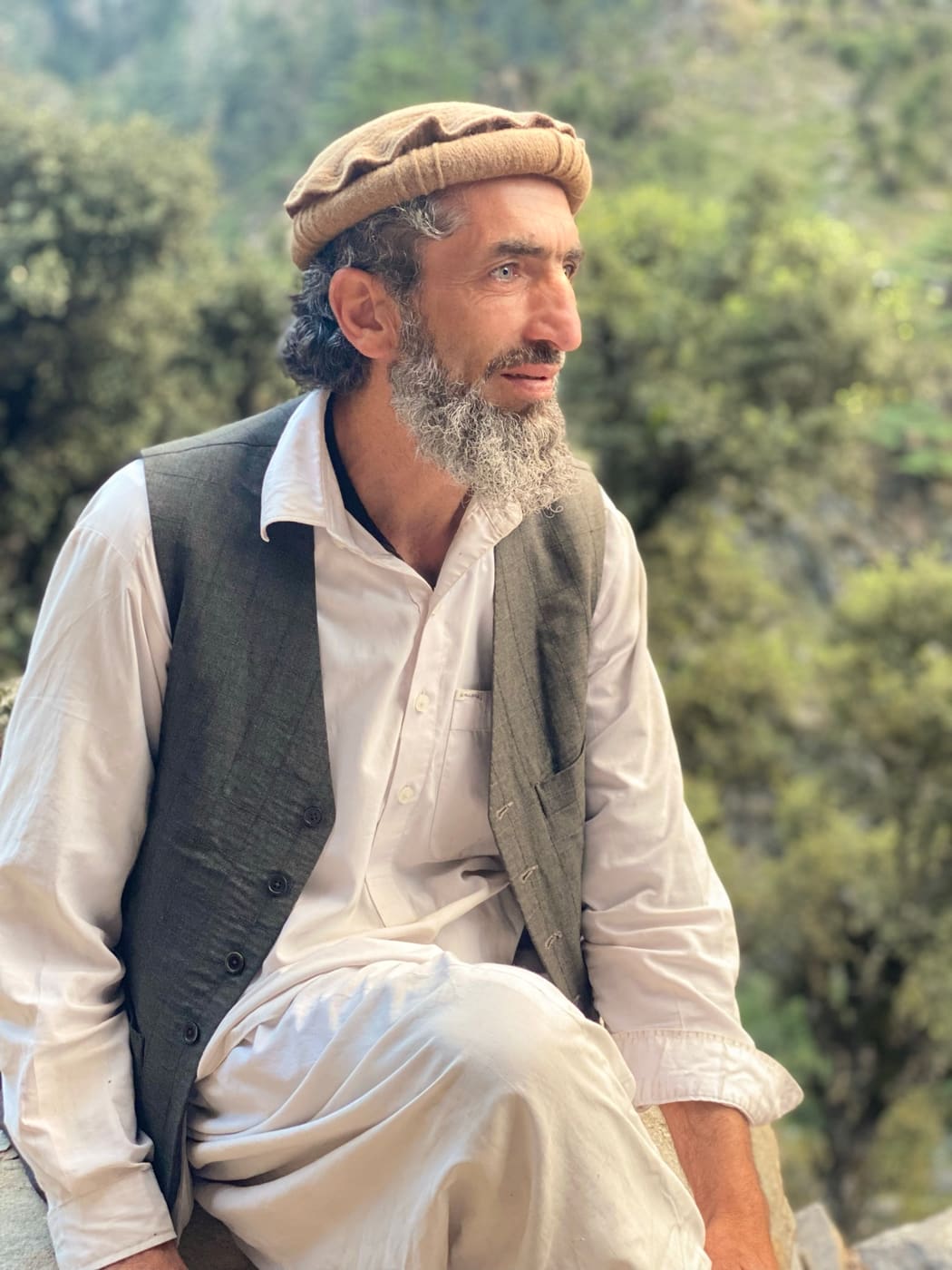
Handmade pakol hats
The rolled wool cap of Chitral and Nuristan. Ask for a single hat or a wholesale order, and we will reply with a price.
The rolled wool cap of the Hindu Kush
A pakol is a soft wool cap with a flat, round top and a rolled brim that can be let down over the ears in the cold. It began in Gilgit, in the far north of Pakistan, and came into Nuristan from Chitral in the late nineteenth century; today it is worn across Pakistan and eastern Afghanistan.
Where the hat comes from, what the name means, its styles and colours, and how to tell a handmade pakol from a factory copy are all in our article on the pakol. This page is for buying one.
One hat or a wholesale order
Single hats and wholesale orders are both welcome. Prices are quoted on request, for one hat or for many.
What to tell us
- How many hats you want: one, or a number for a shop, a stall, an event or a group.
- The colour or colours.
- The size, as a head measurement in centimetres if you can take one.
- Where the hats are going: the country and the town.
Send us those details by the form, by email or on WhatsApp.
We check with the makers what can be made, in which colours and sizes, and how long it will take.
We reply with a quote: the price for your quantity and how the hats would reach you.
How to measure for a pakol
- Pass a soft tape measure round your head, above the ears and across the brow.
- Keep the tape level and snug, without pulling it tight.
- Read the number in centimetres and send it to us with your enquiry.
We pass your measurement to the makers. The sizes they can supply are not listed on this page yet, so we tell you in our reply what can be made.
Handmade or factory: five things to check
- Ask what it is made of. A good pakol is wool, spun by hand and woven into dense cloth. Cheaper ones are machine-knitted from wool blends or acrylic.
- Feel the cloth. Handwoven cloth is dense, slightly uneven and faintly greasy with lanolin. Machine cloth is uniform, light and often shiny.
- Look at the roll. A hand-rolled brim is firm and keeps its shape when you set the hat down. A loose, springy brim points to a knitted copy.
- Check the inside for the cord and for hand stitching around the crown.
- Weigh it in your hand. A wool pakol has heft, and a hat that weighs almost nothing is not made of wool.
These five points are a summary. The pakol article explains how the cloth is woven and the brim is rolled.
Ordering pakols
Can I order pakol hats wholesale?
Yes, we take wholesale orders for handmade pakol hats, priced on request for the quantity you need. Tell us how many hats you want, in which colours and sizes, and where they are going, and we will check with the makers and reply with a quote. The sizes and colours the makers can supply, and how the hats would be sent, are not listed on this page yet, so ask about them in your enquiry and we will answer there.
Can I buy a single pakol from you?
Yes, we source a single handmade pakol as well as wholesale orders, and quote each one on request. Tell us the colour and size you want and where you live, and we will reply with the price and how the hat would reach you. Photographs of the hats themselves, and where they are made, are not on this page yet. Ask about either in your enquiry and we will answer there.
How do I measure my head for a pakol?
Pass a soft tape measure round your head, above the ears and across the brow, keep it level and snug, and read the number in centimetres. Send us that number with your enquiry and we will tell you what the makers can supply.
How do I tell a handmade pakol from a factory one?
By the cloth, the roll, the inside and the weight. Handwoven wool is dense, slightly uneven and faintly greasy with lanolin, and a hand-rolled brim is firm and keeps its shape. Inside there is a cord and hand stitching around the crown. A hat that is light, shiny or springy points to a machine-made copy. Our pakol article goes through each point.
Where the facts on this page come from
- Wikipedia: Pakol (shape, wool, origin in Gilgit and Chitral, arrival in Nuristan in the late nineteenth century, where it is worn today)
- Fabrizio Foschini, Afghanistan Analysts Network, 3 January 2014: From Alexander the Great to Ahmad Shah Massud, a social history of the pakol (Chitral as the source of the hat and its spread among the Nuristanis)
Related: what a pakol is, and how one is made, Nuristani clothing, Nuristani products.
Ask about a product
Tell us the product, the quantity and the country it is going to. Your message goes to Obaid and his team in Afghanistan and the UK. We reply to every message.