Some Afghans have red hair and many older men have orange beards, and they are not the same thing. What the gene behind red hair does, why a dark-haired man can grow a red beard, what the old records say about Nuristan, why so many grey beards are dyed with henna, and where the giant of Kandahar came from.
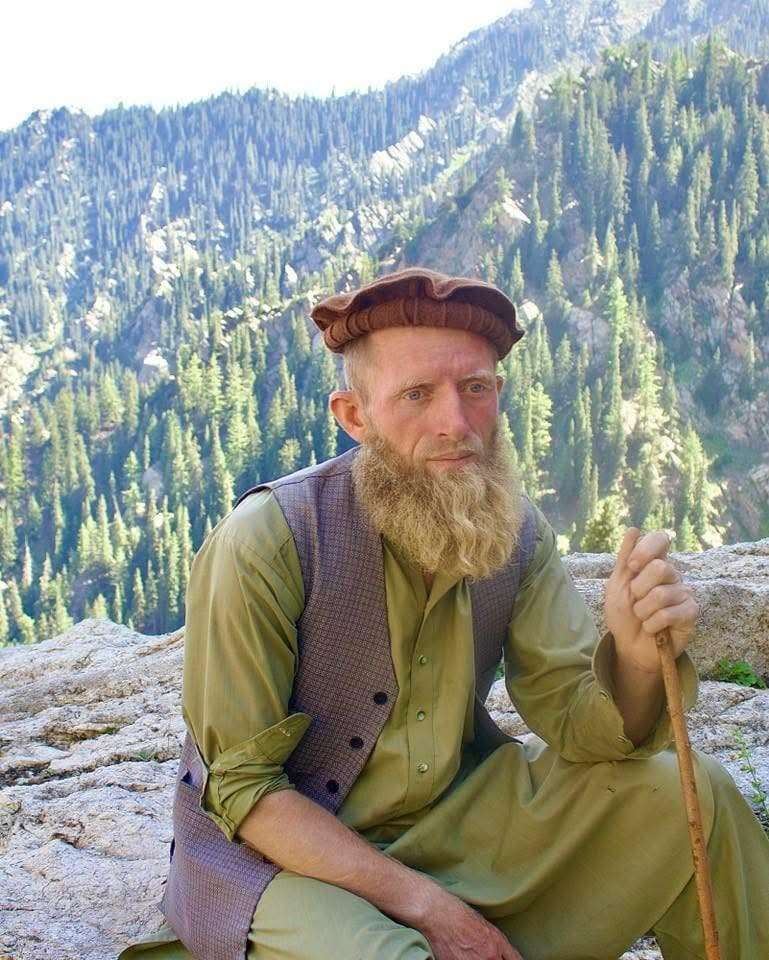
People who search for red hair in Afghanistan have usually seen one of two things: a photograph of an Afghan with red hair, or an old man with a bright orange beard. They are different. The first is a rare natural colour. The second is usually henna. We are from Nuristan, where both turn up, and this page explains each of them, along with the tall tales that have grown around the subject.
The short answer
- Natural red hair is rare in Afghanistan. The few records describe it as rare: fewer than one in a hundred at Kamdesh in 1890, one man in 49 in a Nuristani sample of the 1960s.
- Elsewhere in the world it comes mostly from variants of one gene, MC1R, which can also give a dark-haired man a reddish beard. In Afghans this has hardly been studied.
- Many of the orange beards on older men are henna, a plant dye used on grey hair, a practice recommended in Islam.
- There is no national figure for hair colour in Afghanistan, and nobody has tested hair-colour genes in Nuristanis that we know of.
- Whether any of it came with Alexander's army has never been settled, and the red-haired giant of Kandahar is a tall tale from a 2005 American radio show, with no record behind it.
What makes hair red
Hair colour comes from two pigments made in the cells at the root of each hair. Eumelanin is dark and gives black and brown hair. Pheomelanin is red and yellow. Red hair is mostly pheomelanin with a little eumelanin, according to the US National Library of Medicine's genetics service, MedlinePlus.
The switch between the two is a gene called MC1R. When the receptor it makes is working, the cells make dark pigment. Certain variants weaken it, and the cells make red pigment instead. People with such a variant in one copy of the gene tend to have strawberry blond, auburn or red hair, and the smaller number with it in both copies make only the red pigment. The same variants go with fair skin that freckles and tans poorly, which is why red hair and freckles so often come together.
Red hair is uncommon worldwide. Live Science puts natural redheads at one or two in every hundred people worldwide, most of them in north-western Europe. It is not unknown elsewhere, and Afghanistan is one of the places where it appears.
Dark hair, red beard
Some men have dark hair and a reddish beard. Nina Jablonski, an anthropologist at Penn State who studies the biology of hair colour, explained it to Live Science in 2020: it is almost certainly the same gene, MC1R, working differently in the follicles of the beard and of the scalp, so that the beard makes more of the red pigment. Live Science adds that such men probably carry one copy of a red-hair variant, not two.
She added that some men's beards turn redder as they get older, often after forty, probably because the pigment cells of the beard and the scalp age at different speeds. So a dark-haired man with a coppery beard is not necessarily using henna. If the beard is grey with orange through it, he probably is.
What has been recorded in Afghanistan
The written record is thin, and it all says the same thing. Mountstuart Elphinstone, who led the British mission to the Afghan king in 1809, wrote in 1815 that Afghan hair and beards were generally black, sometimes brown and rarely red. Among the Yusufzai Pashtuns he noticed fair complexions, grey eyes and red beards.
George Scott Robertson spent a year at Kamdesh in 1890 and 1891, among the Kafirs, as the Nuristanis were then called. He put red-haired and very fair people together at fewer than one in a hundred, and noticed that the children of Parun were often fair-haired when small and darkened as they grew.
The Soviet anthropologist G. F. Debets led the only large physical survey of Afghans, between 1964 and 1968. A note to his table for the Ashkun Nuristanis records one redhead among the 49 men whose hair colour was recorded, and the published volume includes a photograph of a blue-eyed, red-haired Tajik from Panjshir. His tables give hair colour only as numbers on a colour chart, without naming the shades, so we take no percentages from them.
Among Pashtuns, a 2026 study of 146 people from six tribes in Khyber Pakhtunkhwa found little difference between the tribes in their pigmentation genes, and found that the gene most associated with hair colour among them was SLC45A2. The variants of MC1R that the standard forensic test uses to predict red hair in Europeans did not turn up in any of the 146, so whatever reddens Pashtun hair may not be the European form of it. That is one small study, and it says nothing about how many Pashtuns have red hair.
In our own valleys, some families have a man with a red beard and grey eyes, and nobody thinks of him as foreign. Most of us have dark hair and brown eyes.
Henna: why so many beards are orange
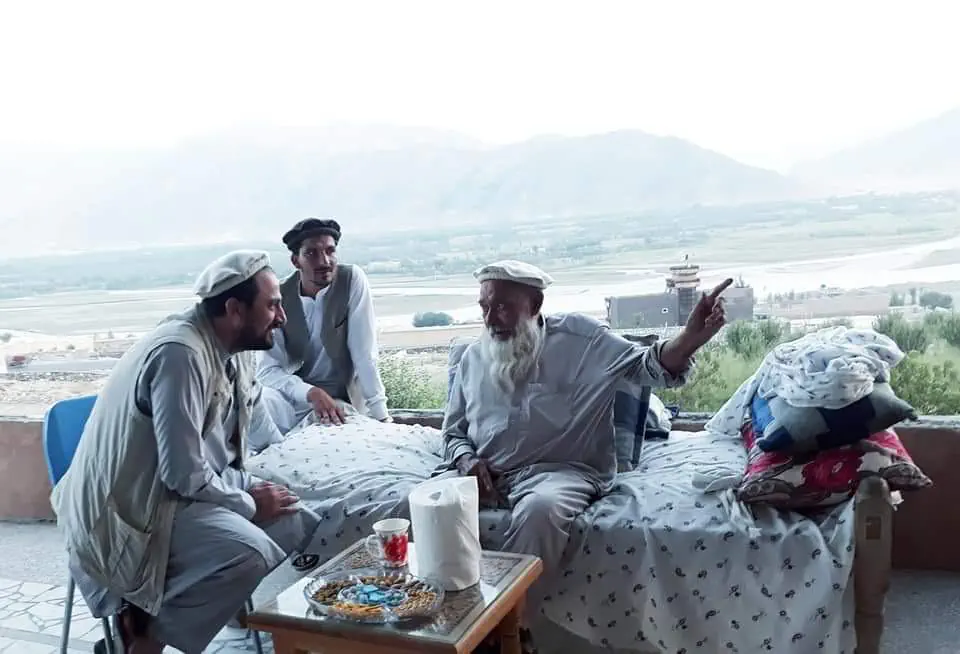
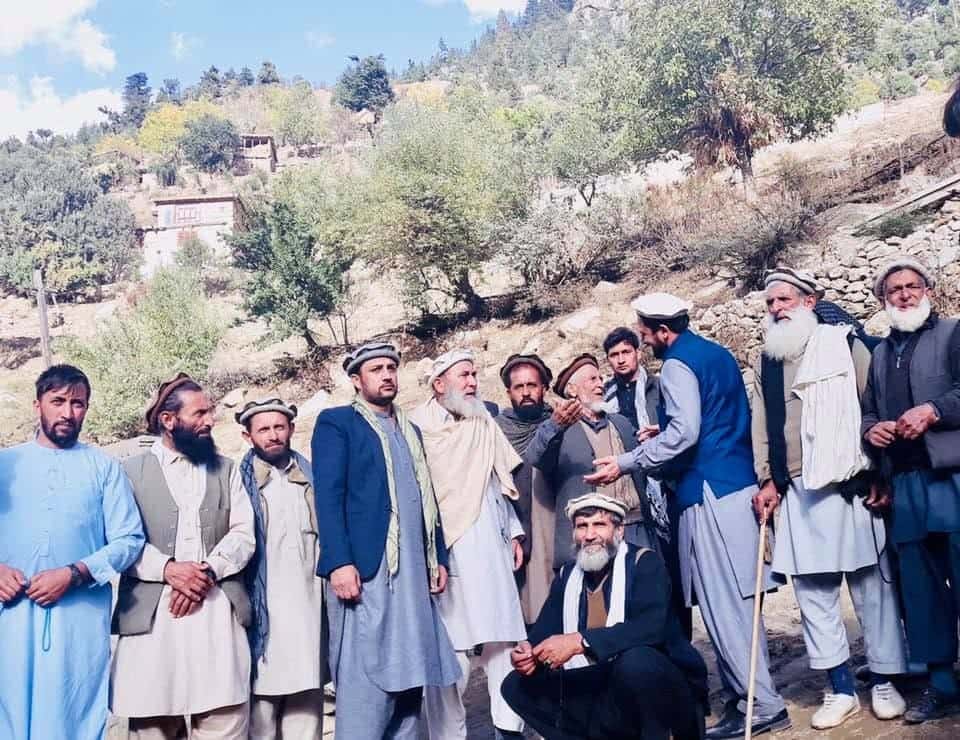
Older men with copper to bright orange beards are a common sight in Nuristan, and most of those beards are dyed. The dye is henna, a russet or orange dye made from the powdered leaves of the henna shrub, Lawsonia. In Waygal and the rest of Nuristan many older men dye their beards or their hair with it.
Dyeing grey hair has a religious basis. It is a recommended practice in Islam. In a hadith recorded by Abu Dawud, the Prophet says that the best things with which grey hair is changed are henna and katam, another plant dye. In a hadith in Sahih al-Bukhari he tells Muslims to dye their grey hair because the Jews and Christians of the time did not. It is a practice for grey hair, so it is older men who follow it.
That is why the colour is so strong. On dark hair henna gives what one nineteenth-century traveller in Persia called a chestnut tone, but on a white beard there is no dark pigment underneath, and the result is orange. Not every man likes it. Encyclopaedia Iranica, drawing on European travellers of the seventeenth century, records that men in Persia with white or greying hair generally disliked a bright russet beard, and that hennaed hair was darkened afterwards with indigo.
Grey roots are the surest sign. Henna goes on grey hair, so as a dyed beard grows the new hair comes through white. A coppery beard with no grey in it, on a man of any age, is more likely to be natural.
Henna has long been part of Afghan weddings. An account of a wedding between two town families, published by Ria Hackin and Ahmad Ali Kohzad in 1953, describes the hennaing ceremonies, in which the bride's palms and feet are hennaed and the groom's father smears henna on his son's palm and little finger while the musicians sing for it.
Did red hair come from Alexander, or from Europe?
The story that the Nuristanis descend from the soldiers of Alexander the Great is old, and light eyes and red or fair hair are offered as proof of it. The evidence does not settle the question either way. Robertson did not accept the descent but allowed that Greek colonists might have left some mark. A 2007 study of the Y chromosome found at most a limited Greek contribution to the Pathans of Pakistan, and the few Nuristani samples ever tested show lineages common across the region.
What the genetics does show is that the variants for light eyes and fair hair are much older than Alexander in this part of the world. Bronze Age herders of the steppe whose remains have been tested carried some of them, though whether that includes the variants for red hair has not been tested, and ancestry of that kind spread south in the second millennium BC, long before he arrived. In small mountain valleys where people married among themselves for centuries, chance alone can make a rare trait more common, or lose it. None of that rules out a Greek or any other contribution. No one has tested it properly, and we leave the question open.
The red-haired giant of Kandahar
Much of what is online about red hair and Afghanistan concerns a giant. The story goes that American special forces near Kandahar in 2002 were attacked by a creature two or three times the height of a man, with red hair and a red beard, and killed it. Skeptoid traced the story to a single source: an author of books about giants, speaking on an American paranormal radio show in November 2005 and repeating what he said a pilot had told him. When Snopes asked, the US Department of Defense said it had no record of a special forces member killed by a giant in Kandahar. It tells us nothing about red hair among Afghans.
Questions people ask
Why do some Afghans have red hair?
Natural red hair is rare in Afghanistan, as it is in most of the world, though it has been recorded among Nuristanis, Pashtuns and Tajiks. Elsewhere it comes mostly from variants of a gene called MC1R, which decides whether hair makes dark pigment or red; in Afghans it has hardly been studied. Much of the red seen in Afghan beards is something else: henna, a plant dye that older men use on grey hair.
Why do Afghan men have orange or red beards?
Many bright orange beards on older men are dyed with henna. Dyeing grey hair is a recommended practice in Islam: a hadith in Sunan Abi Dawud names henna and katam as the best things to change grey hair with. On a white beard henna gives a strong orange-red, which is why the colour is so noticeable. In Waygal and across Nuristan many older men dye their beards or hair this way.
Is red hair common in Afghanistan?
No. Mountstuart Elphinstone wrote in 1815 that Afghan hair and beards were generally black, sometimes brown and rarely red. George Scott Robertson, who lived at Kamdesh in 1890 and 1891, put red-haired and very fair people together at fewer than one in a hundred. No usable national figure for hair colour exists.
Do Nuristanis have red hair?
A few do. Robertson put red-haired and very fair Kafirs, as Nuristanis were then called, at fewer than one in a hundred, and the Soviet survey of the 1960s recorded one redhead among the 49 Ashkun men whose hair was noted. In our own valleys some families have a man with a red beard, and nobody thinks of him as foreign. Most Nuristanis have dark hair.
Why do some men have a red beard but dark hair?
The anthropologist Nina Jablonski told Live Science in 2020 that this is almost certainly the gene MC1R working differently in beard and scalp follicles, so that the beard makes more red pigment than the head. Live Science adds that such men probably carry one copy of a red-hair variant rather than two. Jablonski also said that some men's beards redden as they age, often after forty.
Is the giant of Kandahar real?
There is no evidence for it. Skeptoid traced the story of soldiers killing a giant near Kandahar, which gained its red hair in later retellings, to an American paranormal radio show in November 2005, told by an author of books about giants. When Snopes asked, the US Department of Defense said it had no record of a special forces member killed by a giant in Kandahar.
Sources
- MedlinePlus Genetics (US National Library of Medicine): MC1R gene (eumelanin, pheomelanin and the variants common in people with red hair)
- MedlinePlus Genetics (US National Library of Medicine): Is hair color determined by genetics? (one copy and both copies of an MC1R variant)
- Benjamin Plackett, Why do some men have red beards, but not red hair? (Live Science, 14 March 2020), with Nina Jablonski
- Mountstuart Elphinstone, An Account of the Kingdom of Caubul (1839 edition), on Afghan hair and complexion and on the Yusufzai
- George Scott Robertson, The Kafirs of the Hindu-Kush (1896)
- G. F. Debets, Physical Anthropology of Afghanistan (Peabody Museum, 1970): the Ashkun hair record and the Panjshir photograph
- Saif and others, Genetic analysis of 22 pigmentation-associated SNPs in the Pashtun population of Khyber Pakhtunkhwa (Legal Medicine, 2026)
- Houshang Alam, Henna (Encyclopaedia Iranica, 2003): the dye, darkening with indigo, and the Afghan wedding hennaing after Hackin and Kohzad
- Sunan Abi Dawud 4205: henna and katam for grey hair (sunnah.com)
- Sahih al-Bukhari 3462: dyeing grey hair (sunnah.com)
- Firasat and others, Y-chromosomal evidence for a limited Greek contribution to the Pathan population of Pakistan (European Journal of Human Genetics, 2007)
- Keyser and others, Ancient DNA and the south Siberian Kurgan people (Human Genetics, 2009)
- Brian Dunning, The Giant of Kandahar (Skeptoid, episode 1014, 11 November 2025)